
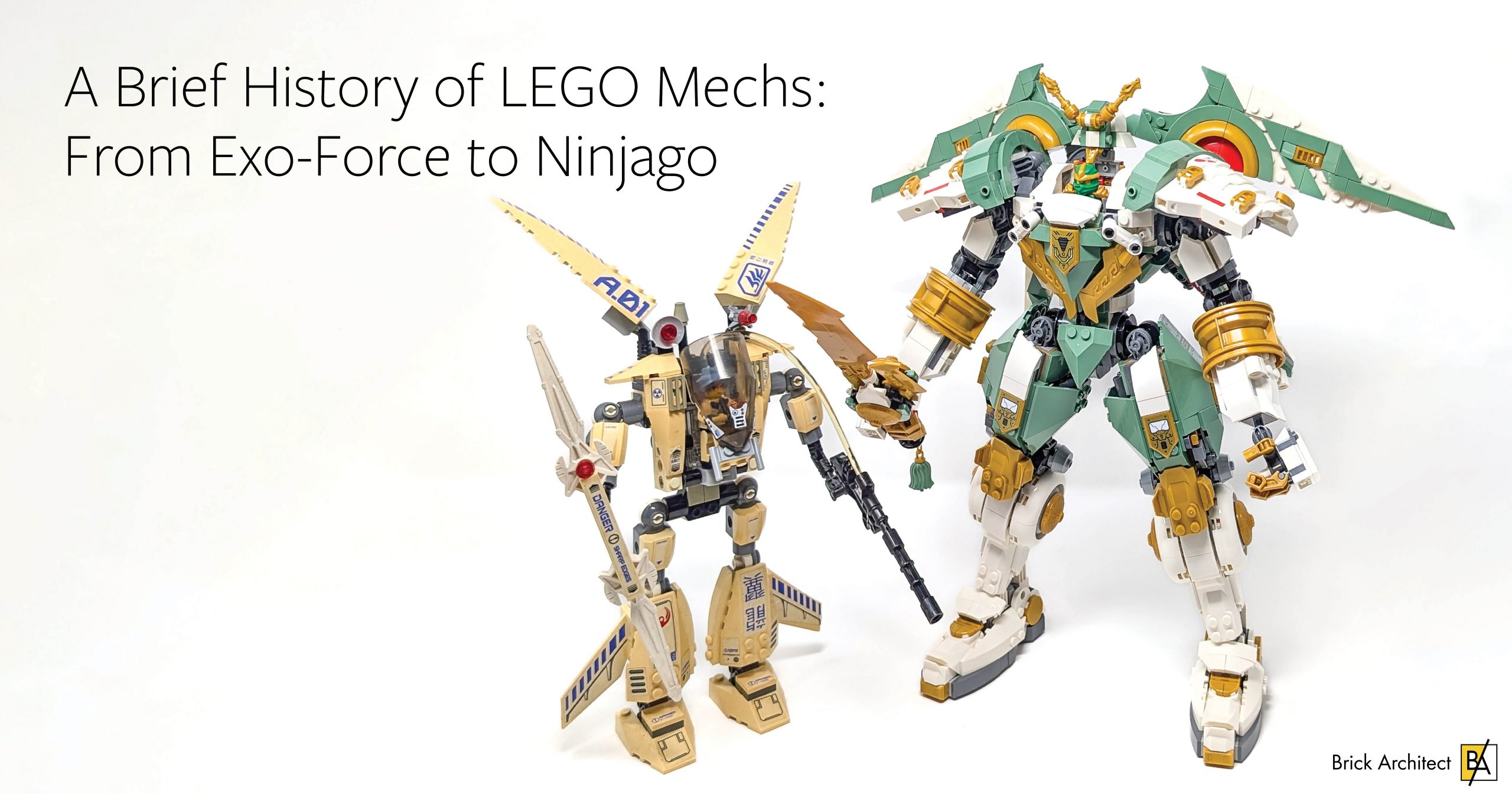
A history of LEGO Mechs: Exo-Force to Ninjago’s #71860 Lloyd’s Titan Mech
Let’s explore 20 years of LEGO Mechs: From their introduction with Exo-Force to the massive mechs in the Ninjago series.

2006’s Exo‑Force was one of my favorite LEGO themes as a kid. The idea of piloting a towering robot felt impossibly cool. While the mechs were rather basic by modern standards, the theme was revolutionary for its time — pioneering the integration of anime themes into LEGO sets for the first time.
My recent experience building 71860: Lloyd’s Titan Mech motivated me to dust off what remains of my old Exo‑Force mechs. Let’s explore how LEGO mech designs evolved across nearly two decades.
What Is a Mech?
When I think about mechs, my mind is cast back to the iconic silhouettes seen in anime series Mobile Suit Gundam. The term mecha (or mechs) in Japanese comes from shortening the English word mechanism (メカニズム, mekanizumu), but was adapted to describe human-piloted walking robots. The idea stems from early science fiction novels such as The Steam Man of the Prairies (1868) and The War of the Worlds (1897). Anime and manga series like Gundam and Mazinger Z established the tradition of towering robots with a human operator at their core.
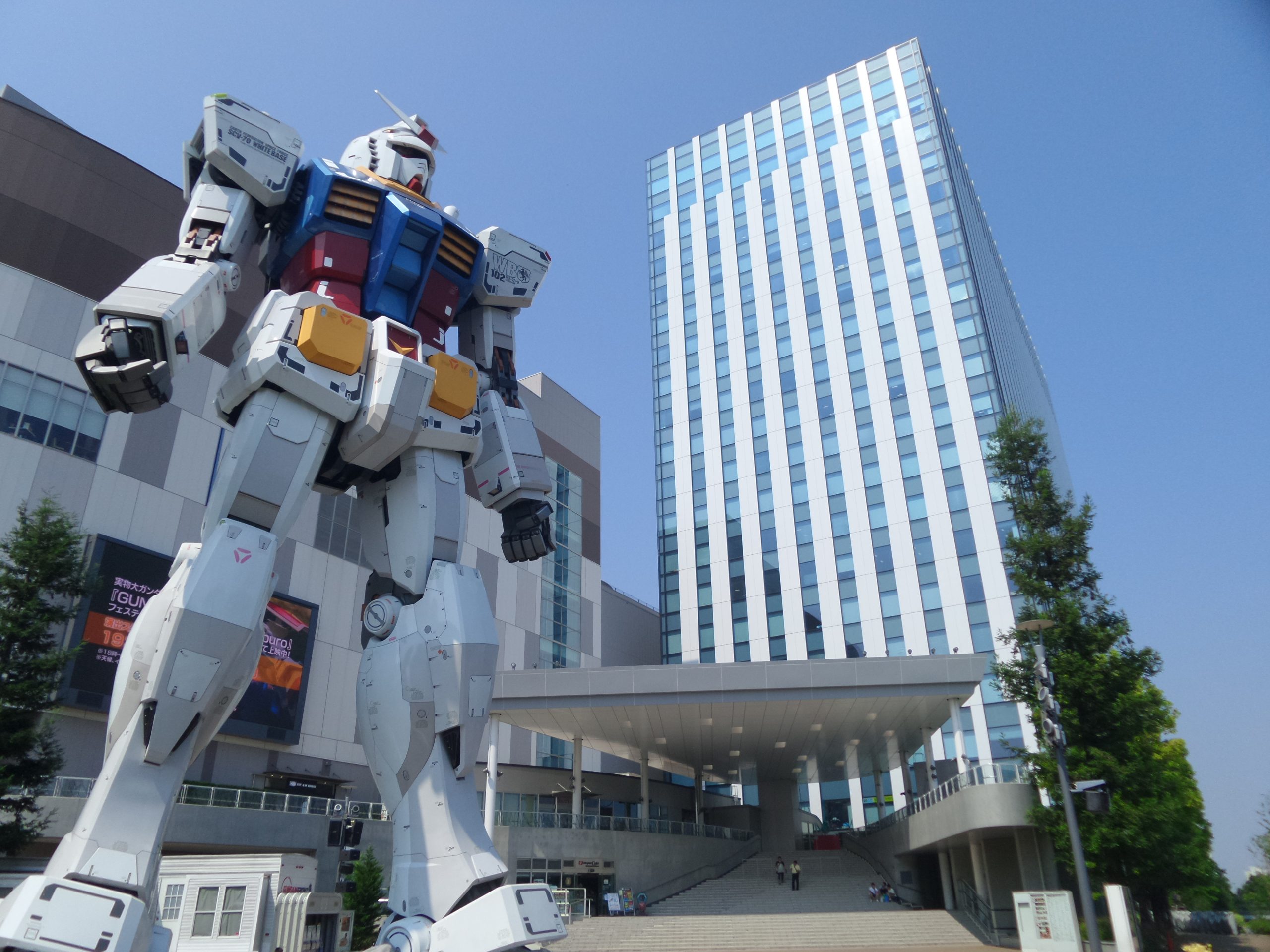
Gundam is iconic even 50 years after its inception. (Photo: pxhere, CC0-1.0.)
A Brief History of LEGO Mechs
Oversized robots built using LEGO are a match made in heaven. While early mechanical robots were found in the classic Space themes of Blacktron and Futuron, we don’t see classic human-powered mechs until the release of Exo-Force sets in 2006. Exo-Force and Ninjago stand out for capturing the heart of mech design language, which is why they are the focus of this article. While themes like Bionicle capture some of the spirit of mechs, they aren’t really mechs.
Let’s look at how new pieces made it easier to build expressive mechs with articulated limbs, making way for the amazing models we see today.
Exo-Force
The first major breakthrough in LEGO mechs came through 2006’s Exo-Force theme. This theme was revolutionary for its time, marrying together anime inspired storytelling with great action packed builds to build a narrative driven wave of sets, something that has become commonplace since. Exo-Force followed the narrative of the human defenders of Sentai Mountain as they battled against an army of rebellious mining robots. This iconic theme has had a massive cult following, still being popular today with LEGO paying homage to it in 2024’s LEGO City Robot World set by including a modern rendition of 2006’s 7700: Stealth Hunter. The first wave of Exo-Force sets came out in 2006 and debuted 16 sets in sizes ranging from the smallest being 7700: Stealth Hunter with 164 to the largest 7709: Sentai Fortress with 1408 pieces. Following its popularity in the first waves, an additional 15 sets got released in 2007 under the Golden City subgenre and a final 7 in 2008 under the Deep Jungle subgenre. Despite its popularity, I was only aware of the first wave of sets at the time of my collecting, and knowledge of the subsequent waves only came to me many years later following my return from my dark period. Although Exo-Force had a brief and limited run it left a lasting imprint, proving that mechs could work as an entire theme, introducing parts and building techniques that would become the standard for themes like Monkey Kid and Ninjago decades later.

Exo-Force is a fan favorite with its incredible mechs.
While it may be nostalgia playing its part, 2006’s 7700: Stealth Hunter was my favorite of the mechs, and had its fair share of play back in the day. Its previously 1White color now a sun faded hue of yellow. These old mechs helped pioneer the use of click joints allowing for posability of the mech. These older joints were limited however, only allowing for rotation around one axis plane. The modern joints, as we will explore later, have evolved to instead allow for rotation across two axis planes. One of my favorite features of the old Exo-Force sets, and one I wish we would see again in LEGO, is through the incorporation of a light brick. By attaching a light brick to the back of the mech and using transparent fiber-optic cables, the red light shines through acting as a power conduit for the weapons the mech wields. These fiber-optics cables were created exclusively for the Exo-Force line and while not perfect created a great illumination effect allowing for fun play. Unfortunately my light brick has become damaged over the decades, but with ease of battery replacement is something I plan to repair in the future.

7700 Stealth Hunter is my favorite Exo-Force mech.
Ninjago
Exo-Force will always have a place in my heart, and in a way might be a reason why I enjoy some of the great builds in the Ninjago line. From the Japanese influences to the mechs, you can easily see how LEGO drew inspiration from Exo-Force to create LEGO’s longest running original IP theme. Released in 2011, Ninjago has run every year since, creating new seasons of the show creating longevity in its story. While themes like City or Technic have run longer overall, they are not story driven IPs and as such are not treated as a LEGO original universe. Since Ninjago’s debut, mechs have been a recurring centerpiece of the theme, with the first mech coming out in 2012 in Ninjago’s second year through 9448: Samurai Mech and 9455: Fangpyre Mech. If the mechs themselves were not enough to highlight the integral role of mechs in the Ninjago universe, sets such as 71837: Ninjago City Workshops that I previously looked into as part of my article on what defines Ninjago’s unique style, showcases an entire modular style build designed around a mech workshop. While mechs play a big role in Ninjago, it is important to note that it is not the theme in its entirety so if you are not interested in mechs there is still likely something in Ninjago for you.

Mechs are commonplace in the Ninjago universe.
Deep Dive: Lloyd’s Titan Mech
When comparing the mechs over the years, we can see the evolution and refinement that has continued to occur over the years, culminating in the beauty that is 71860: Lloyd’s Titan Mech. I do not put together LEGO mechs often, and when first looking at the box I was not blown away, but boy was I wrong once it was put together. The pictures and the box art do not do this set justice, with the varied building techniques, amazing posing and all up size surpassing what expectations I had prior to completion. While singing praises, I am sure when we look back at the 25th Anniversary festivities in a decade, we will once again see how much LEGO techniques have evolved as even greater sets continue to surpass the great ones we have today. To capture the details put into this set, I will be exploring the set all up, while also focusing in on posability, the unique building techniques and scale.
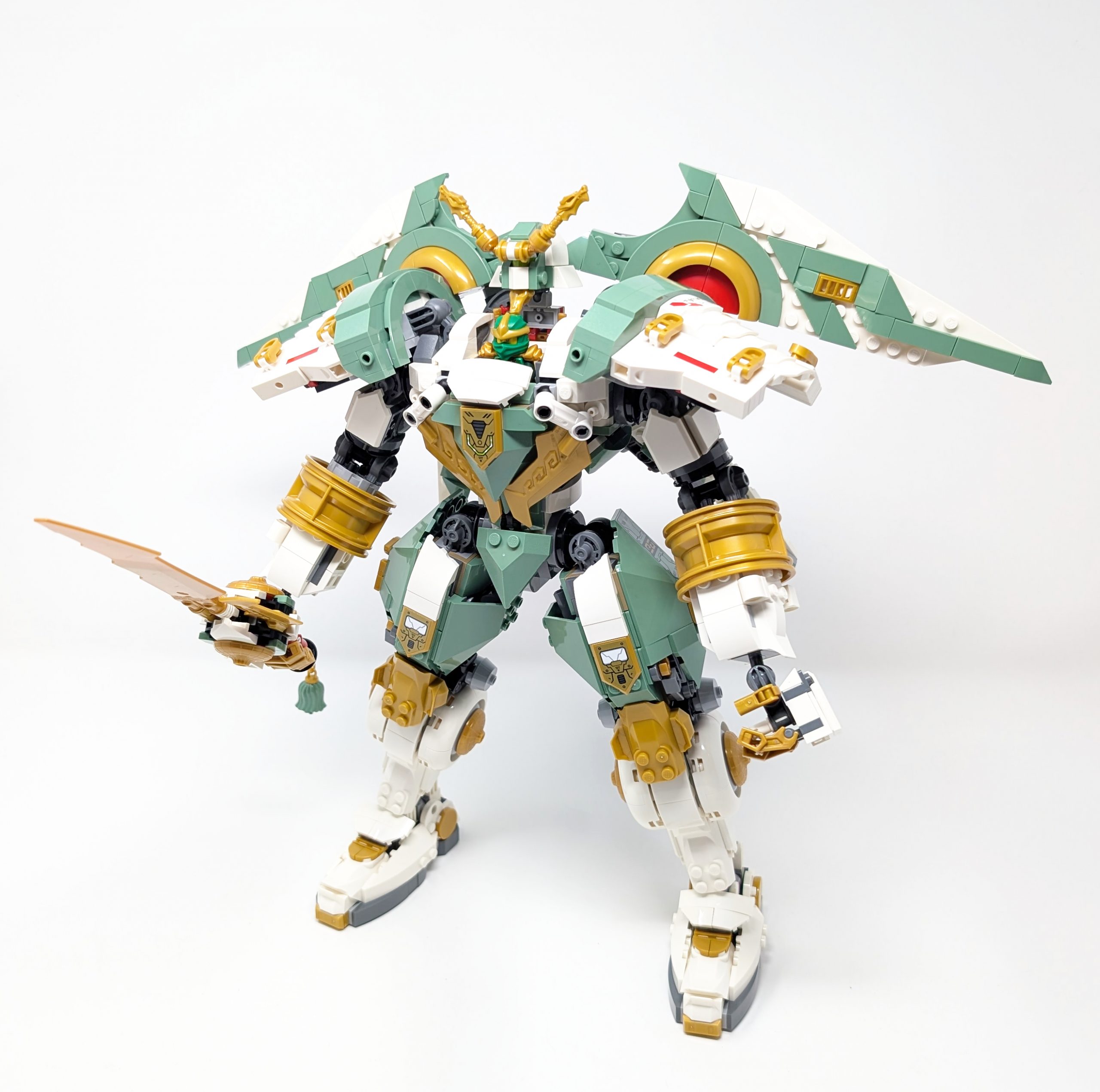
Lloyd’s Titan Mech is robust and incredibly detailed.
About the Set
71860: Lloyd’s Titan Mech releases on March 1st 2026 as part of the 15th Anniversary of Ninjago line of sets. Coming with 3 minifigures and 1293 pieces, it is priced at a whopping $129.99/£119.99/€129.99. While a hefty price tag, don’t let it scare you as not only is this set at the expected price per piece standard of 10.1c/9.3p/10c deemed fair for value but it is massive. 71860: Lloyd’s Titan Mech measures at nearly 40cm tall, depending on how it is posed, making the mech a towering sight. For sizing comparison, 21348 Dungeons & Dragons: Red Dragon’s Tale, a tall set I reviewed previously sits at 48cm tall, making it only slightly taller than this mech.
As being part of the 15th Anniversary of Ninjago line of sets, 71860: Lloyd’s Titan Mech seems to be a throwback to some of the iconic mechs we have seen in this theme over the years. This mech is a remake of the now retired 2019 mech of the same name. 70676: Lloyd’s Titan Mech. While I have not built the older variant, just by looking at pictures from LEGO’s official site I could immediately see the similarities, only this time the new one being greatly improved. When looking at the two, I am reminded of Theodore Roosevelt’s quote that goes “Comparison is the thief of joy”, and as such will not compare the two too closely as both have their merits. It is worth noting that while the new variant comes with 417 more pieces, it does come at a price tag of 50$ more and only has 3 minifigures compared to the 6 of its older counterpart. Despite this, when comparing just the build, the new one looks way sturdier and the build itself feels more impressive, showing how much can be done in over half a decade worth of new pieces and techniques.
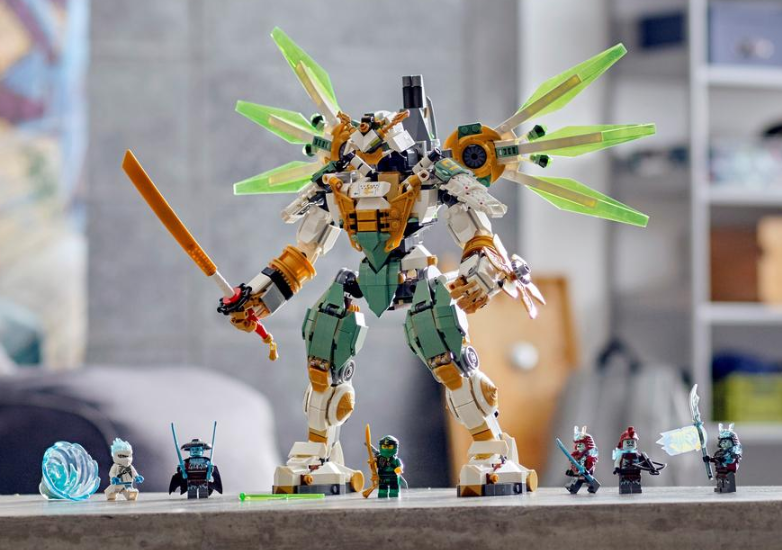
The new mech leans heavily into inspiration from 2019’s version.
Posability
71860: Lloyd’s Titan Mech is a great case study to use when evaluating modern mechs. Mechs in 2026 have come a long way in how naturally they can move, with joints that closely mirror the joints available in the human body. Neck, shoulders, elbows, knees and even hips, to name a few joints, all work together to create poses that are surprisingly lifelike allowing for a wide range of poses. Through all these joints dramatic action stances or just casual T-pose can be formed with ease. As I tried to pose the mech, what impressed me the most is how well balanced the model is. By having a low centre of gravity, almost every pose (within reason) allows the mech to stay planted, without worrying about it toppling over. The designers put a lot of care into ensuring the mech not only looks great but is robust.

There is so much articulation allowing for wacky posing.
When comparing to a two decade old Exo-Force mech, we really see how much has changed. The core ideas are still there, whether it is the ball joints, hinged limbs or a cockpit centred head and torso, but the modern rendition benefits from a wider array of joint options to choose from and more refined building techniques. SNOT (Studs Not On Top) construction is a lot more widely used in modern builds than older ones and is something that Exo-Force either couldn’t achieve or didn’t utilize at the time. The use of this technique in the newer mechs hides structural seams to create smooth cohesive armor plating. This hides a lot of the rough scaffolding that serves as the structural elements of the mech. As much as I adore the early day mechs, they look clunky next to the sleeker and more polished mechs we see in modern builds.
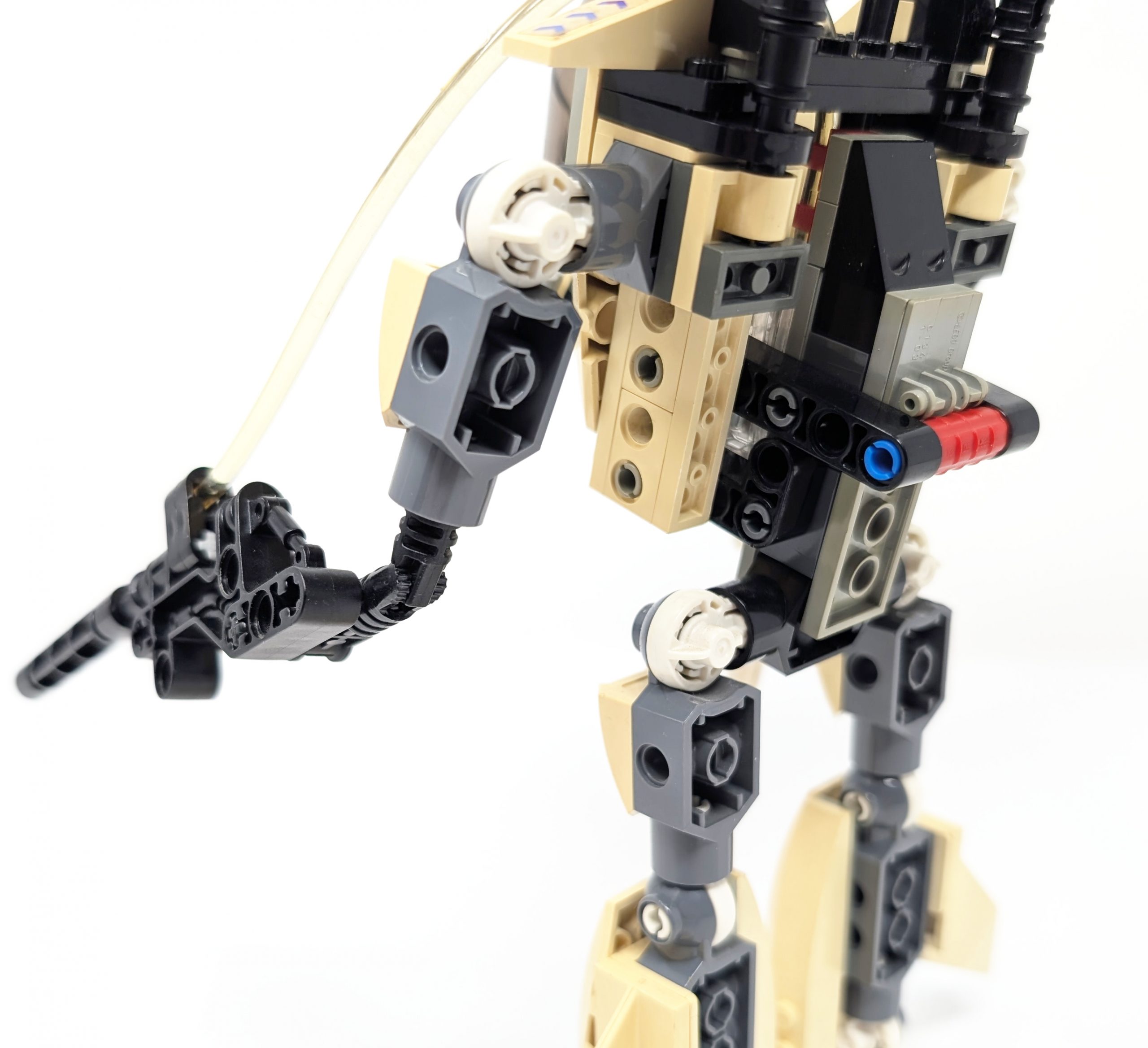
The old mechs are built super simply.
Beauty needs to be on the inside as well as the outside, and underneath all the clean exterior shaping of 71860: Lloyd’s Titan Mech is a clever mix of Technic and System construction that gives the mech its structure while preserving the sleek finish. Through technic pin connections and various click or ball and socket joints, the internal skeleton is built which provides the mech the rigid skeleton needed for its wide range of motion. The designers chose to use click joints for the major joints, while allowing the use of ball and socket connection joints to serve as more expressive connective joints. This allows the mech to stay in place once the ideal pose has been struck. SNOT technique is very evidently used in the modern mechs as layering is utilized to create armor and shaping to build the bulk of the mech. From the front and side most of the structural elements are hidden, but upon turning the model around you reveal the network of connective tissue. While not as sleek as the front, not smoothing out the back as much actually gives the mech some charm, while saving the end builder some money by using fewer pieces in the process.

The full extent of how the mech is put together is visible from behind.
Unique Building Techniques
When building 71860: Lloyd’s Titan Mech, one of the things that immediately stood out to me was how many of the connective elements also double up as visual detailing. This allows for a sense of continuity in the model and shows how the designers opted to blend in structure and detail together. Layering is one of the most common detailing techniques used, whether it with slopes or tiles. This connectivity especially in different colors makes the model pop and catch your attention. Due to the varied nature of the model, there is not a large amount of repetition beyond the mirroring used due to having two arms, legs, wings and so forth. This means that there are a wide variety of fun techniques that the designers got to play around with, in turn meaning you have a varied build experience. While there are a ton of great building techniques, my favorite touch was the piston tucked behind the lower leg. When I built this, the first thing I thought was “this looks like an Achilles tendon”. While I have absolutely zero medical knowledge, my quick internet search highlighted that this LEGO addition serves a similar purpose to the real life counterpart, linking muscle to bone, giving the mech solidity to hold dramatic poses and bend both the feet and knees as needed without compromising structure.
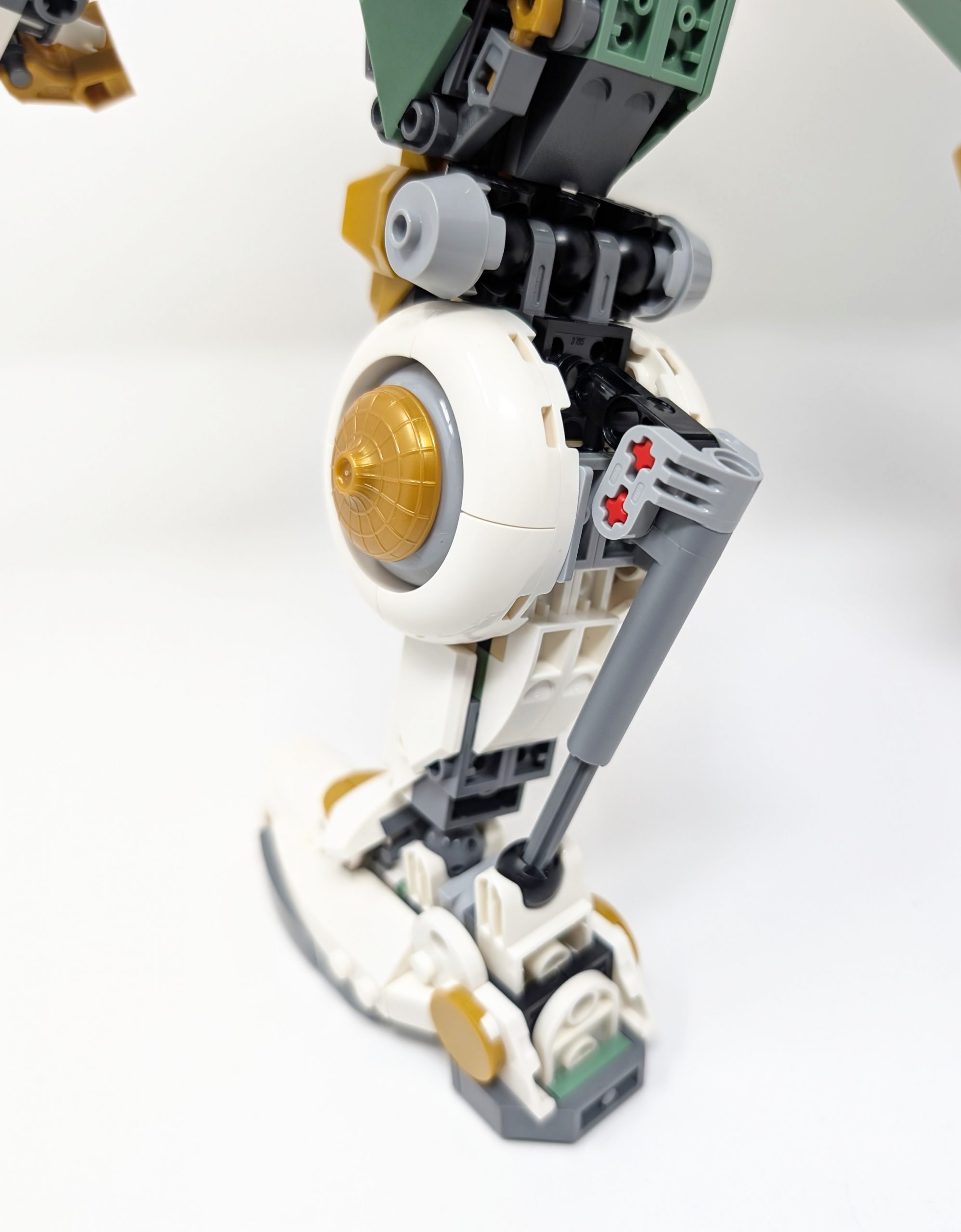
Pistons provide support to keep legs and feet in place.
While pieces make a set, so do colors. A wide array of colors are used, but the standout that immediately catch your eye are the abundant use of 1White, 119Bright Yellowish GreenLime and 297Warm GoldPearl Gold, with the occasional 21Bright RedRed serving as accents. These colors not only mirror the color palette of Lloyd who pilots this mech, but those used in the original 2019 variant of this mech. To accentuate the set even further, a creative variety of parts are used as minor detailing, whether it be hats, frogs or weapon hilts, each used in 297Warm GoldPearl Gold allow for creative minute detailing that finish off the build beautifully. The bulk of the detailing is accomplished through layering, each smoothly sculpting smooth bulk in lighter colors contrasting the darker 199Dark Stone GreyDark Bluish Gray of any exposed joints. There needs to be some exposure to easily pose, but this is not a negative. I like the touch of having exposed structuring on display, even if it is not intentional. While there are a ton of great detailing, the legs in particular are my favorite, feeling bulky for support while shaped cleanly that give a smooth look that doesn’t feel awkward or overly built up.

Construction elements blend with details seamlessly.
As this mech is designed for both play and display, it is intentionally multi-purpose. The wings detach to form a shield and the weapons can be sheathed nearly on the back. You can tell the designers thought carefully about how fans may want to work with this mech and as such provided multiple configurations, something the older mechs did not have the luxury of.
Scale
Even after just building a single foot, one thing you will notice immediately is how incredibly large 71860: Lloyd’s Titan Mech is. Standing nearly 40cm tall, it towers over a minifigure, clocking in at over 10 minifigures high. Frankly this is enormous and almost feels overkill. When you think about it, what enemy in the Ninjago universe could realistically stand a chance against a mech of this size. For anyone familiar with the Fallout franchise, this mech reminds me of the Liberty Prime, a powerful army mech that is 40 feet tall. But I digress as the scale is part of the fun. When I placed the new mech next to my old Exo-Force mech, a mech I once thought was impressively tall, it suddenly felt small, showing how bulk and size really does help accentuate scale and grandiosity of builds.
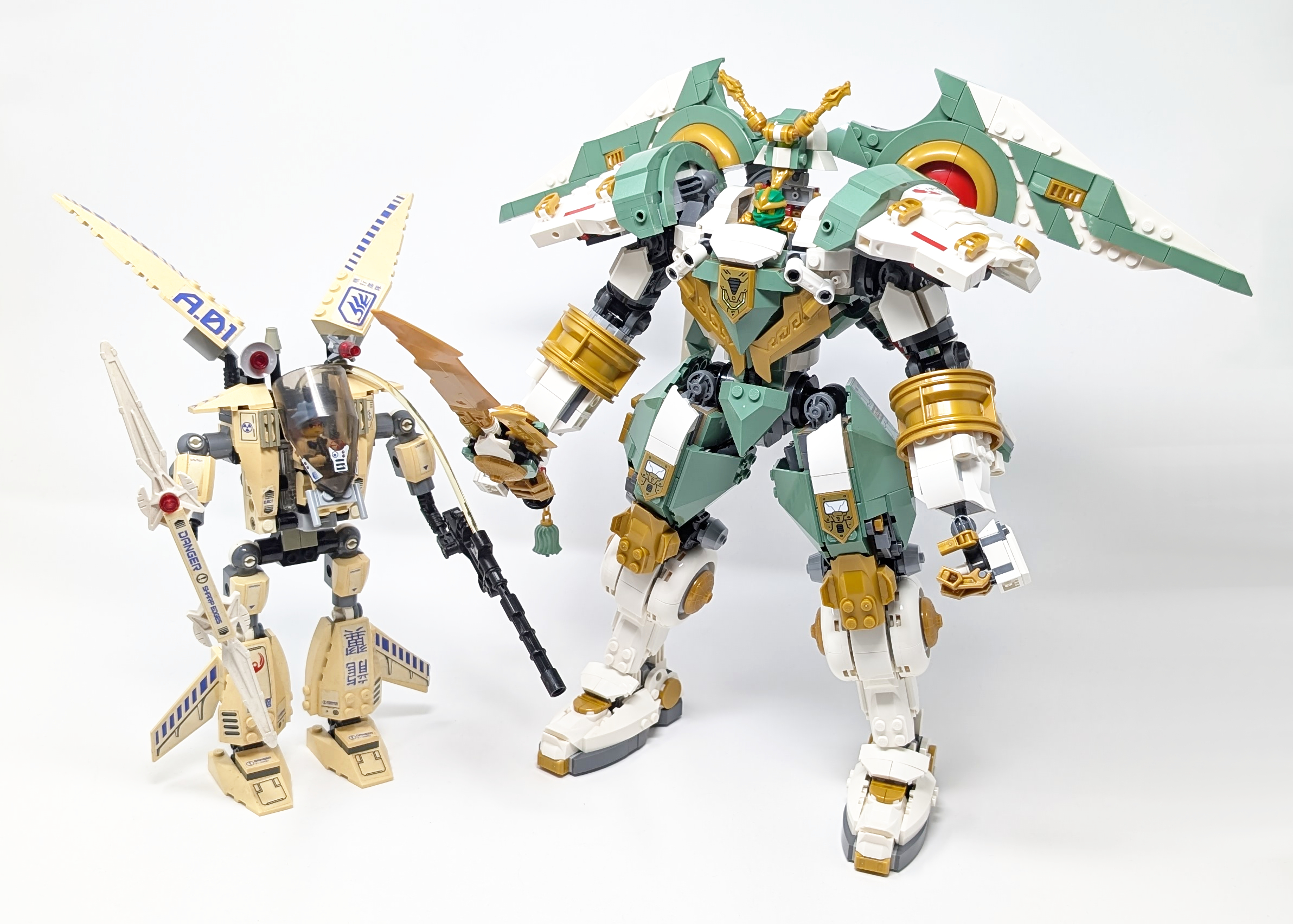
Modern mechs are larger than older variants.
Conclusion
After spending time with 71860: Lloyd’s Titan Mech it is not hard to see that it is one of the most impressive LEGO mechs I have ever built, maybe even being one of the better mechs produced. While my mech collection is small, I now am open to exploring the many possible mechs I could add to my collection and rekindle my 20 year old love for mechs. 71860: Lloyd’s Titan Mech is packed to the brim with clever techniques and expressive articulation, surpassing all expectations I had for it prior to building. Yes the set carries a premium price tag, but that is justified once you see the scale of the build. As LEGO continues to refine its building techniques I am sure we will continue to see great mechs, as the last few years have seen some amazing builds as LEGO continues to deliver.
I hope by providing a brief exploration in the evolution of mechs by comparing two decades apart mechs from Exo-Force to Ninjago, it inspires you to revisit some of your old classic favorites and maybe even build some custom mechs of your own. While this was not a traditional review of the set, I do give 71860: Lloyd’s Titan Mech a Recommended (4/5 Stars) and think it’s a fun pickup if mechs are your thing or you want to get started with mechs.