
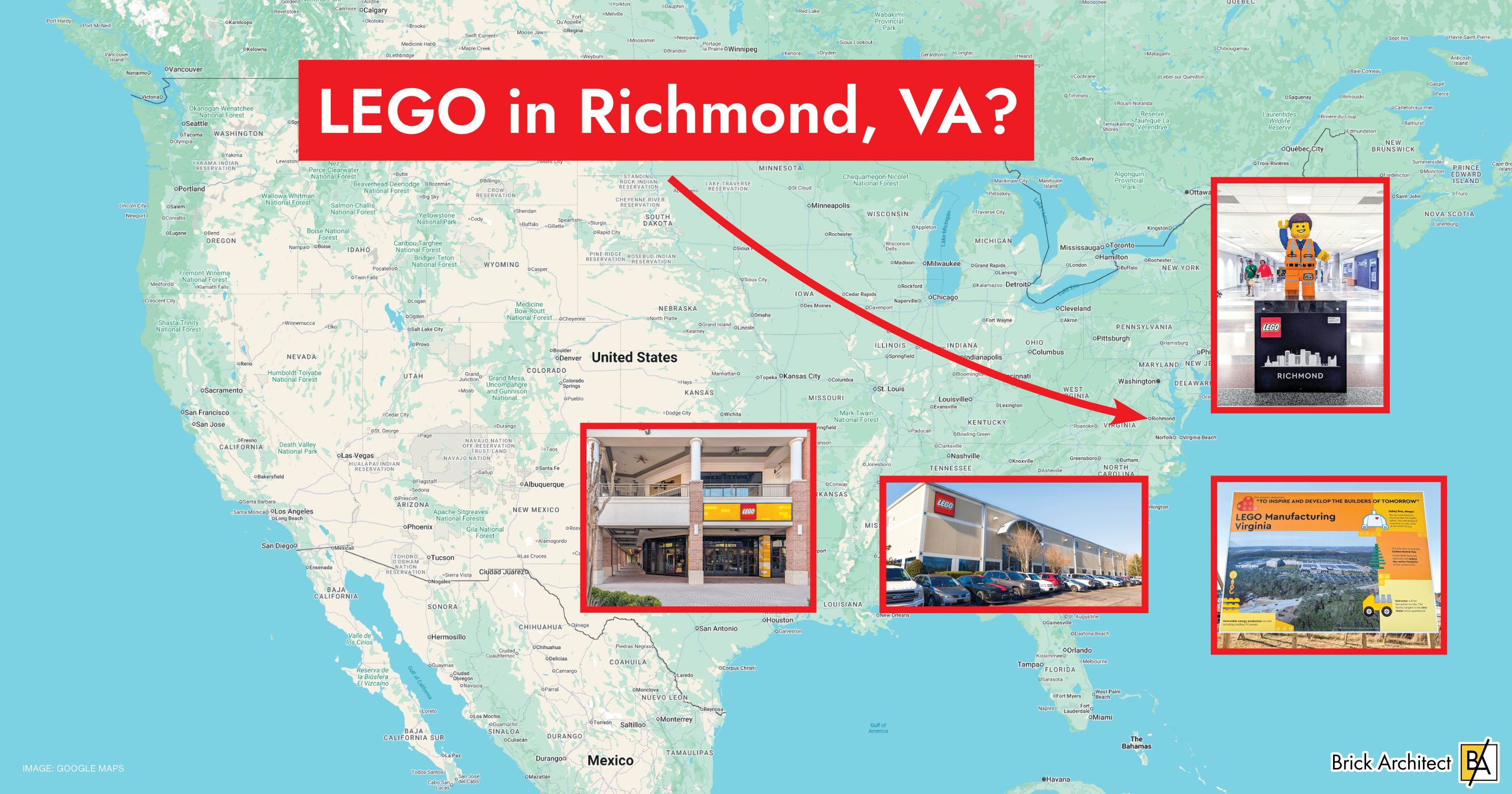
What’s happening in Richmond, Virginia? A new LEGO Factory!
From a brand new LEGO Store to a massive new LEGO Factory — let’s find out what’s happening in Richmond!

In June 2022, The LEGO Group announced plans to build a massive $1-billion dollar carbon-neutral factory in Richmond, Virginia. If you are less familiar with US geography, Virginia is on the East Coast, south of the nation’s capital in Washington, DC. Richmond is 110 miles south of DC, although traffic on the I-95 corridor makes this a several hour journey by car. It’s a city of historic importance to the United States, as the capital of one of the original 13 colonies and the capital of the Confederacy during the US Civil War.
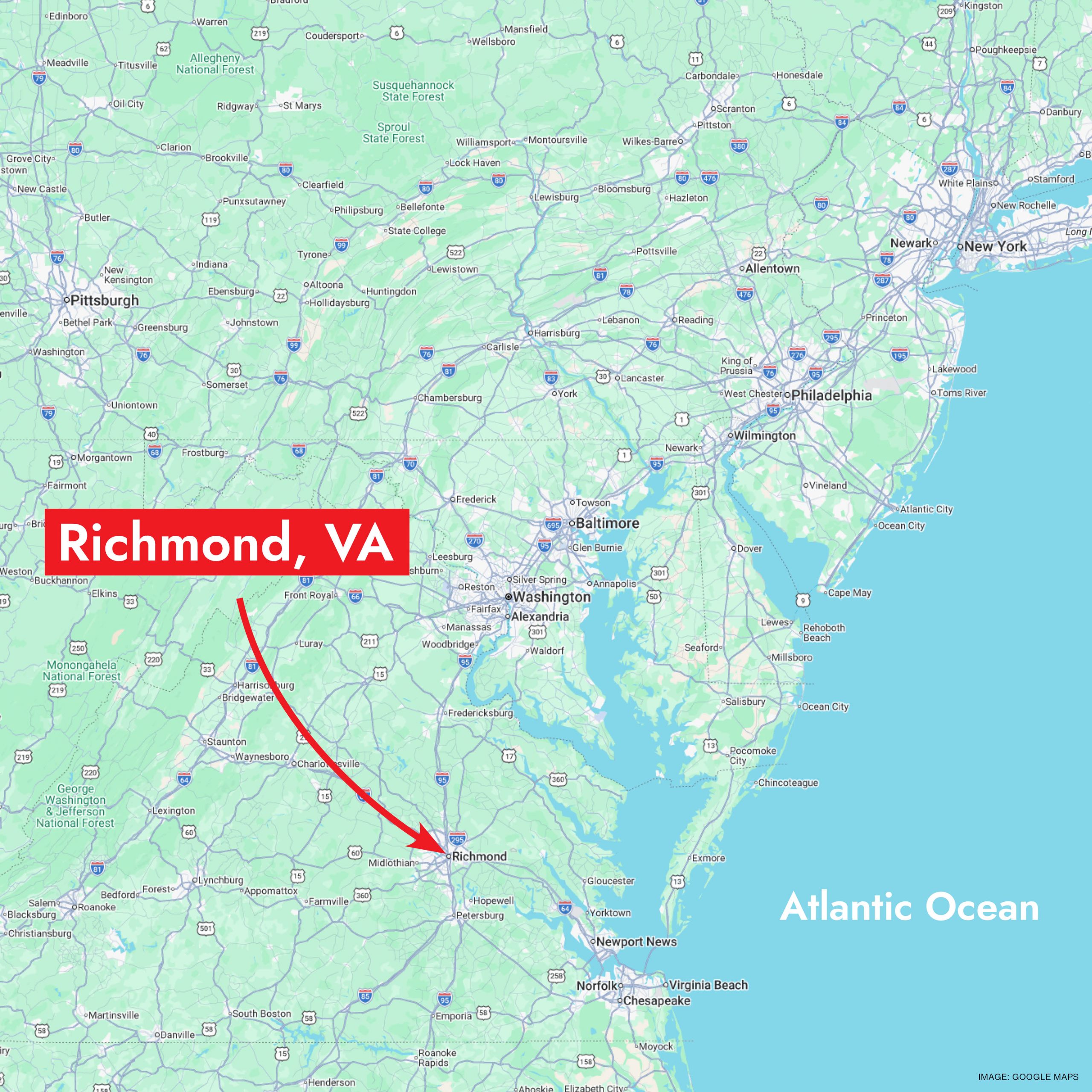
Richmond, VA is on the East Coast of the United States.
Outside the northern Virginia suburbs around Washington DC, it is the largest population center in the state. The LEGO Group isn’t the only big company investing in the area — in recent years, Amazon has built fulfillment and corporate offices in the region as well.
Why Richmond?
Many readers, especially those outside of the United States might not know much about Richmond, or might not have heard of it at all. The fact of the matter is that The LEGO Group already does most of its product development in Billund, Denmark with satellite innovation hubs in London, Boston, Singapore, and Shanghai. By contrast, previous large-scale factories are generally located in lower-wage cities like Kladno, Czech Republic or the only other North America factory which is located in Monterrey, Mexico.
It’s true that Richmond is not a well-known innovation/tech hub like Silicon Valley, Seattle, Boston, or Austin — and that’s kind of the point. While I cannot know for sure, The LEGO Group probably chose Richmond for a combination of reasons: A central location on the East Coast, and easy access to ports on the Atlantic (to receive less common parts manufactured in factories in Europe). Moderate labor costs, affordable land, and sufficient skilled labor also would have played a role. Lastly, it’s likely that the state and/or city provided significant incentives to choose this location over competing cities.
Perhaps the better question is why not another factory in Mexico? If labor costs were the only concern, they could certainly save on labor outside of the United States. I strongly believe the reason is simple… Even with President Trump out of office by 2022, it was clear that the US political landscape was in upheaval. Having a factory in the United States would give The LEGO Group much more options in managing costs, growth, and tariffs in their largest single market. With Tariffs in the news again as we speak, they are probably feeling pretty good about that decision. (They may have also concluded that proximity to DC gives them outsized political influence compared to other cities.)
LEGO in Richmond
Richmond, which often goes by the abbreviation ‘RVA’, has not been a historical hotspot for the LEGO hobby. They do have an active LEGO Users Group called RVA-LUG which has been active since 2001 and meets monthly. What the city did not have until late last year was an official LEGO store. Instead, the gap was filled by several independent LEGO stores, big box stores, and long drives to the nearest LEGO store in Northern Virginia.
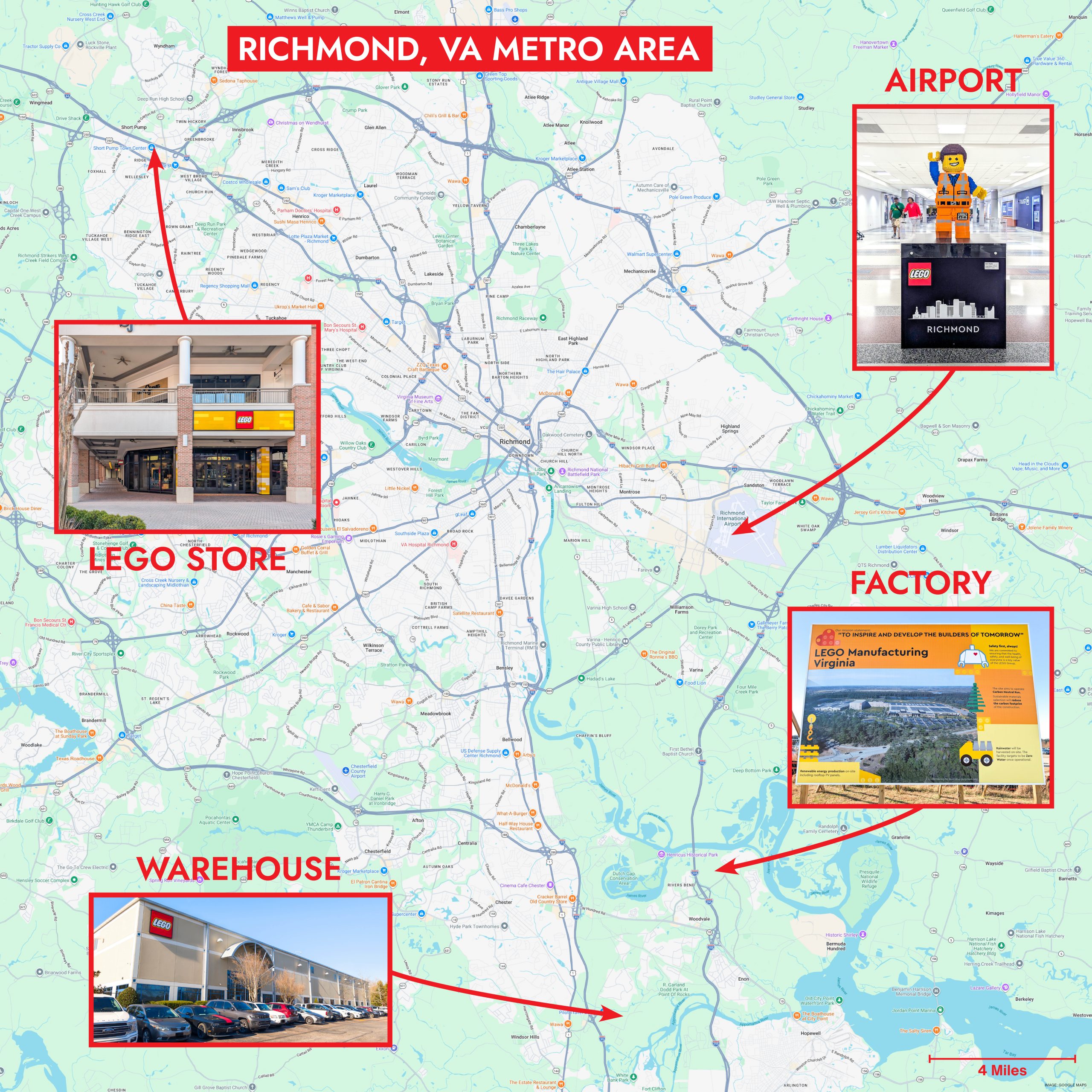
It’s a 76-mile loop to visit all four LEGO sites in Richmond.
In this article, I will highlight the four places that I’m aware of where The LEGO Group has made a visible mark on the Richmond metropolitan area: The Airport, the newly opened LEGO Store, the factory site, and a fourth location which we will explore later.
RIC Airport
If you are visiting Richmond by air, you will likely arrive at Richmond International Airport, or RIC. A quick look at their current route map reveals no regularly sceduled direct flights outside of the United States, so it’s not especially international. We have family in the area, so we sometimes fly to Richmond (which requires a connection), and sometimes get a direct flight to Dulles and rent a car.
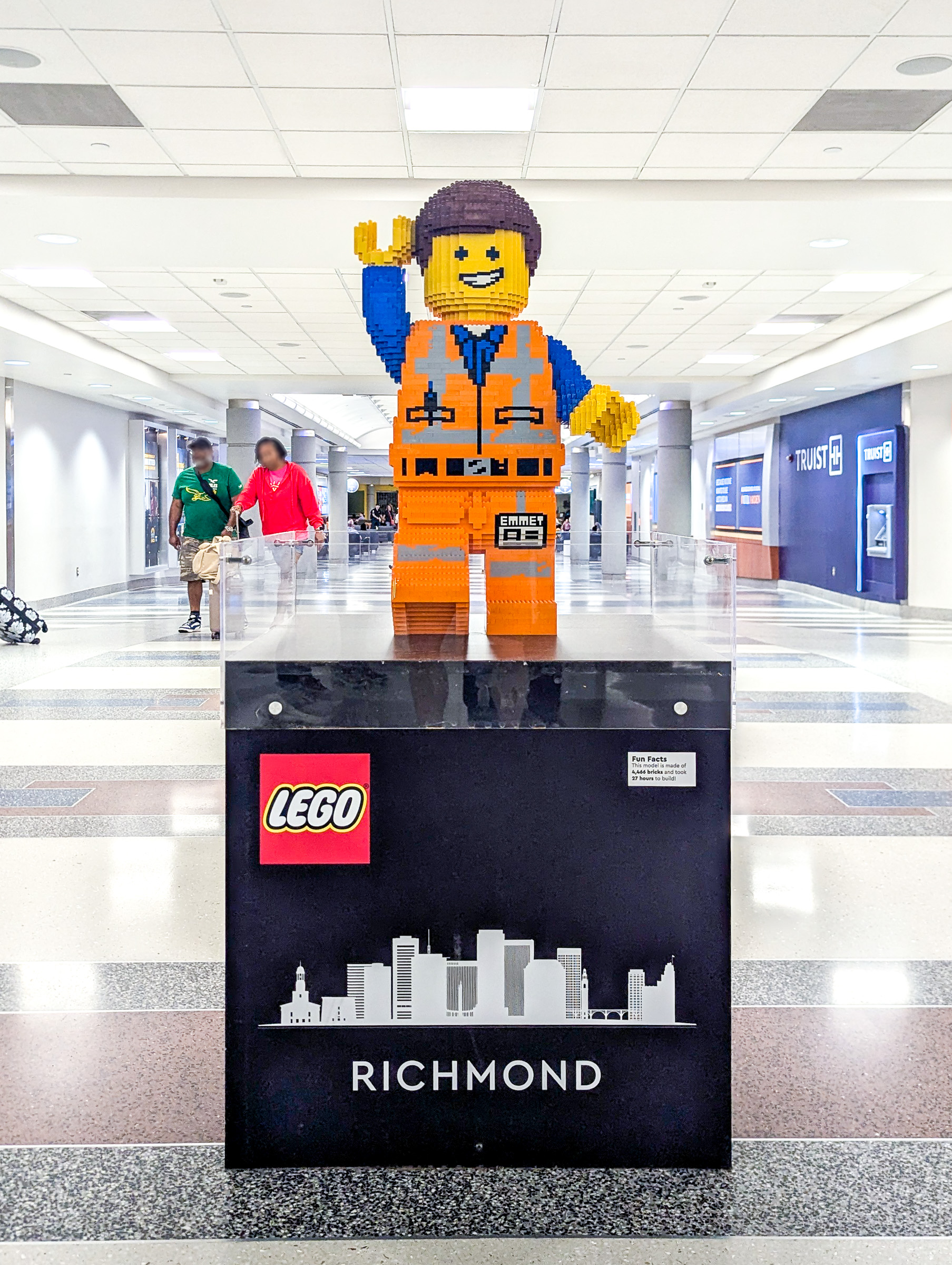
Emmet is ready to greet you at the RIC airport.
While there isn’t a large LEGO presence at the airport, you will find Emmet greeting travelers right after you exit security. It is a small airport with just two concourses connected by a single hallway, so you can’t miss it! (Techically, Emmet is facing towards the entrance, so you will see his backside when arriving in Richmond.)
LEGO Store (Short Pump Town Center)
The second LEGO-branded landmark in Richmond is the new LEGO store at the upscale Short Pump Town Center, which is 15 miles northeast of downtown Richmond. While the official address for the mall says Richmond, VA – it is well outside of the city of Richmond’s actual boundaries. In fact, all of the places featured in this article are outside of city limits, although they are clearly within the Richmond Metropolitan Area.
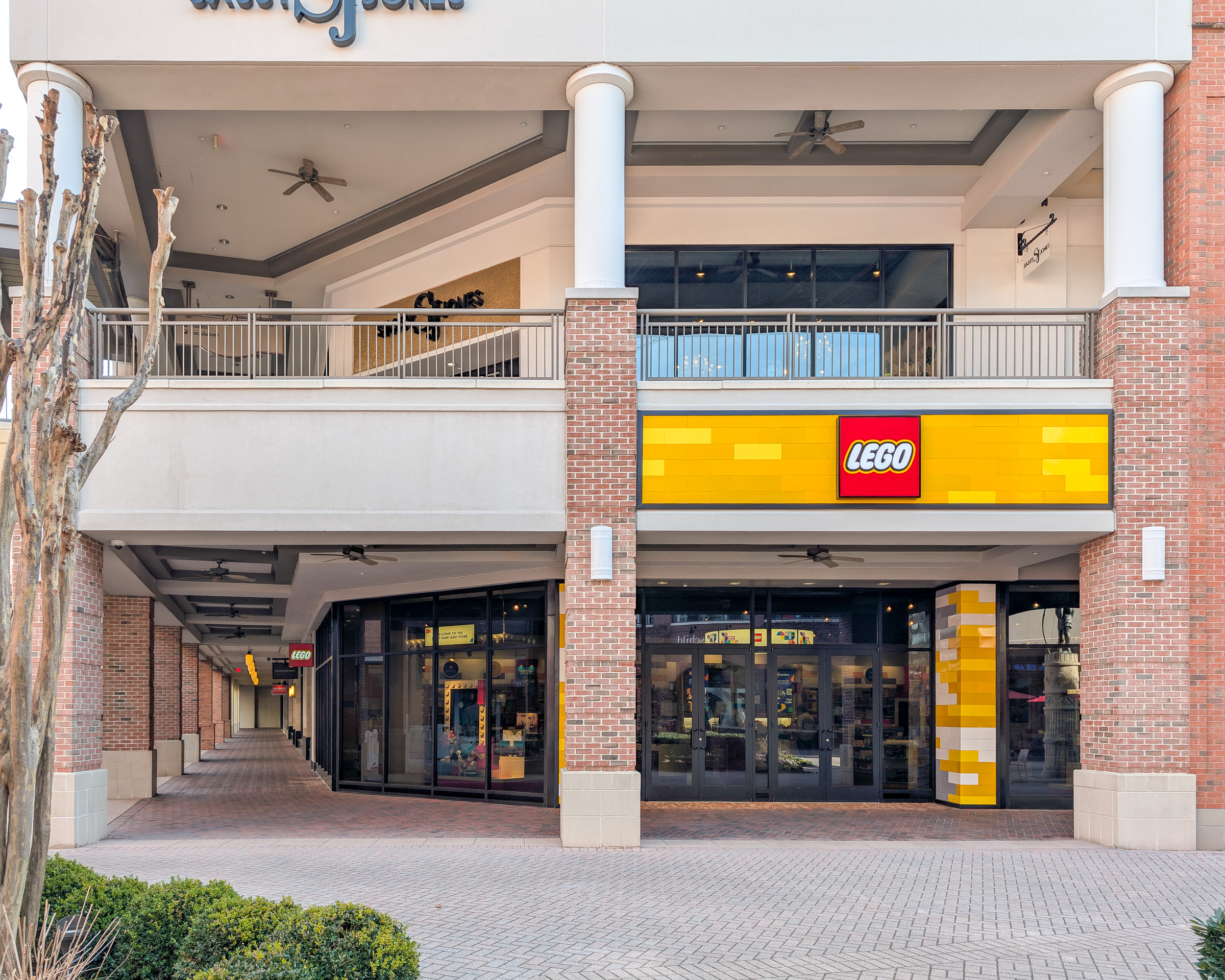
LEGO Store, Short Pump Town Center.
Because I hadn’t decided to write this article yet while visiting the store, I didn’t take any photos of the interior. I am happy to report that the interior design is significantly nicer than any of the three stores in the Seattle area, with a lot of nice oversized LEGO brick details on endcaps, shelving, around the register and on the walls. I had a nice conversation with one of the salespeople who moved from another city to help open this location, and he told me that the interior design was based on the latest corporate design guidelines, and I agree with his perspective that it is an above-average interior.
It’s also a physically large store, which I estimate is twice the footprint of the store I visit most frequently in Bellevue, Washington. It doesn’t have the unique local details found in flagship stores like the ones I’ve visited in Chicago, London, or New York, but it’s the nicest ‘normal’ store that I’ve seen. I am very curious if they add additional local details as the factory gets closer to completion. Let’s continue our tour of LEGO sites in the Richmond area…
LEGO Warehouse?
The third destination I want to highlight is the one that I know the least about. When my son and I went on an afternoon drive to try and visit the factory site, Google offered me a reasonable-sounding address for a location on the east side of the city: LEGO Manufacturing Richmond, 1600 Ruffin Mill Rd, Colonial Heights, VA 23834.
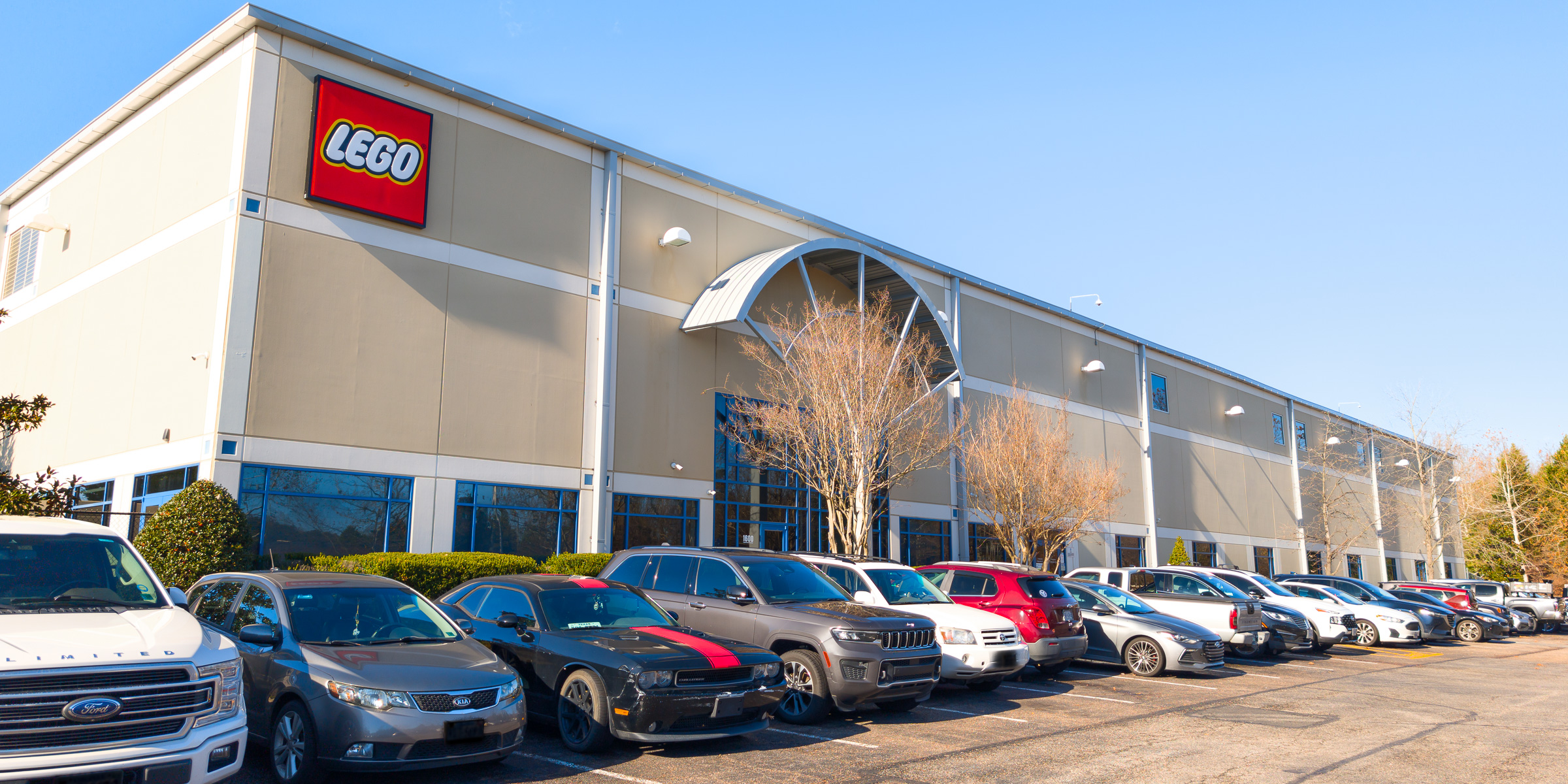
Big LEGO logo, lots of cars, no idea what’s going on…
It was immediately clear that it is not a brand-new, world-class factory site. Instead, I found what looks like an early-90’s light industrial and warehousing facility with multiple buildings, and only one of them had a LEGO logo on the side. Before trying to find where the actual factory is located, I drove around the perimeter and looked for clues.
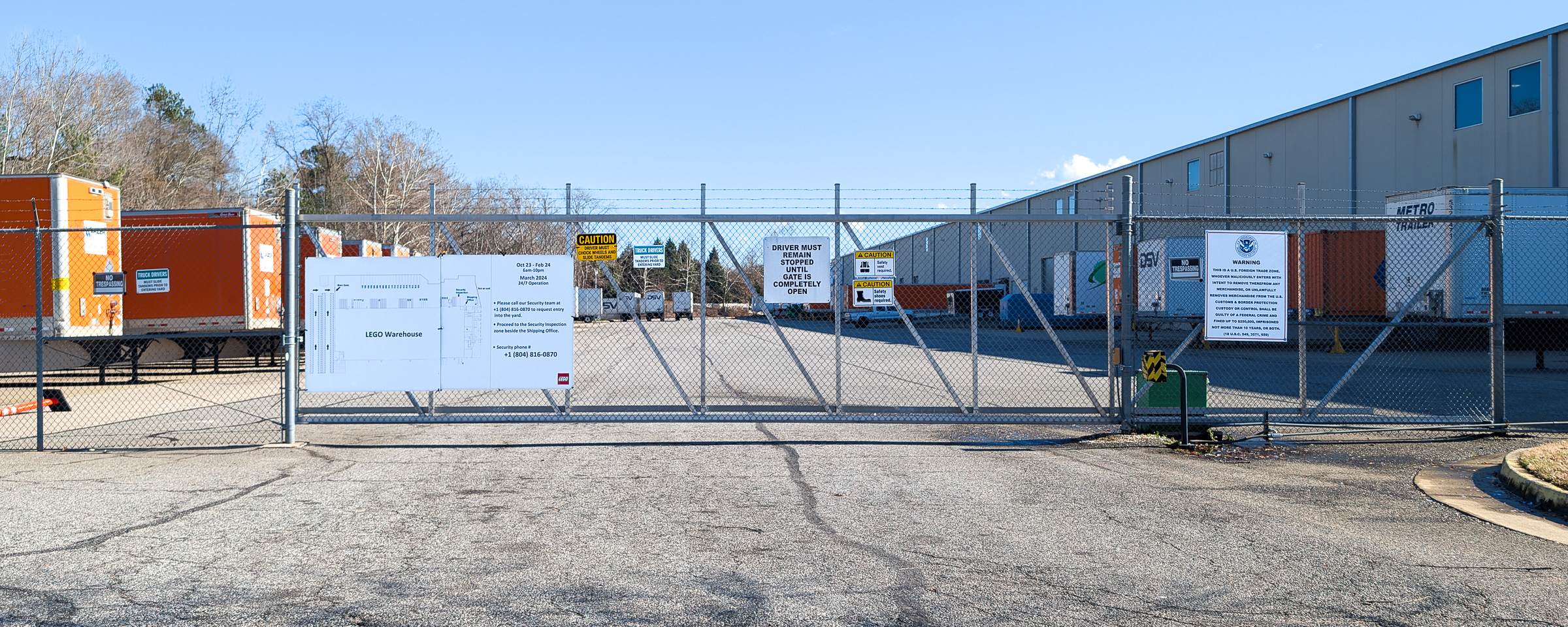
Lots of parking for tractor trailers around back…
Around back, I found the clearest evidence for this facility’s real purpose, a US Department of Homeland Security sign indicating that “This is a U.S. Foreign Trade Zone.” I was pretty sure I knew what this meant… A Foreign Trade Zone (or FTZ) is a location where importers can store imported goods before paying import tariffs. While I don’t know for certain, I suspect this facility is being used to defer duty payments on factory equipment being imported into the United States until that part of the factory is ready.
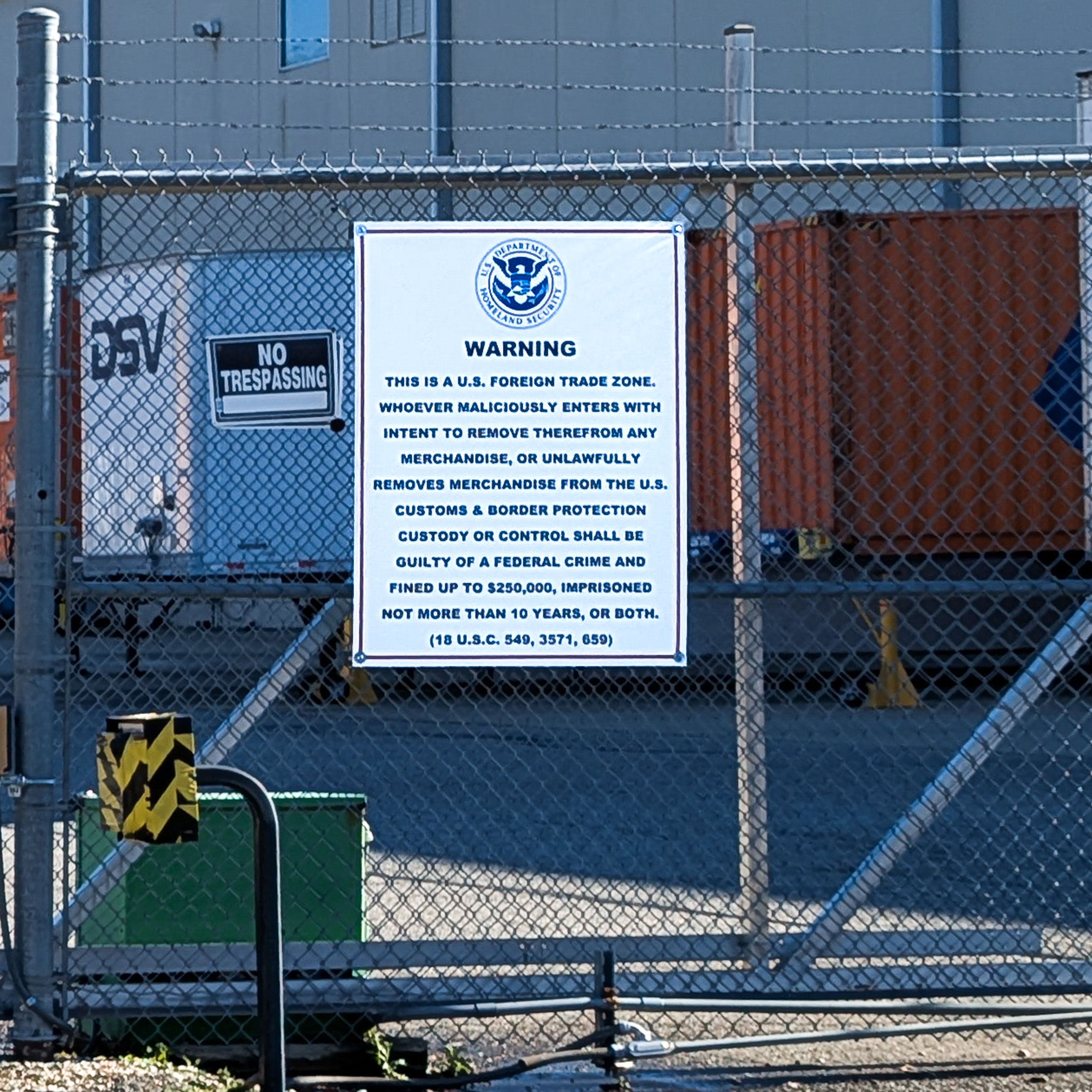
A clearer image of the Foreign Trade Zone signage.
While a Foreign Trade Zone is often used to manage duty payments, The Trump Administration’s obsession with tariffs could make an FTZ especially useful at this time. For example, The LEGO Group may be able carefully time duty payments to take advantage of gaps between different tariff policies. While it is pure speculation, I suspect this facility is playing a crucial role in managing risks associated with unpredictable import tariff policies.
The new LEGO Factory!
The most exciting news is the factory itself, which is well underway ahead of a 2027 opening date. The job site is in what’s called the Meadowville Technology Park, although the area is clearly early in its potential development with residential neighborhoods, some brand new apartment buildings, and a few other warehouses nearby including an Amazon fulfillment center.
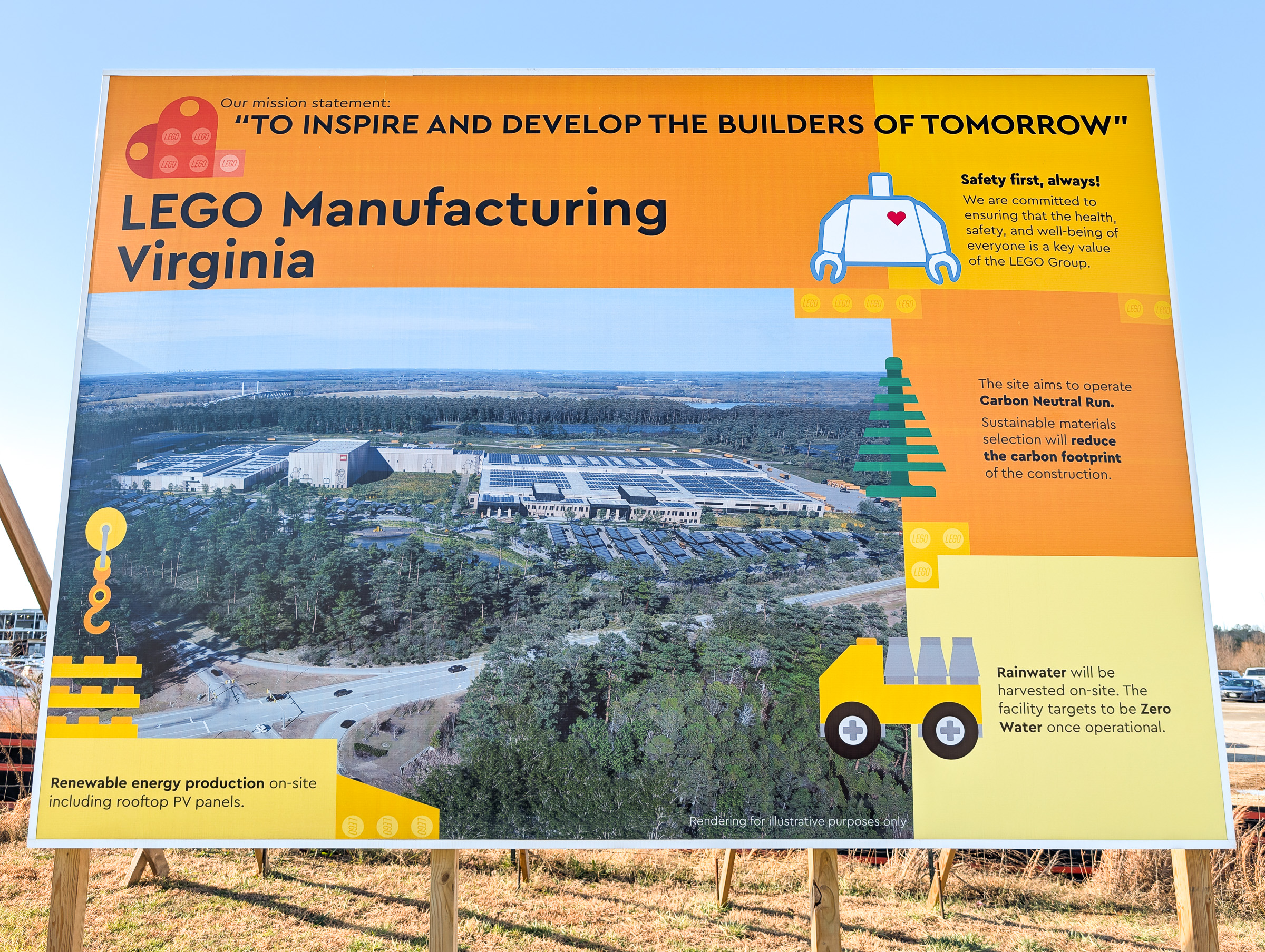
A large sign with lots of brick-inspired character is located on the left side of the construction entrance.
We visited midday on a December weekday, which meant that we could see signs of construction with heavy machinery moving equipment around the job site. The entire campus is surrounded by a fence, which meant that we could only see the progress from a distance. There isn’t any obvious guest parking areas, so we parked on a side street near the construction entrance at the roundabout intersection of Meadowville Road and Meadowville Technology Parkway.
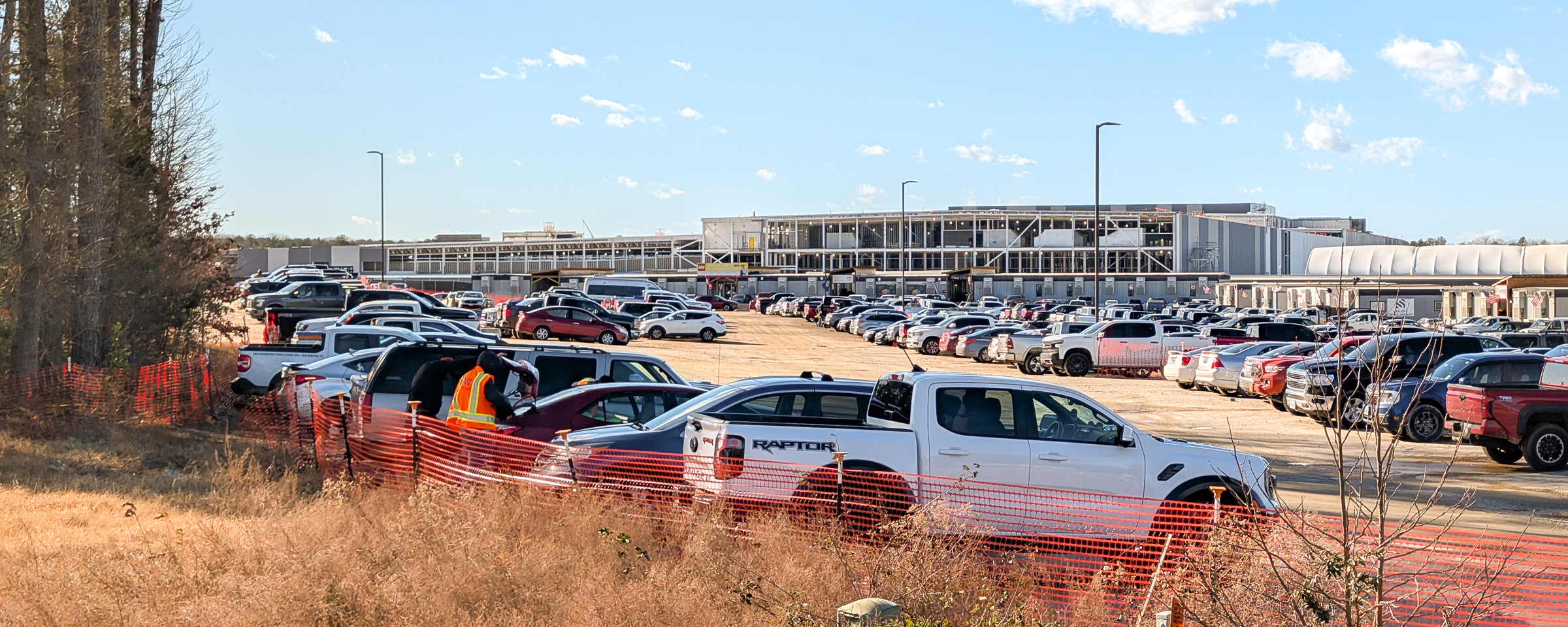
Looking west from the construction entrance, you can see the massive scope of the east-facing wall.
As my son and I walked clockwise around the south and west facing side of the campus, I was able to get a much better photo of the west-facing wall of the building. I would love to understand why the north side of the building is so much taller than the south-facing side.
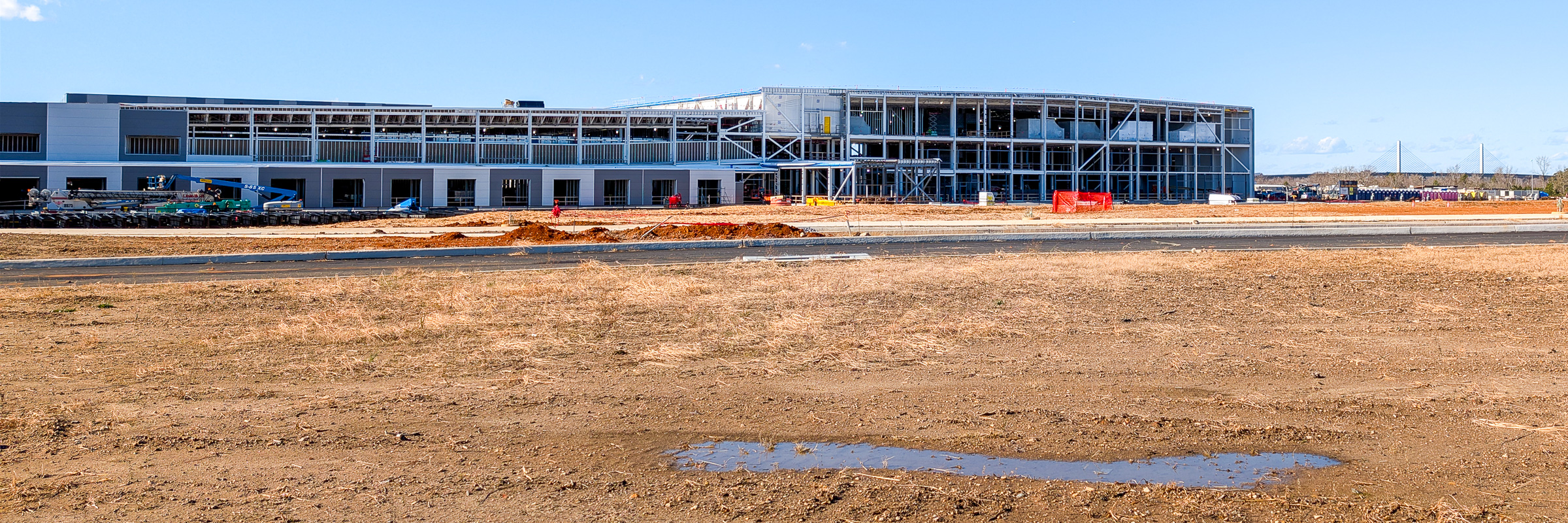
The east-facing wall of the factory with the Varina-Enon bridge behind it.
We encountered around ten different LEGO-themed billboards featuring minfigures, with most of them in construction-themed scenes. The signs have faded a lot, which makes sense since they are south-facing and they have likely been there for two or three years by now.
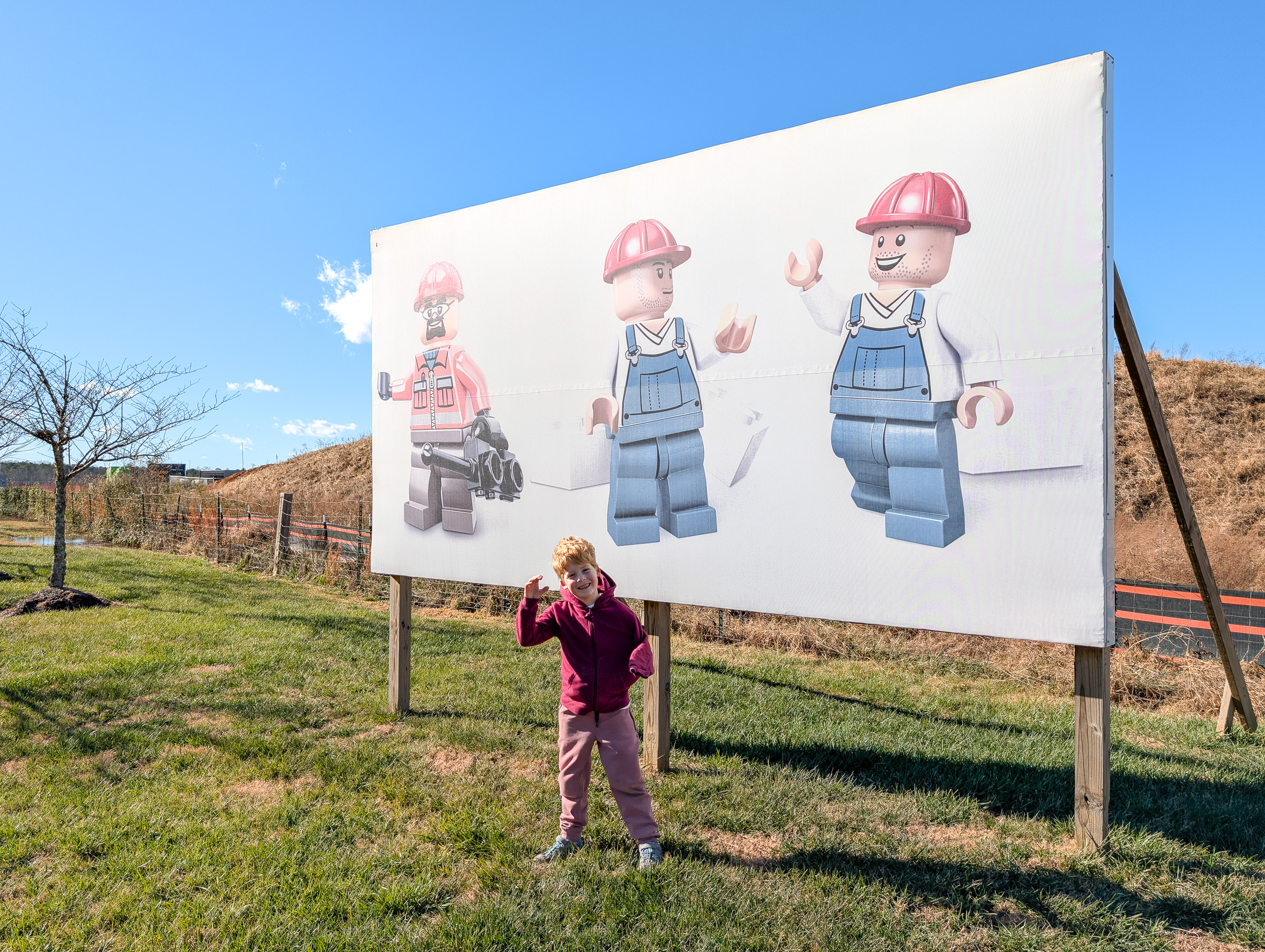
Minifigure-themed billboards surrounding the complex. (7-year old for scale.)
As we continued walking west, I quickly realized that the massive-looking building we saw across the parking lot is only a tiny part of an even larger complex. While I’ve tried to use personal photos to share a ground-level view of what you can see if you visit the worksite, I did want to include a couple of aerial photographs provided by meadowville.com to show the full scope of the complex. These photos are from July 2025, so the buildings are not as complete as when I visited in December.
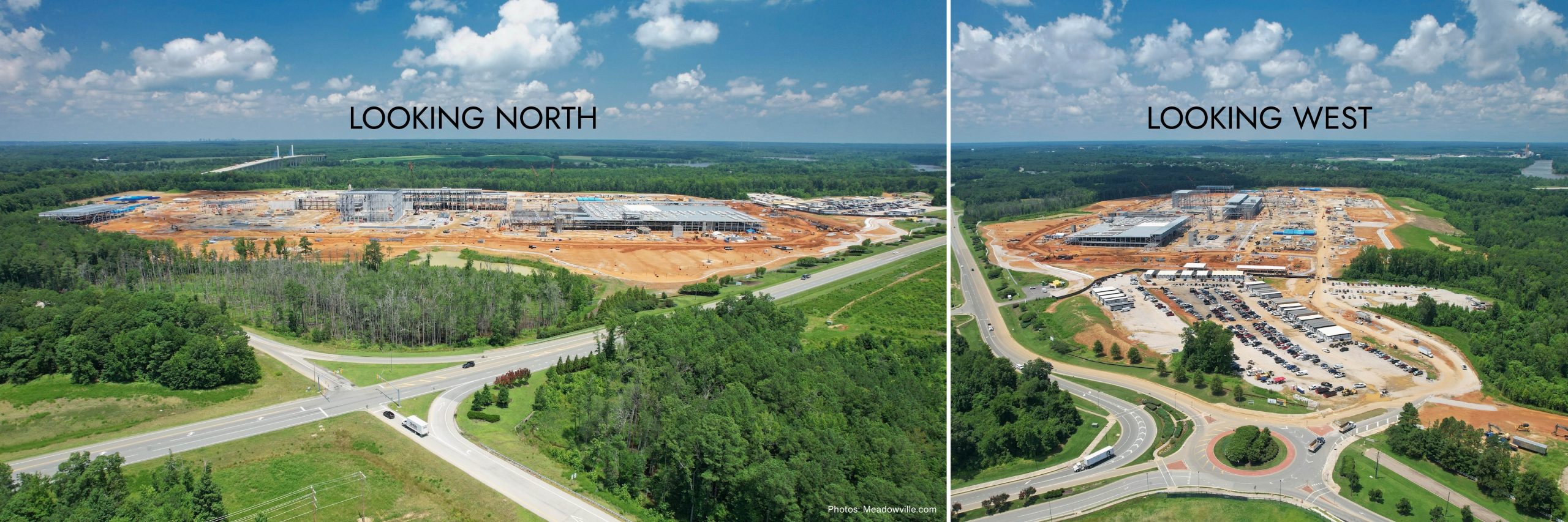
Aerial photos provide much-needed context for this massive job site. (Photos: Meadowville.com)
From ground level, you can’t see as much, but I wanted to share a few more photos from my explorations… You should be able to identify the perspective in the photo below using the aerial photos above.
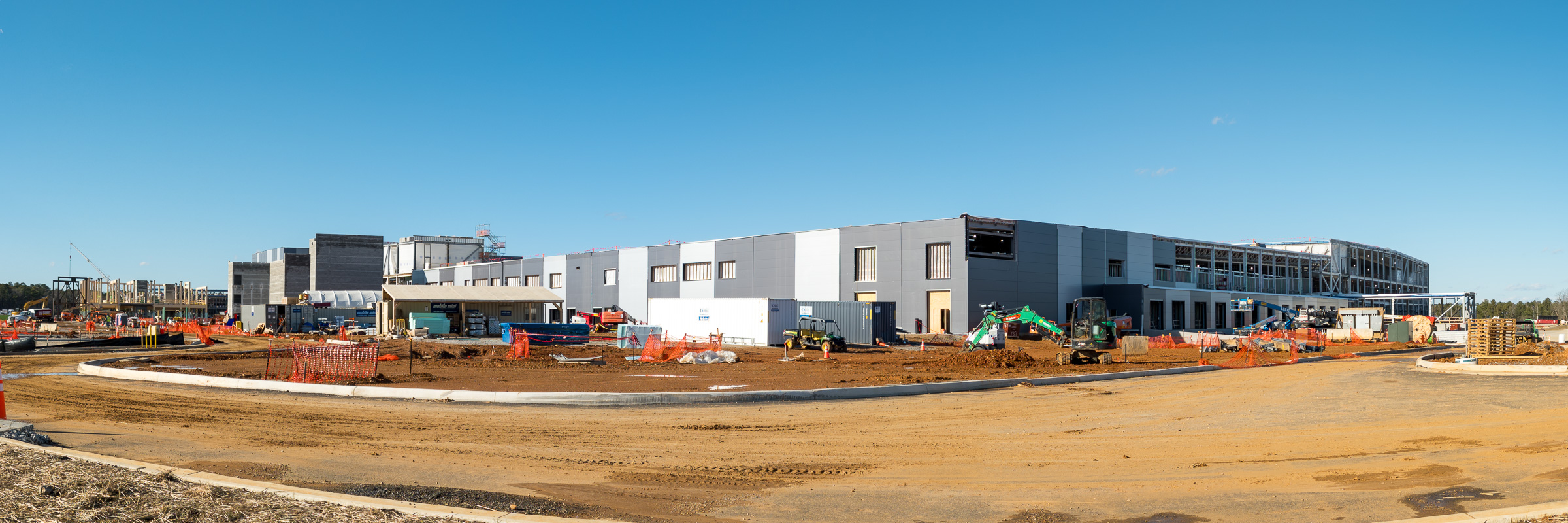
South-facing walls (left) and east-facing walls (right). (Panorama stitched from multiple photos)
We continued west as far as we could, but you can’t see much once you get close to the onramp for northbound I-295 due to a small hill between the fence and the factory. While I’ve included one more photo showing a glimpse of the roofline for the other large building on the West side of the jobsite, the aerial photos and renderings offer a better sense for how large that part of the building will be.
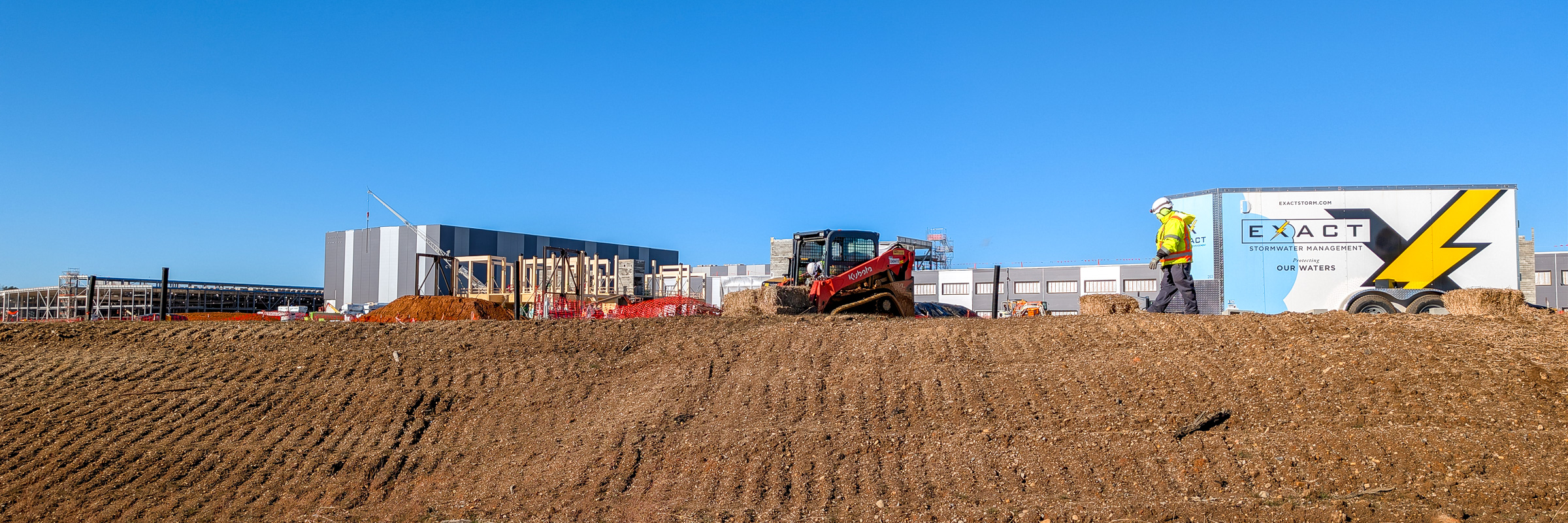
Looking north, you can see a glimpse of the westmost building on the left side of this photo.
If you do decide to take a similar tour of the job site, do not expect to see much more than I was able to show here, and be sure to wear waterproof boots because the grass can be muddy and it is not safe to walk along the side of the busy street.
Conclusion
I hope you have enjoyed this look at the What, Where, and Why of The LEGO Group’s recent investments in Richmond, Virginia. I enjoyed discovering four LEGO landmarks in the Richmond area, and am very eager to see the project’s completion in 2027. I am also hopeful that this will help The LEGO Group better serve the North American market.
If you are in the area, you can try a similar pilgrimage, but remember — the factory is an active job site and there isn’t much for you to see or do. My main takeaway from visiting it in person was an even greater appreciation for the sheer size of the factory they are building, which is poised to be one of the largest LEGO production factories in the world. While definitive measurements are hard to find, it looks like it will be larger than factories in Mexico and Hungary, and comparable to the new factory in Vietnam which just opened in 2025.
I’m surprised you didn’t mention the factory site’s visitor center: two connected shipping containers decorated like giant yellow Lego bricks. Has it been closed and removed?
Mark,
Correct, it was apparently removed some time ago.
Since that factory is in the northern hemisphere, one of the reasons that the northern wall is higher might be to do with the kind of weather it might exclude from perhaps a sheltered inner square?