
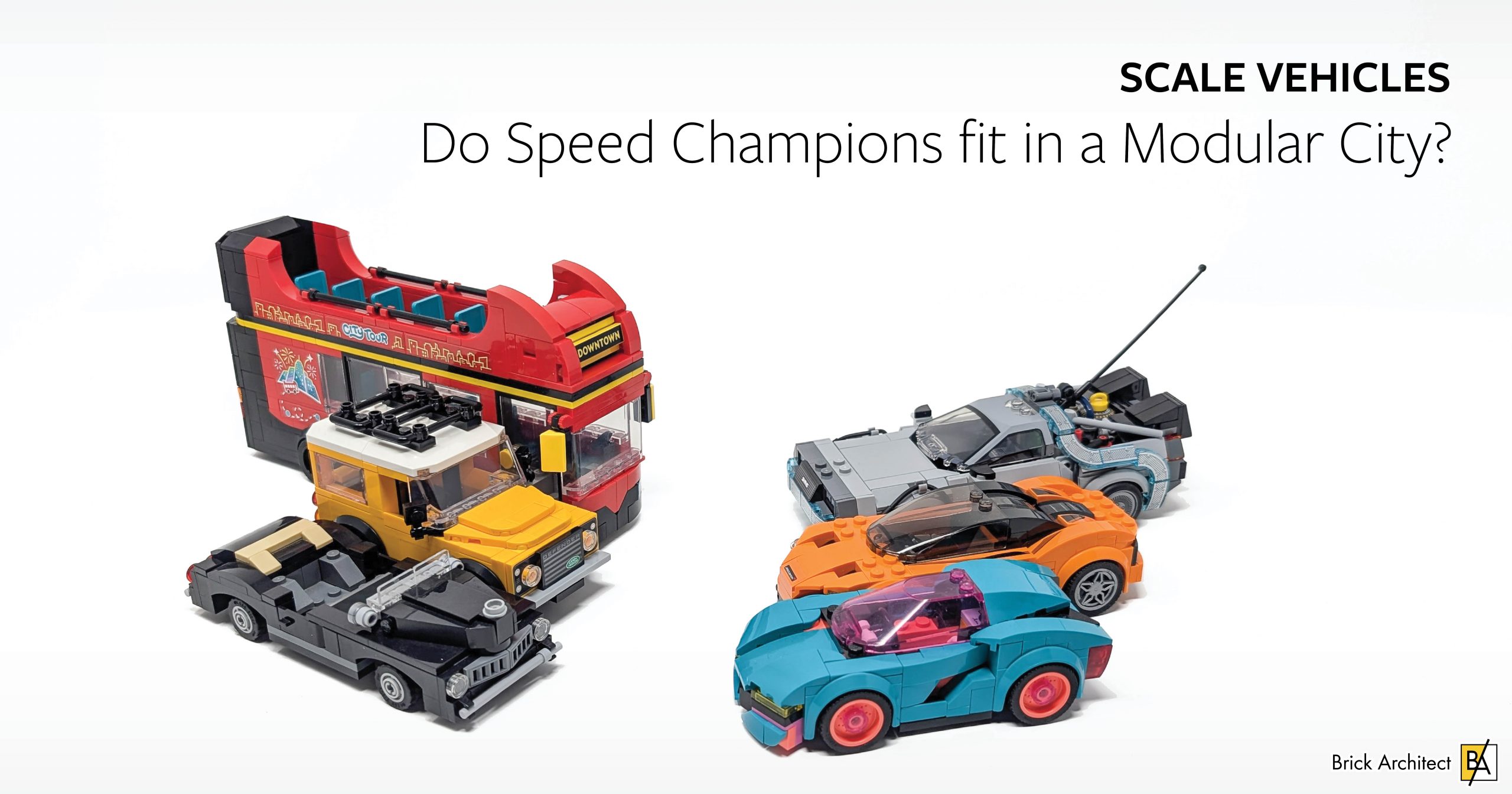
Right‑Sizing the Ride: Which LEGO vehicles fit in a Modular City?
LEGO vehicles set the tone of a city layout — but what actually fits in a Modular City, and are Speed Champions vehicles too big?

LEGO has been creating vehicles since the 1950s, starting with simple builds evolving into the detailed models we know today. Over the decades, vehicles have appeared in almost every shape, size and even color imaginable, making them a fascinating lens for understanding how scale works in the LEGO system.
When I got my hands on a copy of #77256 Speed Champions: Time Machine from Back to the Future, it sparked a new curiosity. When I finished putting together the model it made me wonder how different vehicles fit into the broader structure of a LEGO city. That question led me to dig through my own collection and pull out a wide range of cars and trucks from across several themes to compare them. In this article, we will take a fun dive into vehicle sizing and see how these models compare to the Modular Standard, to minifigure proportions, and even to real-life scale. By looking closely at these differences, we can better understand how vehicles shape the look and feel of a LEGO streetscape.
The history of LEGO Vehicles
LEGO has been producing vehicles for almost as long as it has been making bricks. The first true brick‑built cars appeared in 1963, a few years after the modern LEGO brick was introduced. Everything changed in 1962 when LEGO produced its first rubber tires, a small innovation that opened the door to more realistic cars and trucks. Those tiny wheels became so popular that LEGO has grown into the world’s largest tire manufacturer, producing more than 300 million miniature tires each year, far surpassing real companies like Michelin and Bridgestone. A fun fact about LEGO tires is that they are made using over one-third recycled materials such as old fishing nets, ropes, and engine oil. This new material is known as RSEBS or styrene-ethylene-butylene-styrene.
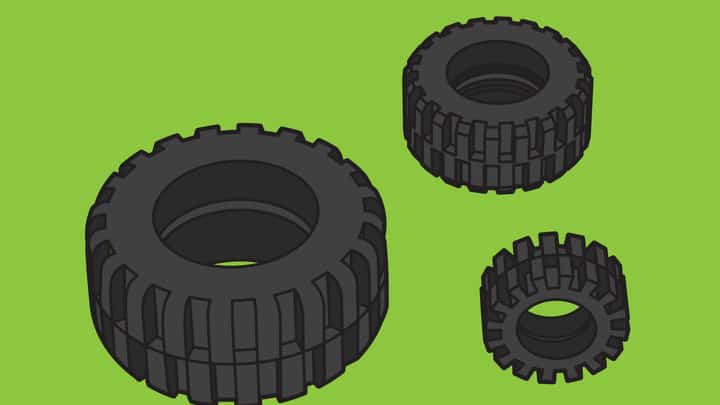
LEGO is the world’s largest tire manufacturer. (Source: LEGO)
As the LEGO themes grew in the 1970s and 1980s, vehicles became an essential part of the system. The presence of vehicles allowed for endless play and introduced more immersive elements into the playability following a build. Builders needed cars that could navigate streets and carry minifigures from one part of the city to another. LEGO Town, which evolved into LEGO City, released in the late 1970s cemented the idea that vehicles were crucial to LEGO’s design making it a core play element to the brand.
1977 for the first time saw a new line of sets released through “Expert Builder”, which eventually rebranded to the more commonly known Technic in 1982. Through use of gears, axles and pins, builders were able to create complex mechanical models. These sets appealed to older fans who enjoyed engineering challenges and a new lens to the LEGO product. In this article we will only be exploring System built LEGO vehicles and as such will not be diving into the Technic line.
Probably one of the biggest shifts in modern LEGO vehicles arrived in 2015 with the launch of Speed Champions, a theme that brought licensed cars from real manufacturers into an affordable, minifigure‑scale series of sets. These sets offered a new level of accuracy and detail, giving fans the chance to build recognizable vehicles from brands like Ferrari, McLaren, and Porsche. Speed Champions changed expectations for what a LEGO vehicle could look like, making it one of the most popular themes LEGO has in production.

Speed Champions was a game changer for LEGO vehicles. Introducing iconic cars at an affordable price. Source: LEGO.
The Vehicle Standard
Width and height are one of the most defining characteristics of a LEGO vehicle, and it has changed significantly over the years. Whether sized to fit one or more minifigures, lots of design considerations need to be taken into consideration when weighing detail versus practicality and realism when it comes to scale, tradeoffs that sometimes require us to suspend disbelief. Let’s have a look at how the vehicle standard has evolved over the years and how this has an effect on the sets.
Vehicle Width
For a long time LEGO cars were built at four studs wide, which allowed them to fit easily on narrow roads in a classic Town layouts. A scale that was cemented in the old road baseplates. These early cars usually seated a single minifigure, and the compact size was done with a playability focus in mind. As LEGO pieces got smaller and more complex and building techniques improved, expectations for detail increased. To meet these expectations six studs wide vehicles became the new standard. This extra space allowed for more shaping and realistic proportions, making them feel much closer to real cars.
When Speed Champions launched in 2015, the cars were six studs wide, which kept them compatible with most city layouts. Over time however, the designers wanted to capture more accurate proportions and finer details from real‑world vehicles. This led to the shift to eight‑wide models starting in 2020. The wider format opened the door to smoother curves, more accurate shaping, and interiors that could comfortably seat a minifigure without compromising the silhouette. It also created a stronger visual presence on the street, making these cars more popular with adult fans.
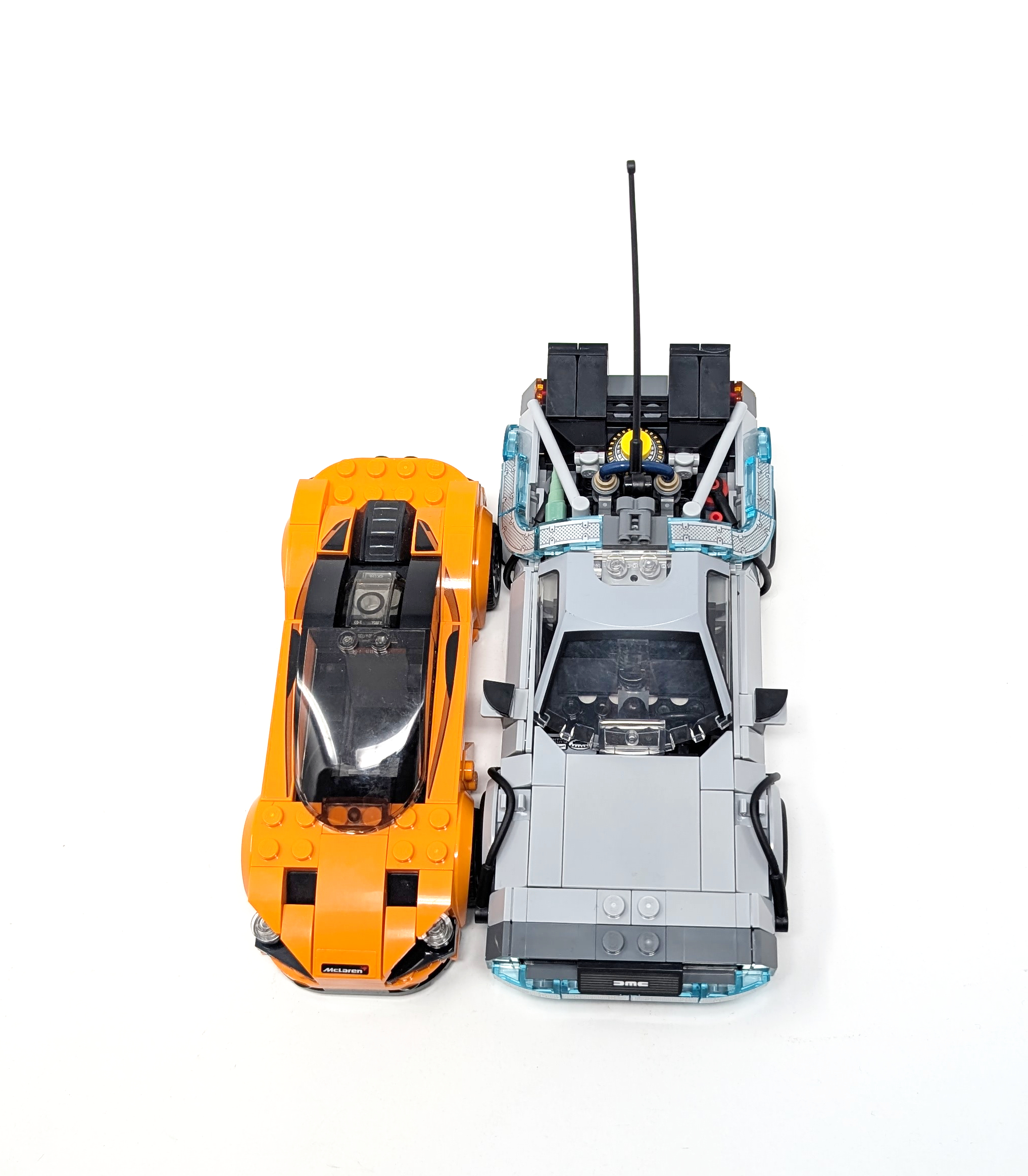
The new Speed Champions sets are 2-studs wider than the older ones.
When looking at width, it is important to note that the interior width of a LEGO vehicle is always narrower than its footprint, because you lose approximately one stud on each side for the walls and door details. In a six stud wide car, that usually leaves just enough room for a single minifigure to sit comfortably in the center, or two minifigures squeezed in with some compromises to arm movement or door thickness. By contrast, an eight stud wide vehicle typically has a five to six stud wide interior, which is enough space for two minifigures to sit side by side with proper seats and even a center console. When I compared some of the modern six and eight stud wide vehicles in my collection I saw this reinforced. That however doesn’t mean that every vehicle needs to be the modern Speed Champions wide, as sometimes the compactness of a vehicle gives it extra charm.
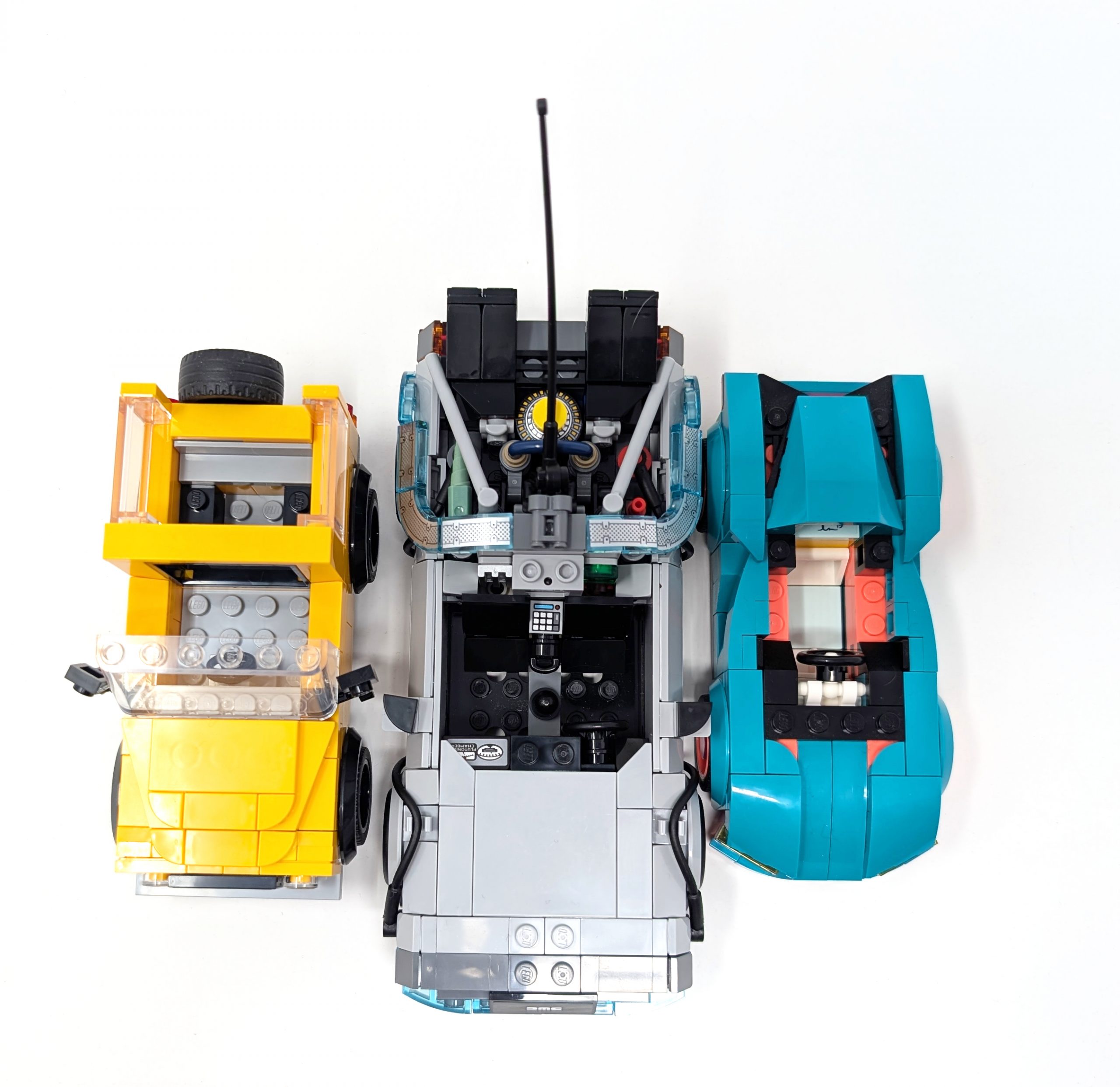
Modern LEGO vehicles come in a variety of scales.
Vehicle Height
A LEGO minifigure stands a little over four bricks tall, which we will use to roughly translate to the height of an average adult. In real life, a typical sedan is about 1.4 to 1.5 meters tall, which would place it well below a standing person. When you translate that LEGO that means most cars should sit somewhere around the shoulders or chest of a minifigure. In LEGO form however, achieving that proportion is difficult if not impossible. Wheel elements alone are usually two or three bricks tall, and once you add a floor, seats, and a roof, even the shortest LEGO cars end up noticeably taller than their real world counterparts. Many compact LEGO vehicles as a result are about thirty percent taller than they would be at true minifigure scale.
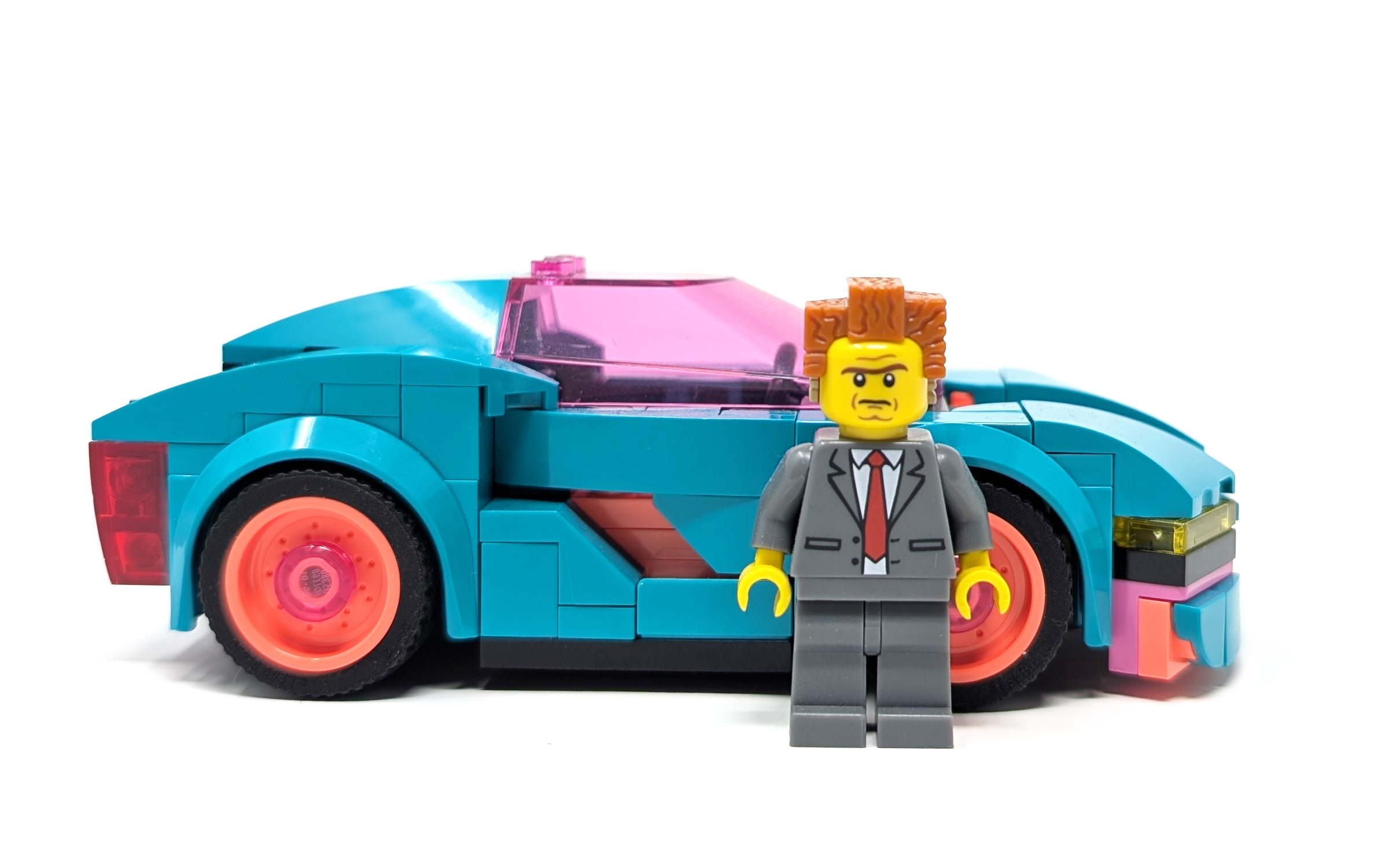
There are limitations to how short you can make a vehicle.
These limitations become even more visible in Speed Champions cars. When adding extra shaping and detail a consequence is that it often adds height. The result is a vehicle that looks fantastic on display but sits a little blockier and a little taller than a real car would at the same scale. Looking at #77256 Speed Champions: Time Machine from Back to the Future, the designers made several clever choices to keep the DeLorean as close to accurate as possible, but compromises were still necessary. As a result there is often a tradeoff between keeping a build as close to accurate scale versus adding even more details. One of the most unfortunate tradeoffs is noticeable with the lack of functional butterfly doors, which would have added even more height and complexity. It is a feature many fans, myself included, would have loved to see, but it simply did not fit within the constraints of the model.
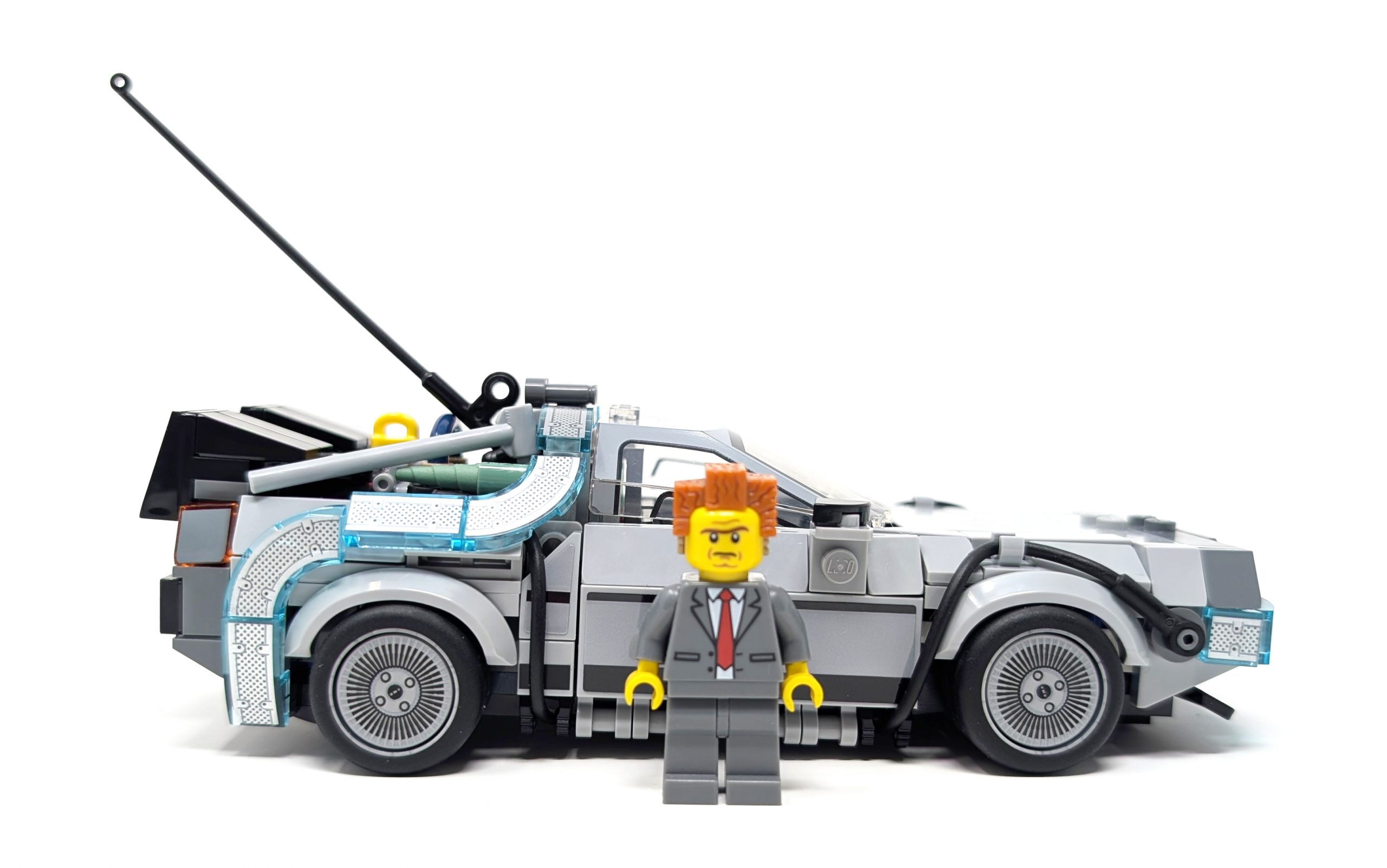
The DeLorean DMC-12 is not to scale.
Height becomes even more interesting when you look at larger non sedan sized vehicles. The LEGO Land Rover is a great example of how SUVs and off‑road vehicles can appear oversized when compared directly to real‑life proportions. At first glance, the model looks perfectly natural in a LEGO city, but when you start thinking about realistic scale, the height difference becomes obvious. This is a reminder that scale is flexible in LEGO form, and that a vehicle can look right even if it is not strictly accurate.
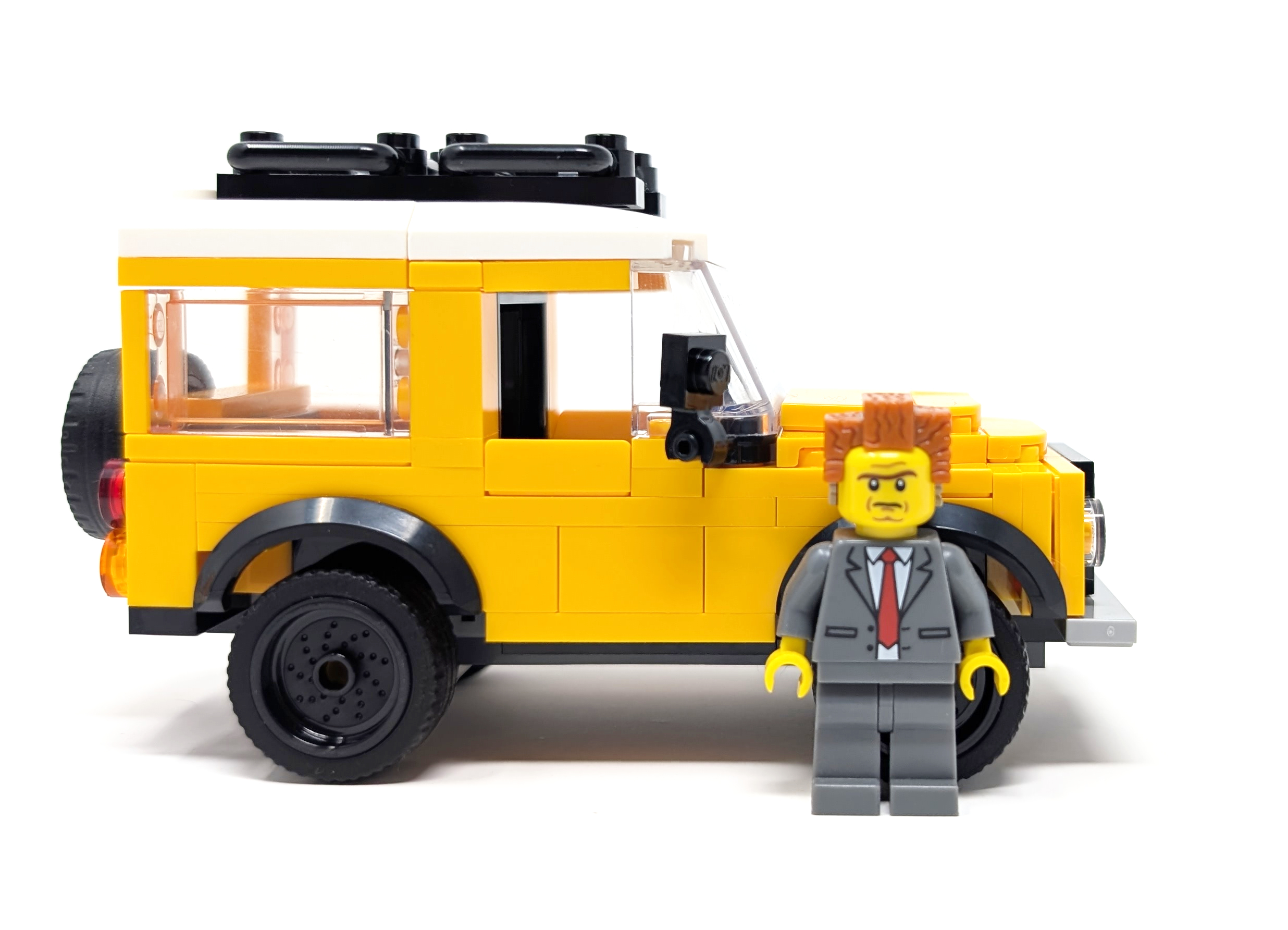
Even if scale is poor, some heights work.
The double decker sightseeing bus is a better example of a tall vehicle that fits within LEGO and realistic scale. A real double decker bus is taller than a single story, and the LEGO version captures that presence in a way that feels correct. It shows how larger vehicles can work extremely well in brick form. When looking at the double decker bus, for me it highlighted how the LEGO City theme continues to offer some of the best variety when it comes to interesting vehicles, expanding beyond just the typical Police vehicles or Firetrucks.
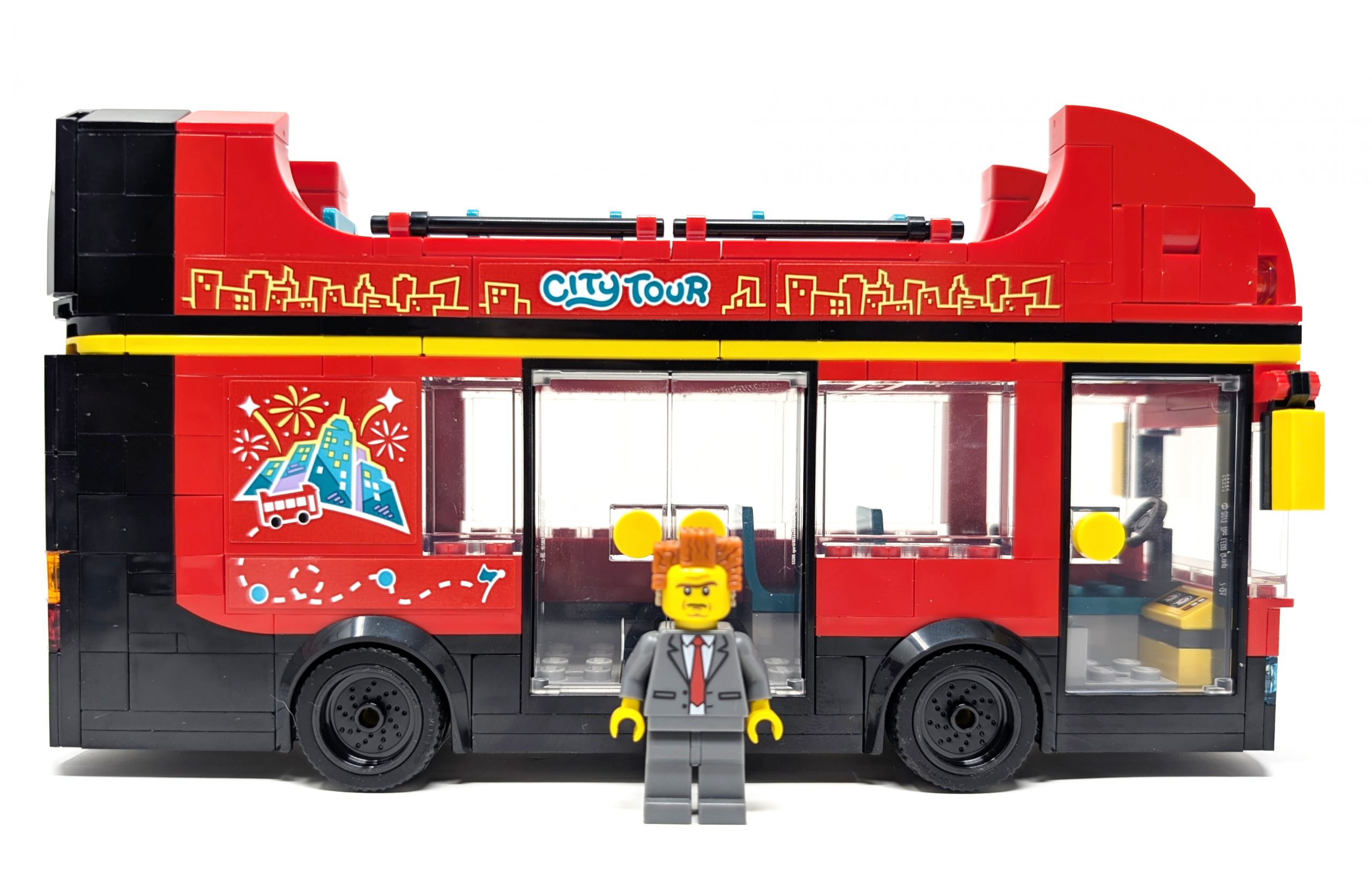
The double decker bus might be the best scale vehicle.
As we look at just some of the different sized vehicles LEGO has on offer, these examples show that height does not need to be perfect to work. LEGO vehicles rely on tradeoffs, and designers must balance accuracy, playability, and the limitations of the parts available. At the end of the day LEGO is meant to be a toy not a scale replica. As long as you stay conscious of height and make thoughtful choices, you can achieve the level of detail you want while still creating vehicles that feel right in a LEGO world, something the designers have continued to do.
Outrageous sizing
While some vehicles are great with sizing, even giving a pass for some unrealistic scale, others are intentionally outrageous to allow for better play. Take the motorbike from #71857 Ninja Vehicle Tree House Battle for example. This vehicle is multiple times larger than a minifigure and looks ridiculous when placed in the Modular scale. While I am not a fan of this vehicle, something anyone who has read my article on the topic in the Review: 2026 Ninjago Mega Review article I did can attest to, I do know that there is a place for this scale of vehicles in the LEGO vehicle lineup, and to many it is ridiculous in an endearing way.
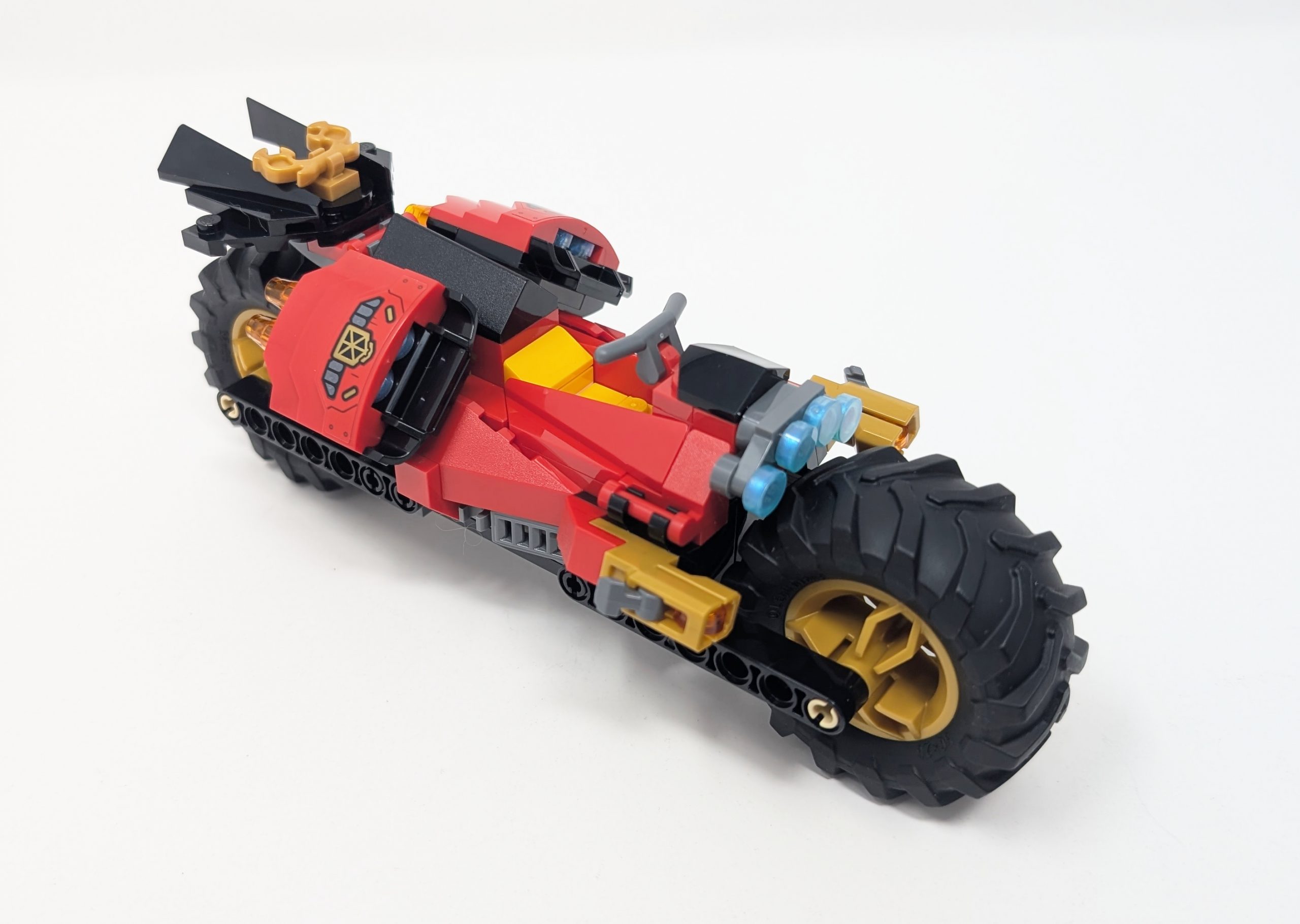
The motorbike is huge!
What is the Modular Standard?
The Modular Standard is the building standard that grew out of the LEGO Modular Buildings series first released in April 2007. Buildings that follow the Modular Standard follow a consistent scale for doors, windows, and floor heights, aligning them to minifigure scale. Each building connects cleanly to the next, creating a consistent continuous streetscape. Even though the Modular Standard is focused on architecture, it plays an important role when thinking about vehicles. Placing a car or truck next to a Modular building instantly reveals how that vehicle is scaled in a city environment. A model that feels oversized on its own may look perfectly natural once it is parked at the curb, while a smaller vehicle might suddenly seem too compact. Using the Modular Standard as a backdrop helps us understand how vehicles fit into a larger scene and how scale choices affect the overall look of a layout. LEGO vehicle scale is often aligned to the Modular Standard scale rather than its real life scale.
For those interested in diving deeper, a analysis on the Modular Standard and how you can build your own creations to this scale can be found in my article Getting Started: MOC’ing the LEGO Modular Building Standard.
Vehicles and the Modular Standard
The height, width and scale of vehicles play a big role in how they fit within the Modular Standard. Most LEGO vehicles are designed with this scale in mind, which means that even if a model looks oversized or undersized compared to its real‑life counterpart, it often fits perfectly once placed next to a Modular building. Six stud wide vehicles have long been the typical standard for city layouts, and because of that, garages and road widths in Modular scale builds are designed around that size. As a result the newer Speed Champions models, which are eight studs wide, do not fit into these spaces without modification.
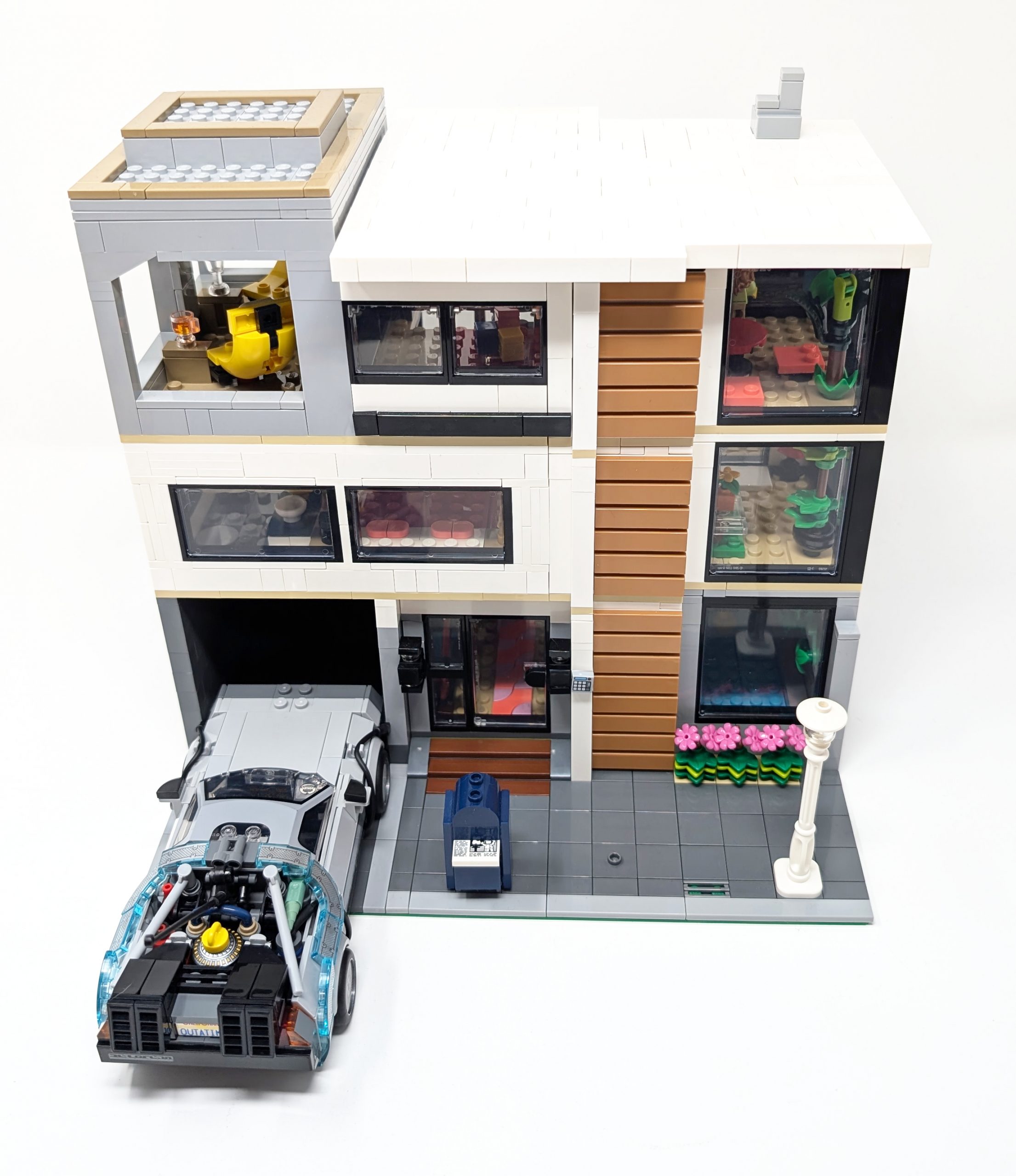
Speed Champions sets do not follow the traditional 6 stud wide vehicle standard.
Some vehicles that may have felt too oversized as a standalone look like a better fit once they are placed in a Modular scene. The Land Rover is a great example of this. When viewed by itself it looked too tall compared to a minifigure, but once it is parked beside a Modular building, the proportions allow it to fit in place. This is a good reminder that LEGO scale is not always perfect and that a little suspension of disbelief goes a long way to add fun.
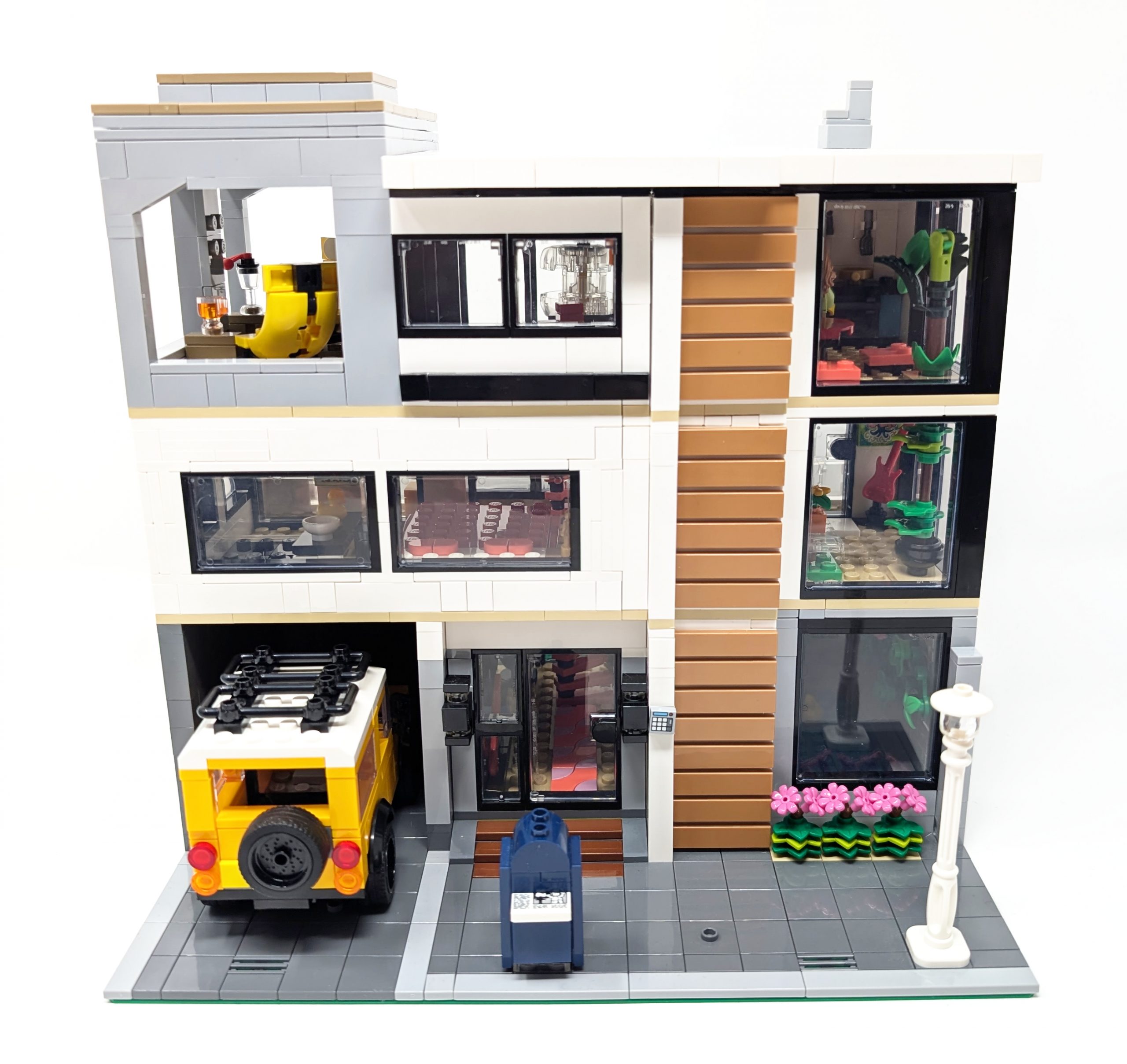
The Land Rover fits perfectly into the height of the Modular Standard.
The Modular Standard’s first floor height typically ranges from nine to eleven bricks tall. While not practical and downright silly, in theory, you could stack two of the shortest LEGO cars on top of each other inside a garage. It is obviously not something you would ever do with real vehicles, but it highlights how the exaggerated scale of LEGO builds can create plenty of room for fun play.
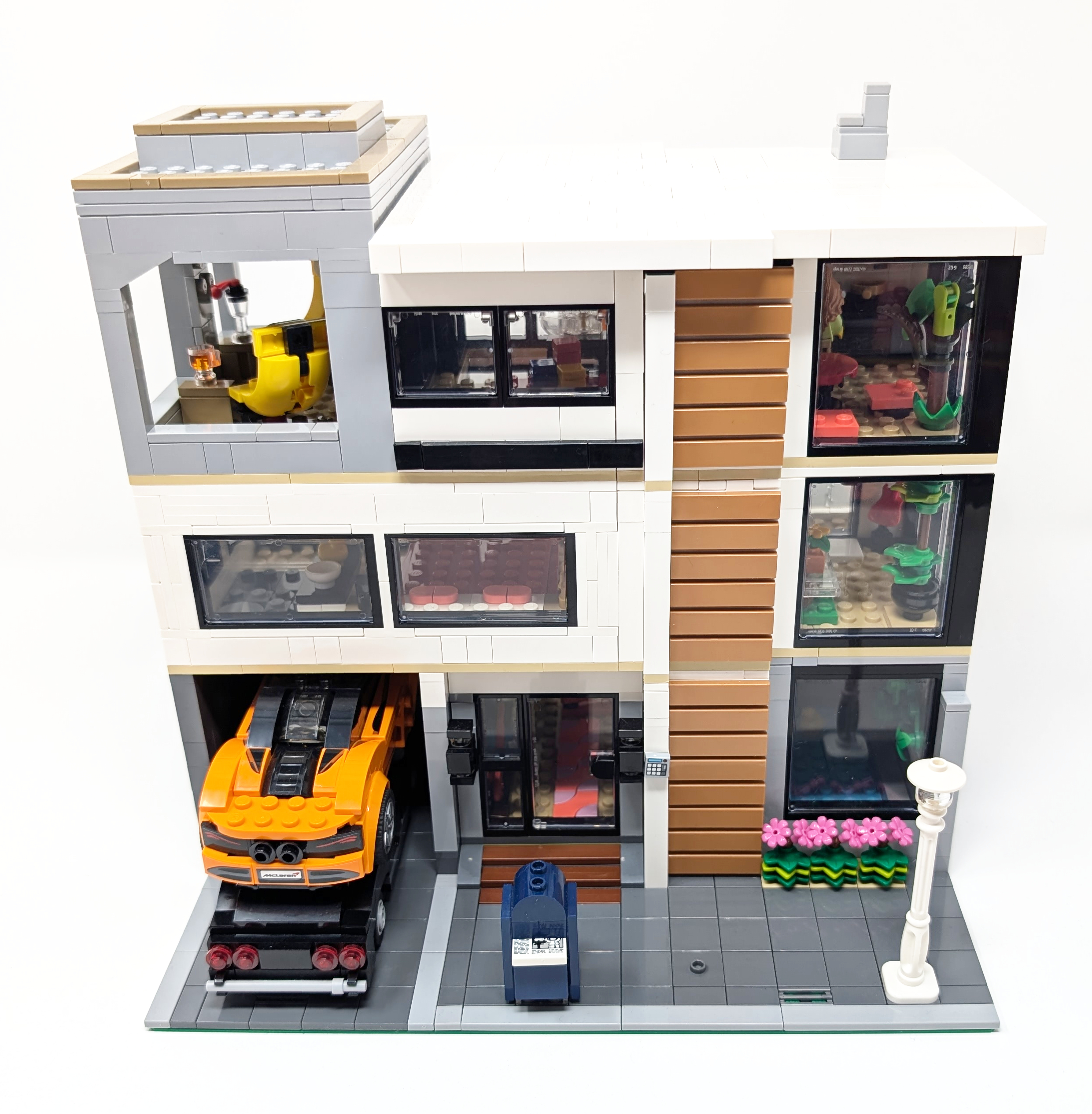
While not realistic, you can stack smaller vehicles to make them fit as well!
All of these examples show that LEGO vehicles are often designed to fit the Modular Standard rather than real life scale. The proportions may not be realistic when compared to actual car sizes, but within a LEGO city fits seamlessly.
Vehicles and roads
For cars to exist there need to be roads and 60304: Road Plates is a perfect way to incorporate roads into your build in a modular manner. These road plates are the next phase of the traditional LEGO road baseplates, only providing improved functionality as you can incporate accessories to enhance these plates. To not repeat too much about these road plates you can read my deep dive into the new road plates in my article Getting Started: MOC’ing the LEGO Modular Building Standard.
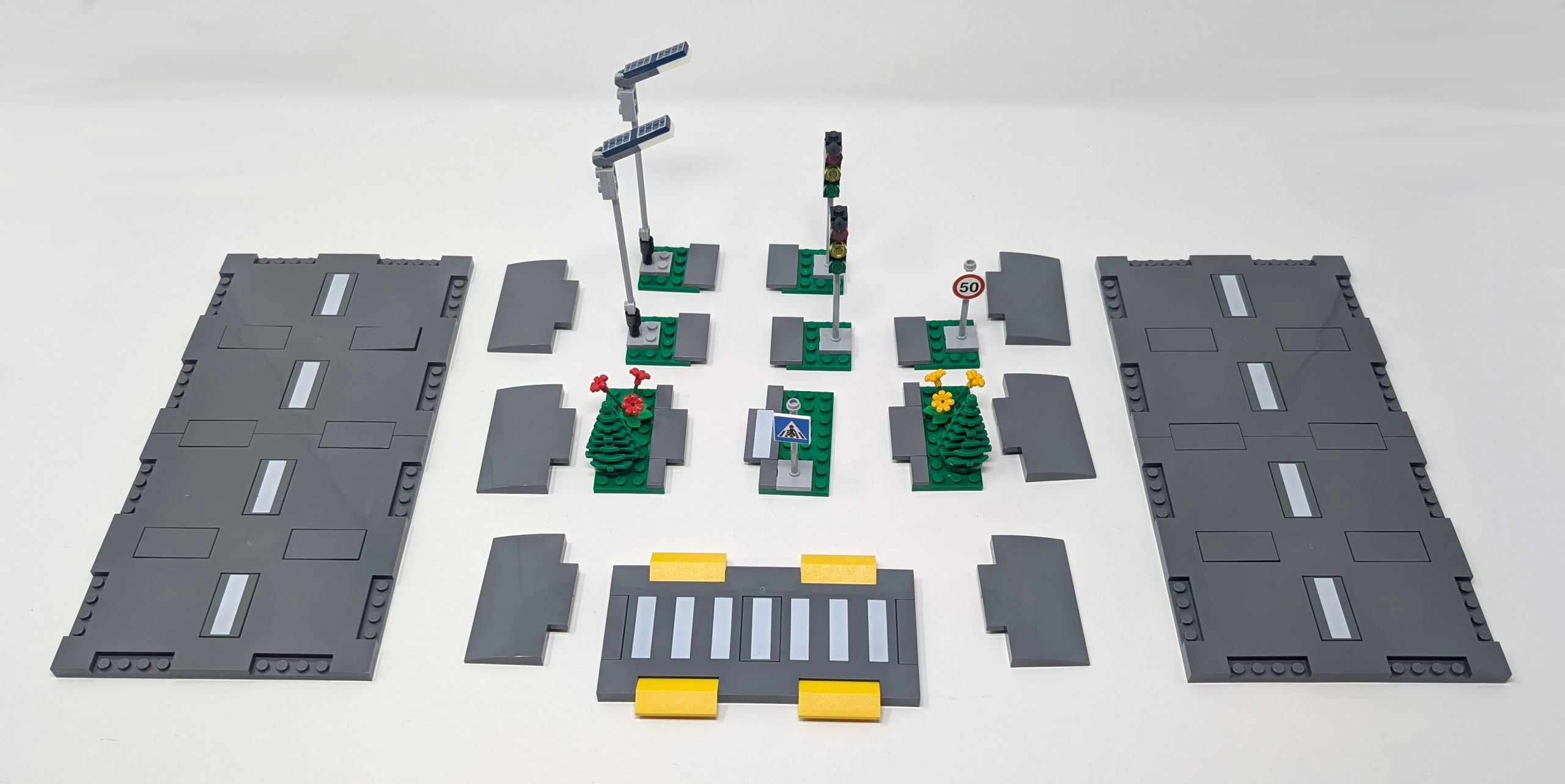
The modular nature of the roads allows you to easily add custom road details to your build.
Roads in the LEGO system have always been designed around six stud wide vehicles. This was true for the classic printed baseplates and remains true for the newer Modular road plates. A six stud wide car fits neatly within a lane, leaving just enough space for curbs, sidewalks and occasional street detail. The proportions are built to Modular scale and feels natural in a minifigure scale city. A major reason why this width has remained the gold standard for so long.
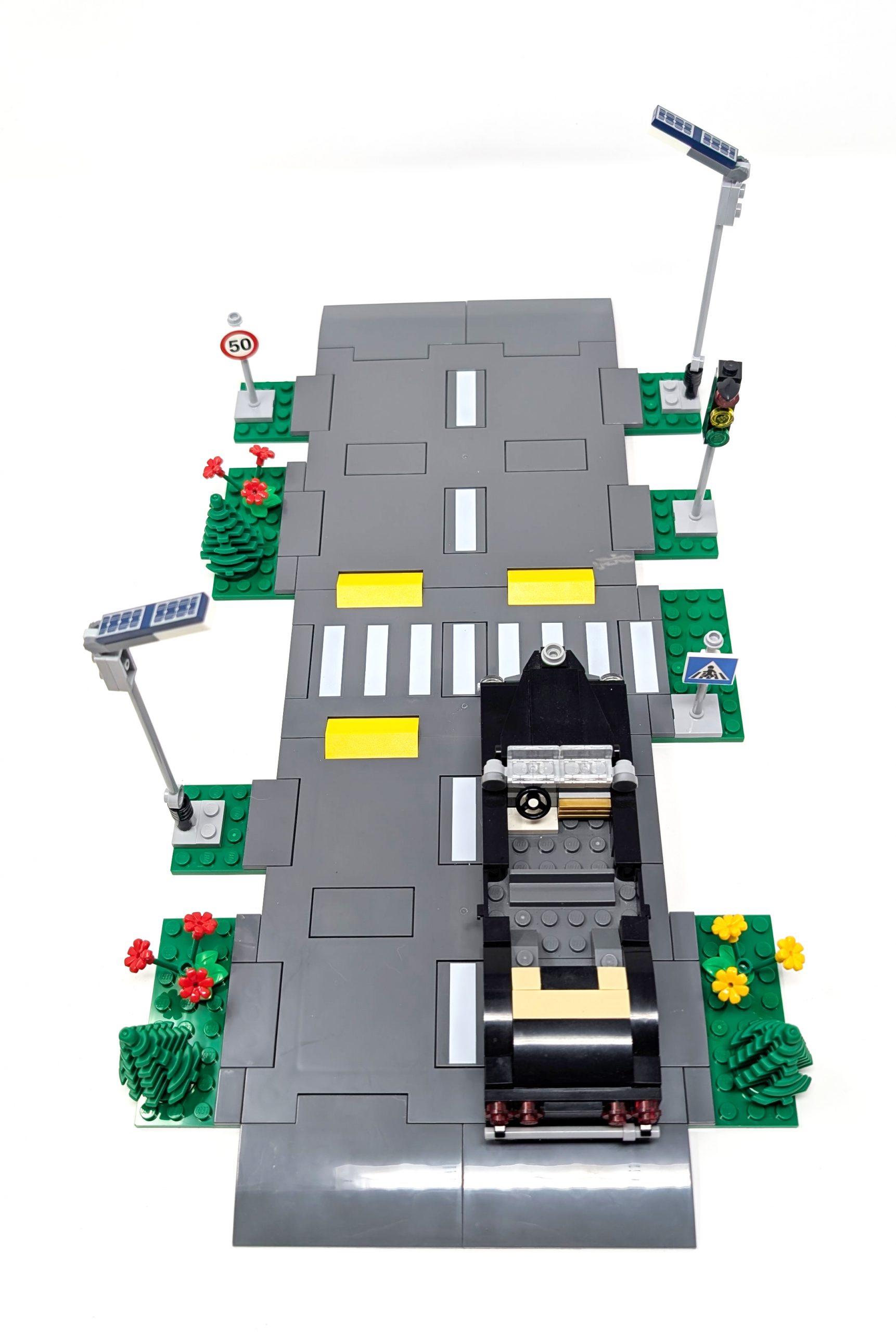
Road plates are designed for 6 stud wide cars.
The road plates allow two six stud wide cars to comfortably pass each other on a standard road plate, even offering a little extra room to spare. You can use that leftover space to add a bike lane or a narrow shoulder to add further details. Even large vehicles can easily pass as long as they remain within the desired width.
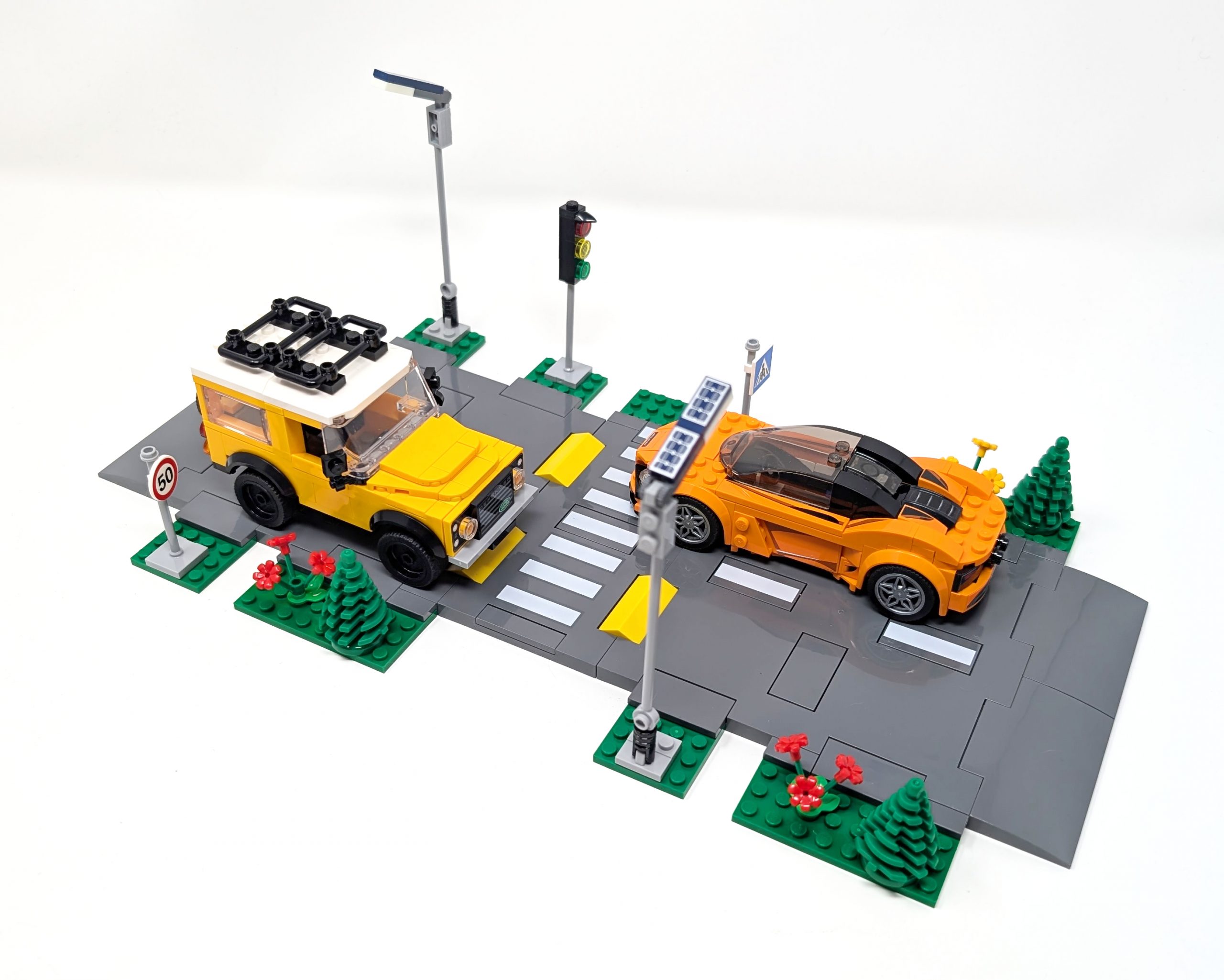
There is enough room for two cars to fit side by side.
Unfortunately things change once you introduce the new eight stud wide Speed Champions cars. Their extra width, while allowing for great detailing, makes them difficult to place on road plates. They tend to spill across lane markings, much like how a real world oversized truck trying to squeeze down a narrow street would. This kills some of the immersion and scale when these cars are placed on the road. To get around this you can expand the roads to be slightly wider using tiles giving the cars the room they need on the road.
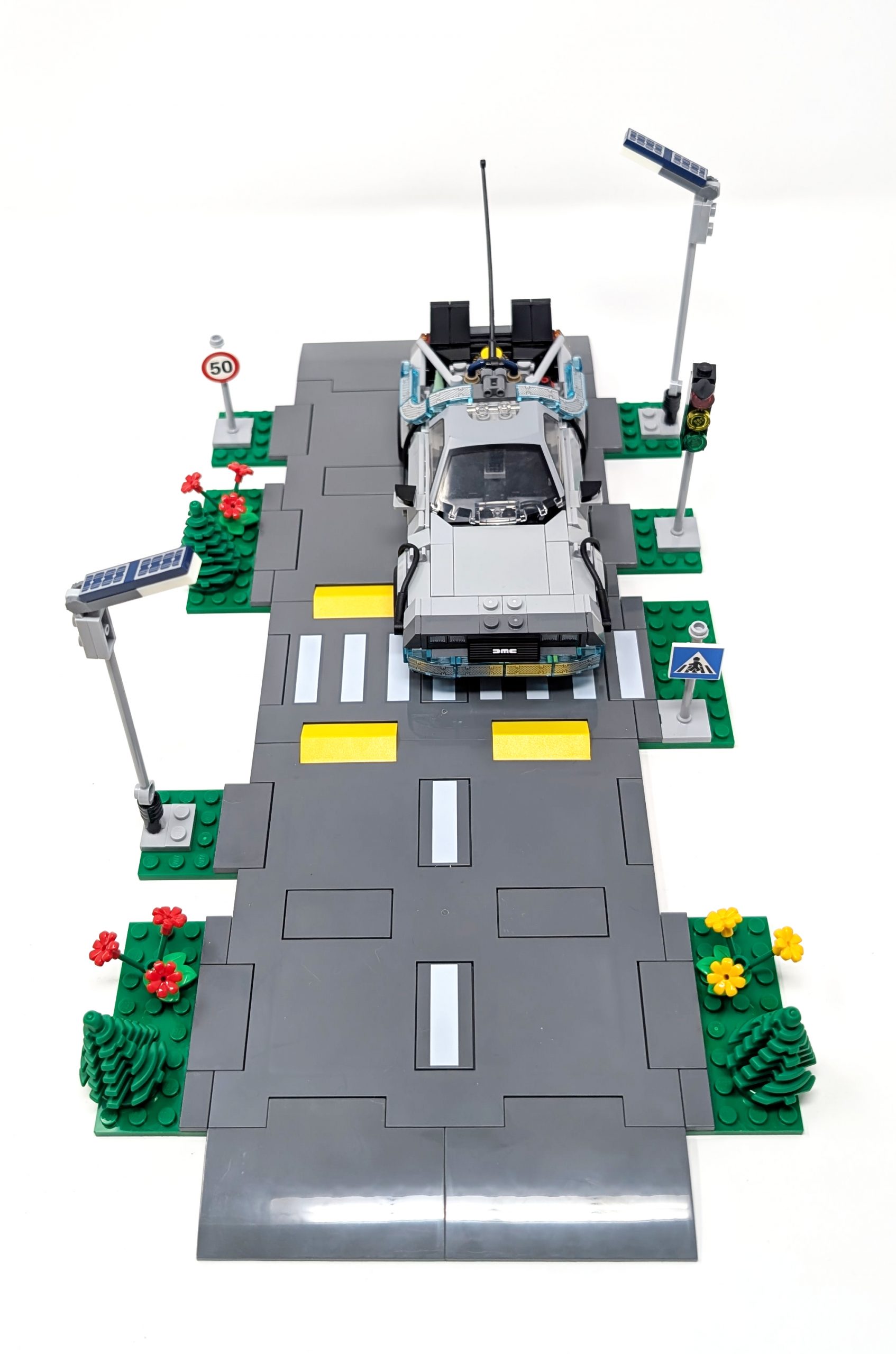
The new Speed Champions cars are too wide.
While six stud wide vehicles could pass each other with ease, the difficulty with eight stud wide cars becomes even more noticeable when two vehicles meet. If a Speed Champions car is on the road, there simply is not enough room for another car to pass it, not even a narrower six stud wide car. As eight stud wide vehicles become more popular I can see LEGO introducing wider roads in the not to distant future.
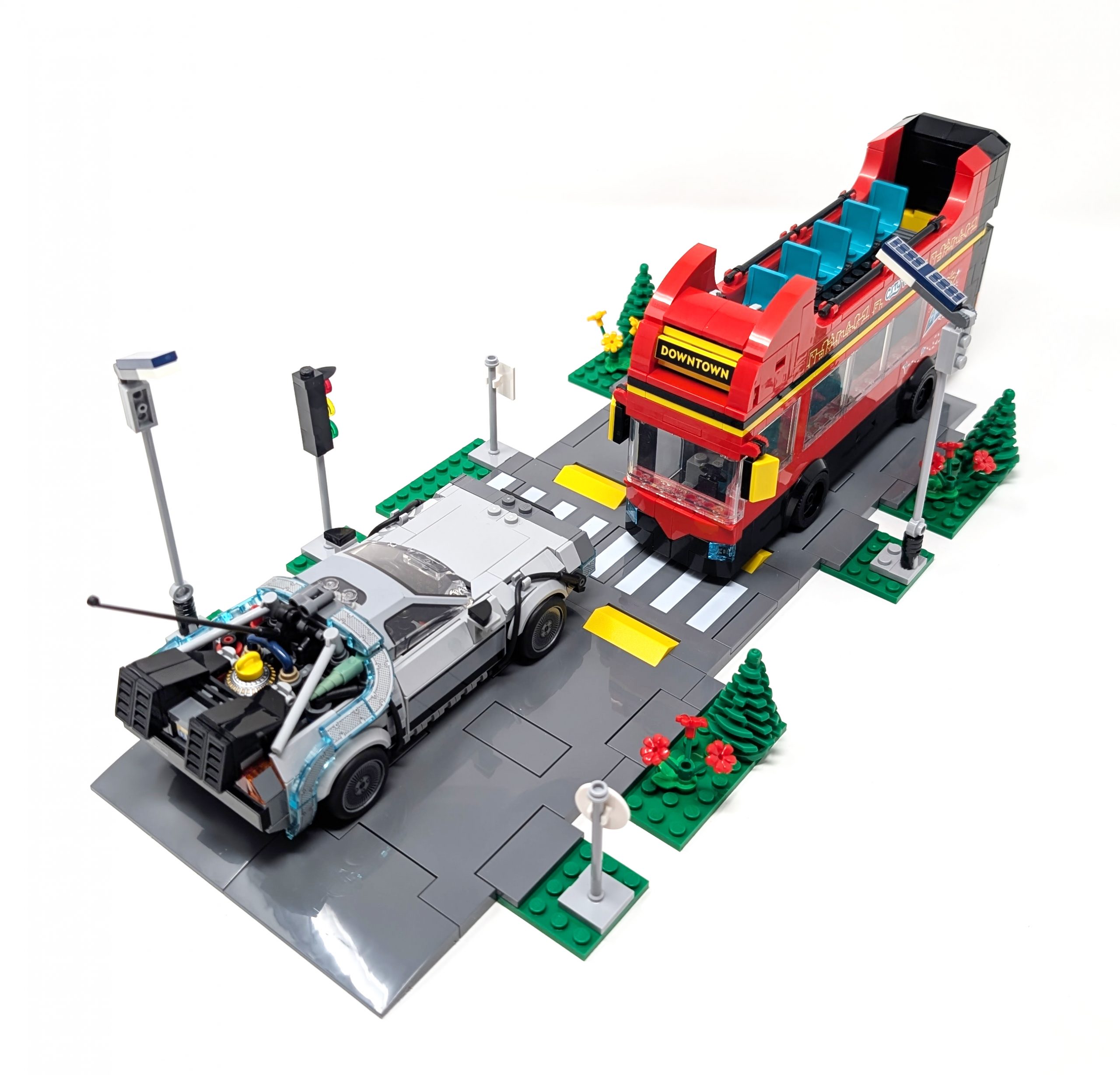
The oversized cars are an accident waiting to happen.
Despite the inconsistencies caused by the varying widths of the vehicles, because road plates are highly modular, you can adjust their width as needed to support any vehicle scale. Whether you prefer compact six stud wide cars or the detailed presence of eight stud wide Speed Champions models, the system gives you the flexibility to build the streets you want. It is worth remembering that in the Modular Standard most LEGO city elements are designed around the six stud wide vehicle standard, which is why that scale continues to look the most natural in a typical street layout.
Pop culture and vehicles
Pop culture has always had a strong influence on LEGO vehicles. With the existence of Speed Champions, LEGO has found an accessible way to bring iconic cars from movies, games, and real manufacturers into their collections. While many pop culture builds appear in the LEGO Ideas theme, those sets often focus on full scenes or large display models and can be more expensive. If you only care about vehicles, Speed Champions offers something different, providing a chance to collect detailed, recognizable vehicles on their own, without needing to buy an entire diorama.
The Time Machine from #77256 Speed Champions: Time Machine from Back to the Future is a perfect example of how well Speed Champions captures an iconic vehicle at minifigure scale. The model aligns closely with the real car’s proportions and uses a smart mix of pieces and stickers to recreate the details that make the DeLorean DMC-12 iconic and recognizable.
With 357 pieces and a price of $27.99/£22.99/€27.99, #77256 Speed Champions: Time Machine from Back to the Future offers an impressive price per part of 7.8c/6.4p/7.8c, which is a pleasant surprise for a licensed set. It is no wonder that this model has been on backorder since release. It may be one of the most detailed LEGO vehicle sets I have seen at this scale!
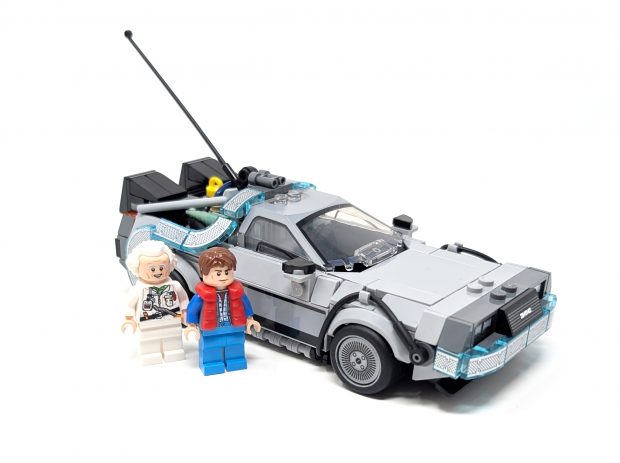
#77256 Speed Champions: Time Machine from Back to the Future is a great example of how LEGO blends pop culture and iconic vehicles in the Speed Champions line.
Over the years, Speed Champions has featured a wide range of pop culture and licensed vehicles, including cars from franchises like Fast and Furious, James Bond, and various racing series tied to brands such as Ferrari, McLaren, and Porsche. These sets allow you to add instantly recognizable vehicles to your streets, while also being great standalone builds. I own a few Speed Champions sets and plan to pick up more when any catch my eye.
Conclusion
While there is no single correct way to build LEGO vehicles, a deeper understanding of scale can help you achieve better results. Height, width, and whether you want vehicles to work well with the Modular Standard all influence how the model feels once placed on the street. The best thing about Speed Champions is that it continues to raise the bar, with clever techniques and impressive shaping — showing just how far LEGO vehicle design has come. They also hinting at an exciting future for detailed minifigure scale cars of any size.
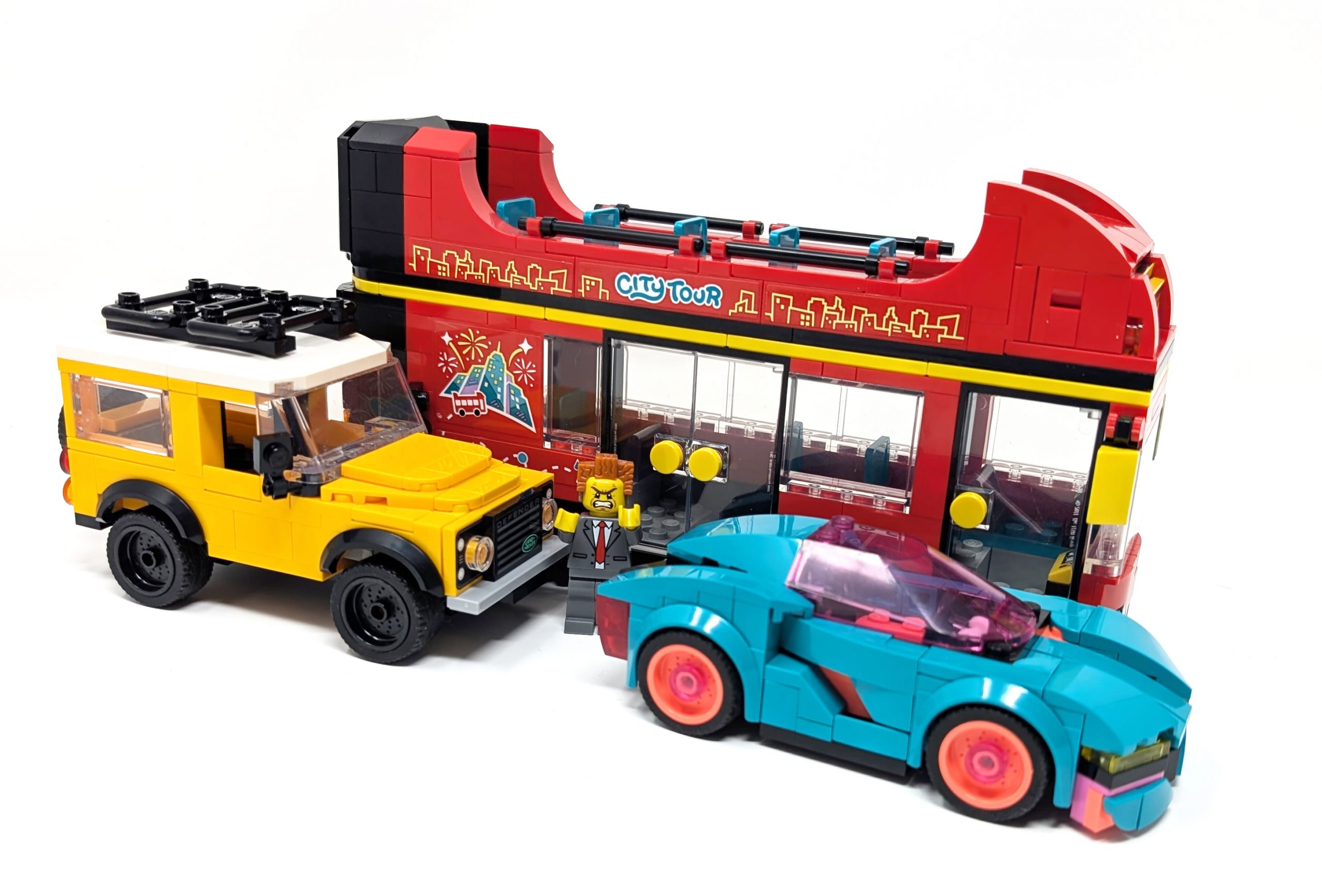
So many great vehicles constantly get released!
I hope that by exploring how different vehicles fit into the Modular Standard this article encourages you to experiment with your own streets and vehicles. Whether you start by modifying a road plate or building your first custom car, the hardest part is simply getting started. Once you do, you will find that creating your layouts is a whole lot of fun!
I’m pretty old-school when it comes to scale, so I prefer compact cars. Personally, I’m mostly bothered about the difficulties with placing two minifigures next to each other. The old 30149 Adventurers seat is a pretty elegant solution, but the mold might have been scrapped by now…
Good news, Håkan: there’s a new mold in town! A 2×6 plate with 10 studs and small ridges on each side, door stops, since LEGO has decided to put doors back in cars & trucks.
The plate enables 2 minifigs to sit side-by-side and put something like a gear shift or something else in the centre.