

Review: #11505 Woodland Mushrooms (LEGO Botanicals)
More than just a beautifully composed forest scene, the diverse parts and inventive building techniques invite a much closer look…

#11505 Woodland Mushrooms is the latest addition to the LEGO Botanicals series. The set was released on June 1, 2026 for $79.99 (79.99€ / £69.99 / 114.99 CAD / 129.99 AUD), designed for ages 18+, and contains 806 pieces. It is available now at LEGO.com or your favorite retailer.

#11505 Woodland Mushrooms – Box front and back.
Initial Impressions
This set is immediately inviting with its cozy forest floor setting, vibrant colors and intricate details. The triangular shape of the build invites you to start at the bottom, draws the eyes up to the red spotted caps, and back down to the mossy earth. I am curious to see what techniques are used to build up the center of the set to elevate the highest mushrooms, and to give depth and dimension to the scene. I’m excited to see this one come together.

The box includes 7 numbered bags, one loose part, and the building instructions.
The instruction booklet’s introduction is beautifully designed. There are some detail shots of the completed set from different angles, and an opening paragraph from the design team, but the stars of the show are the side-by-side shots. Eight distinct photographs of actual fungus and plants are shown side-by-side with their Lego recreations. It is a nice way to invite the builder into the set and to linger on the details within.
Build Process
Bags 1-2: Base
In bag 1, we are starting to build the foundation of the set. Dark greens and browns predominate, and set the forest floor atmosphere. SNOT pieces are used around the edge, which will presumably be the basis for details in future bags.
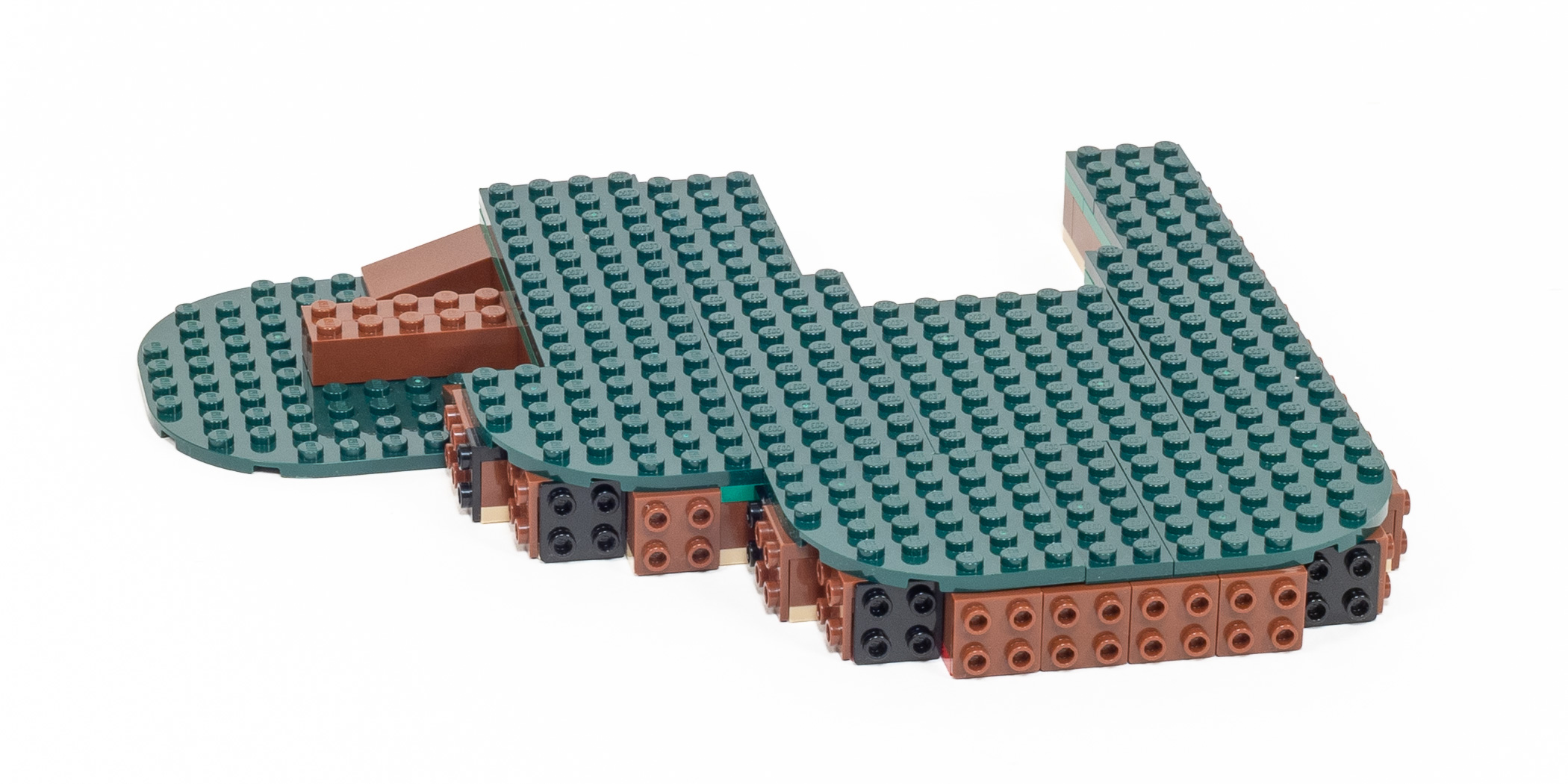
Building a sturdy base in bag 1.
The second bag adds greebling around the front and side edges, along with more height on which to build the plants and fungus in future bags. The intentional greebling adds physical and visual texture and enhances the impression of being plucked right from the forest. Several hinge pieces are added, potentially to clip plants or fungus in future bags.
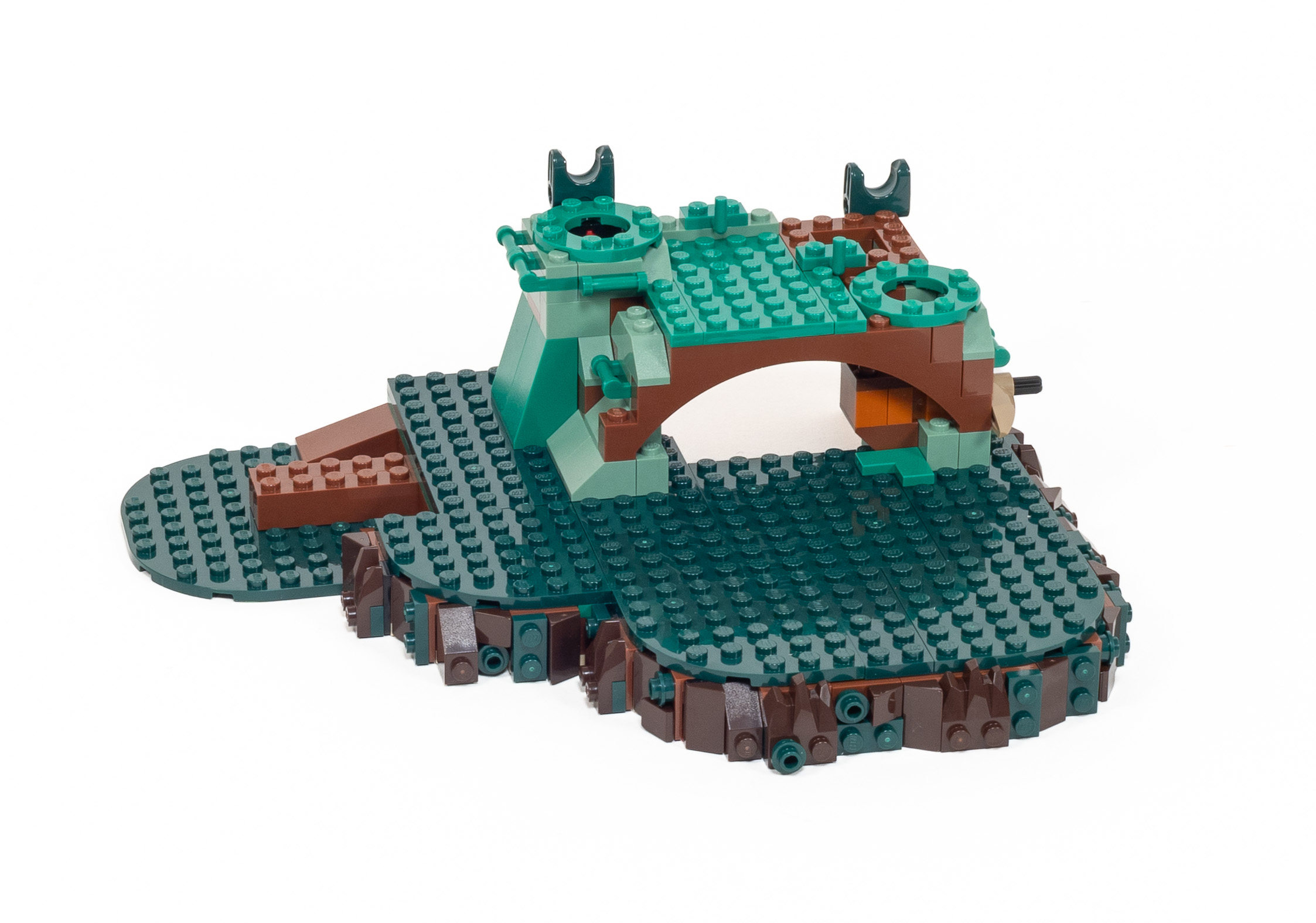
Adding height to the base in bag 2.
Bags 3-7: Foliage
The third bag focuses on the upper section of the model, adding lots of plants and three bright, beautiful mushrooms! These are a real standout of the set, so it was exciting to be able to build them. Unfortunately, the “cap” piece on the smallest mushroom has very little clutch power, and falls off with the slightest touch. It is the first mushroom we build, and as we add the plants around it, it keeps getting knocked off, which gets frustrating after the first few times of putting it back on. Leaf and plant pieces are attached to the hinges using clip, which allows them to move both horizontally and vertically, allowing for a more organic feel.
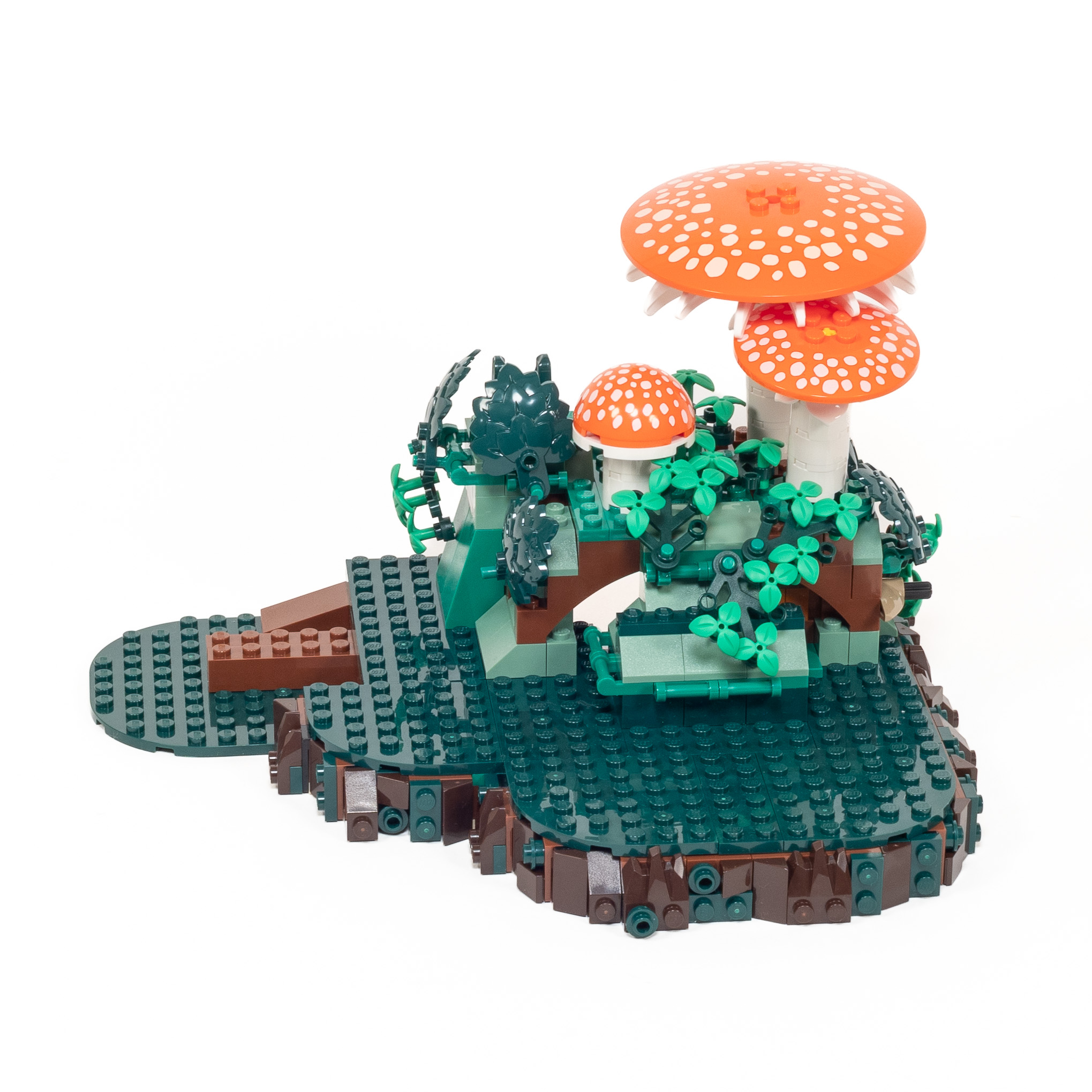
We add three large mushrooms in bag 3.
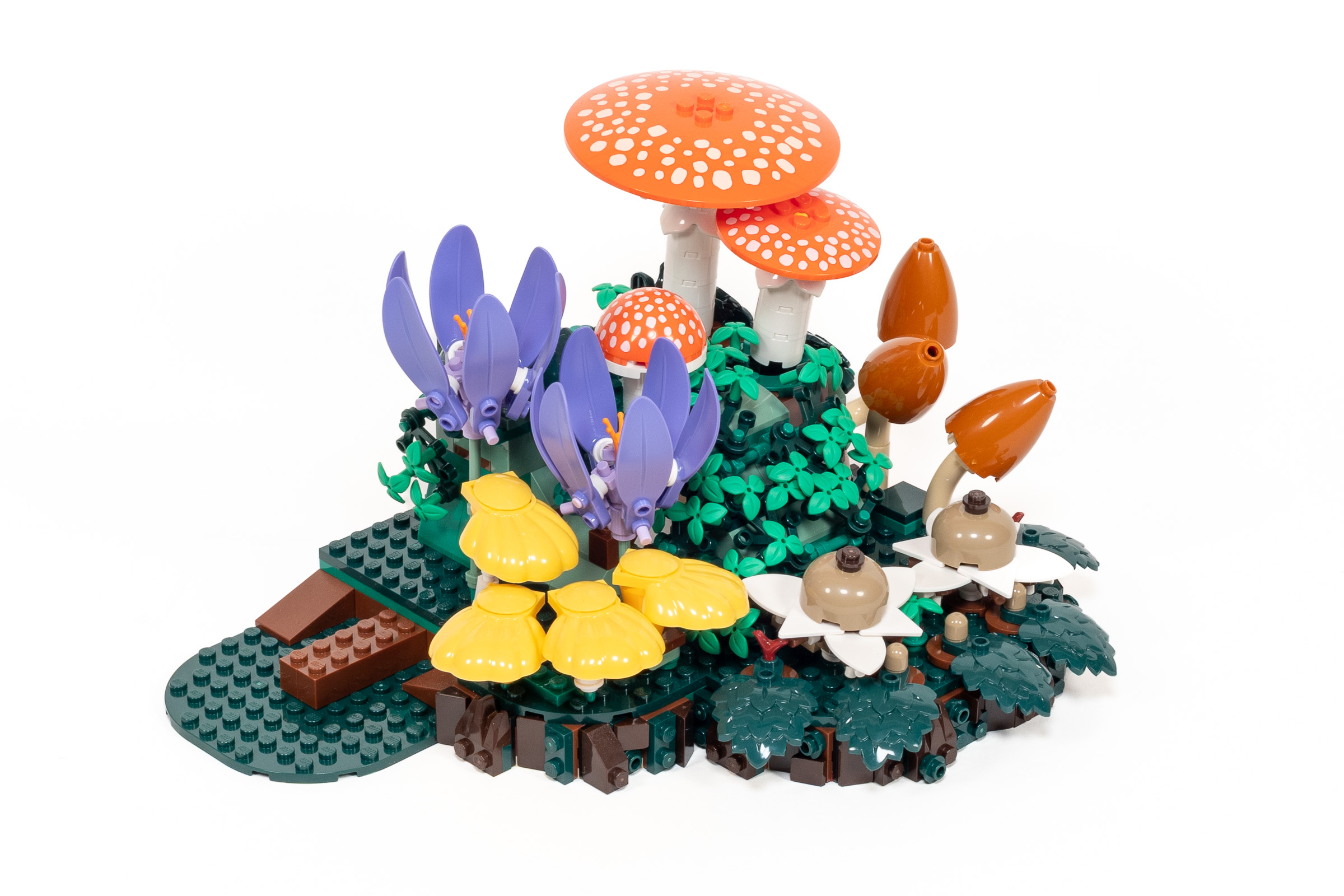
Bags 4 and 5 build up the lower levels of the set and fill in the spaces with more mushrooms and flowers. We first add the collared earthstar and marzipan fibrecap mushrooms to the right and front of the scene. These large bulbous pieces add both height and volume to the set, and the large, rounded forms are satisfying to add. Next, the golden chanterelle and autumn crocus add some much needed vibrant color to the left side. The crocus add some height to the side, with the chanterelles stair-stepping towards the bottom.

Adding more flowers and mushrooms in bags 4 and 5.
The sixth bag was the most interesting part of the build so far. We build a decaying stump with both common bonnet and oyster mushrooms growing on its side. The mushrooms themselves are cute, but the real fun is building the stump, as there are several different and fun techniques used to create both the rounded structure of stump itself and the roots that come off the base. Several of these techniques were new to me and somewhat complicated with various types of SNOT work, but the instructions were clear and I’m happy with the result. It is even capped off with an adorable ladybug!
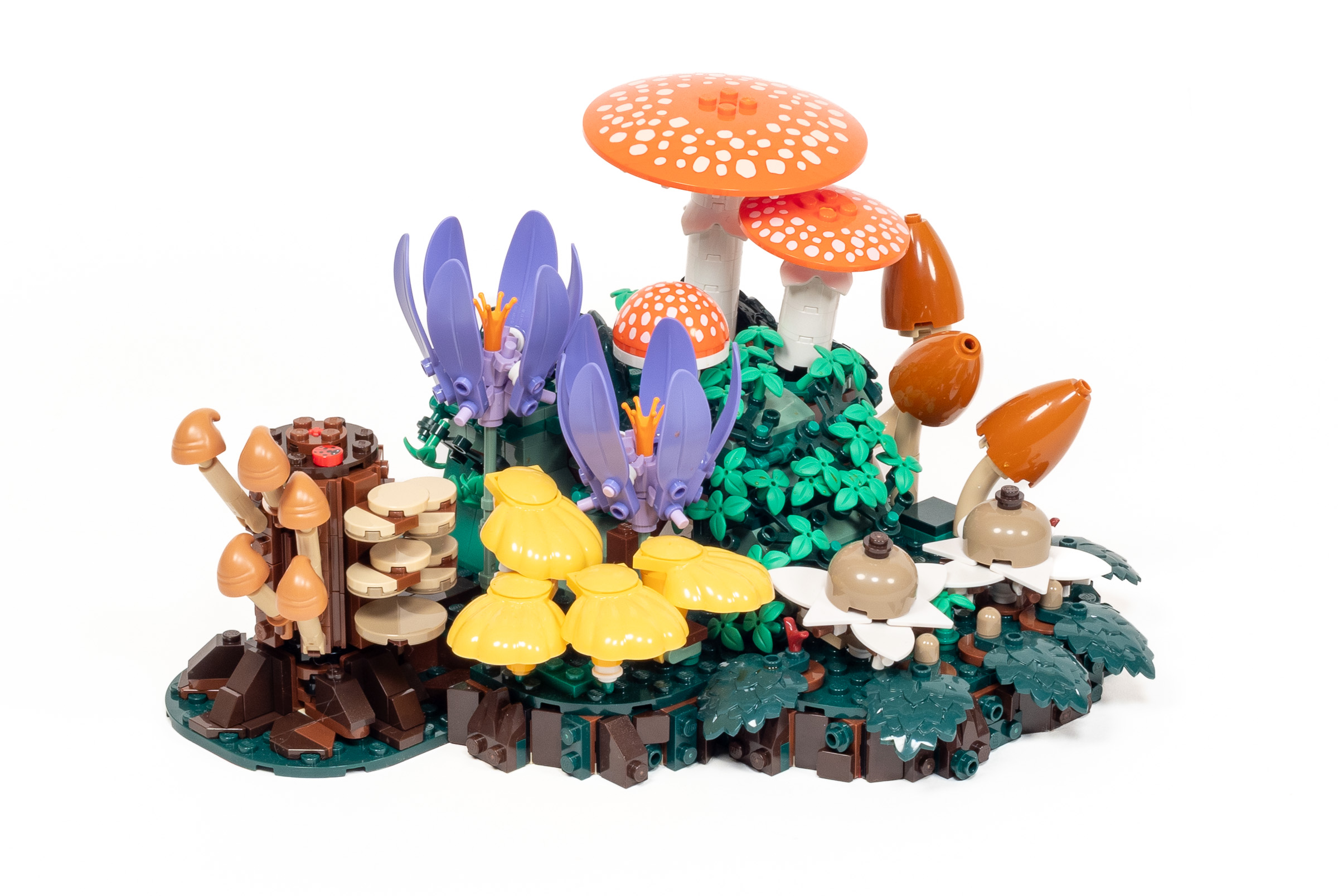
Adding a decaying stump with multiple types of mushrooms in bag 6.
In the seventh and final bag, we add three of the largest elements of the set: the tallest fly agaric mushroom with its bold red cap, and two bright green bracken. These elements add height to the set and provide a bit of forest “background”. The cap of the mushroom is thoughtfully designed and looks great from all angles.
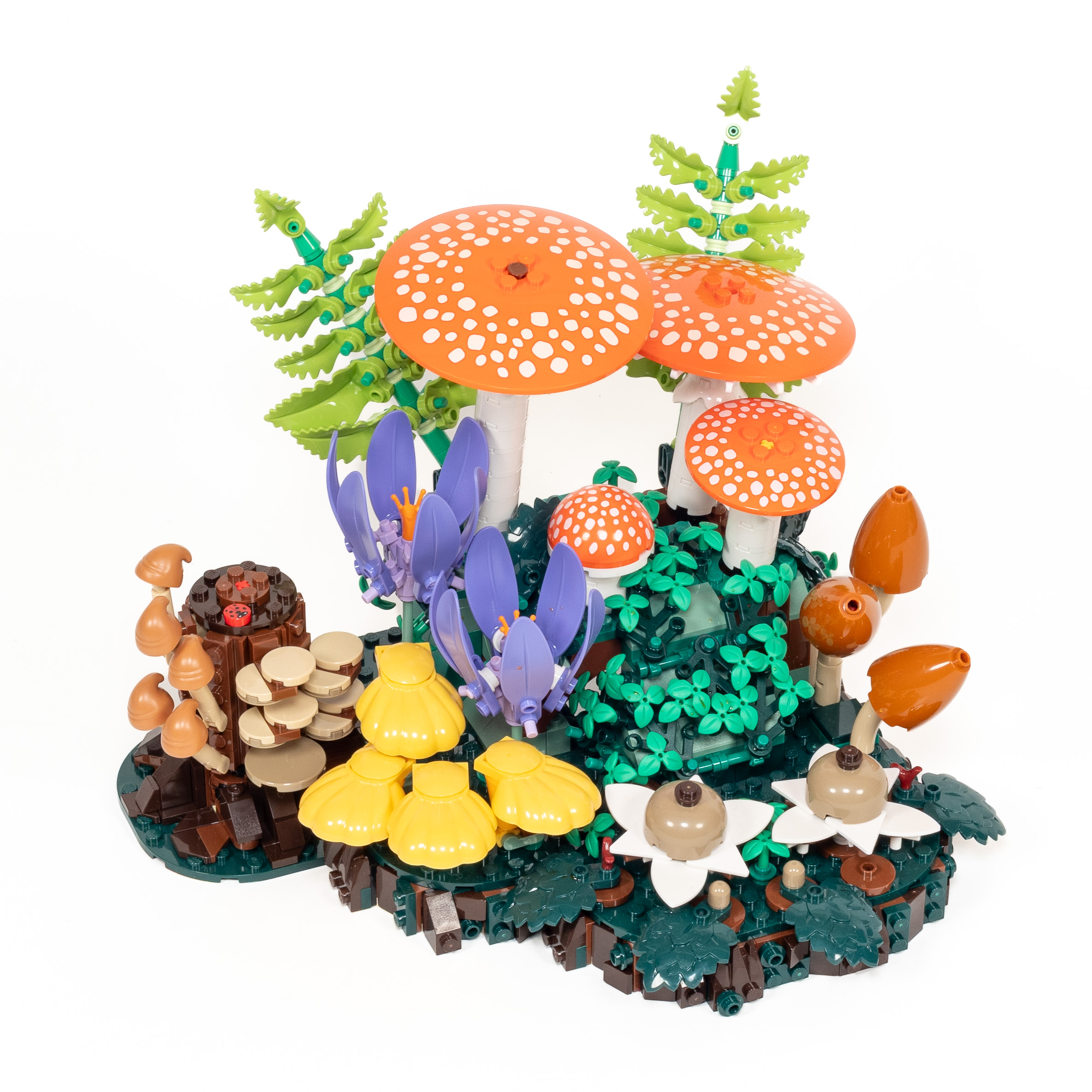
A pair of ferns adds height to the model in the final bag.
Conclusion
I loved building this set! Each bag unfurls a different section of our cozy forest nook, combined with clear instructions that never feel rushed or overly complex. There are enough different building techniques to keep the builder engaged without feeling overwhelmingly complicated. This is the perfect balance for me, since I’m far from an expert, and still enjoy learning new techniques.

The rear of the model shows how the raised section uses arches to reduce weight and cost.
The finished model has a strong presence as a display model because it has a triangular composition aided by a raised section in the back. This makes for a more compelling model while using fewer parts.

#11505 Woodland Mushrooms is an excellent LEGO set.
Overall, #11505 Woodland Mushrooms was extremely pleasant and relaxing to build, and ranks as one of the best sets I have ever completed. The finished model is beautifully composed, was engaging to build, and includes a diverse selection of parts. That’s why it earns the rare Must Have (5/5 Star) rating despite offering a pretty typical value.