
Rebooting LEGO Mindstorms in a Licensing-dominated Toy Market
A closer look at the upcoming ‘Smart Brick’, the recent failure of LEGO Mindstorms, and an opportunity to teach programming concepts without writing code.

It’s no secret, The LEGO Group’s partnership with Lucasfilm on LEGO Star Wars was one of just two LEGO themes that saved the company from bankruptcy. (The other being Bionicle.) The current LEGO catalogue is awash with licensed sets from Disney Princesses to Marvel to Minecraft. Even most LEGO Technic sets are now based on a specific brand instead of ‘generic’ of heavy machinery!
While The LEGO Group has had remarkable success in recent years with in-house themes like City, Friends, and Ninjago, I would argue that these have become IP strongholds as well, complete with their own characters, lore, and TV shows. I’m not here to lament the shift to an IP-dominated toy landscape, I’m simply trying to highlight that IP-based sets are at the center of the LEGO building experience for most families.
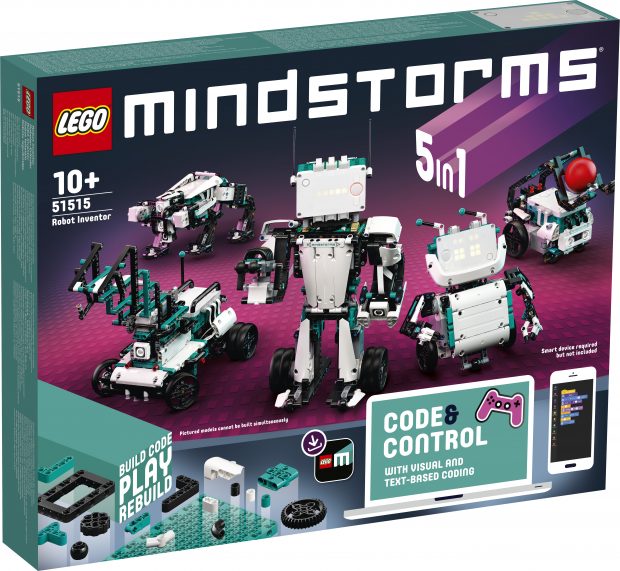
#51515 LEGO MINDSTORMS Robot Inventor was discontinued after just 2 years.
It’s honestly not that surprising that the most recent consumer-facing LEGO Mindstorms product was a flop. First of all, the set was extremely expensive. It was also released in a very different world dominated by inexpensive STEM-based learning kits from companies like Crunchlabs. Furthermore, It had no familiar characters or compelling narrative to draw you in. It just doesn’t make sense for LEGO’s flagship programming experience to sit outside of the IP-dominated world that LEGO families have grown to expect.
Introducing Smart Bricks
Last week, The LEGO Group made a high-profile announcement of their new ‘Smart Play’ system at their first big-budget press conference at the influential Consumer Electronics Show (CES). The system features a small ‘Smart Brick’ that includes a microprocessor, NFC sensor, color sensor, accelerometer, speaker, and wireless communications. That’s a lot of functionality in what appears to be just two plates thicker than a standard 2×4 LEGO Brick.
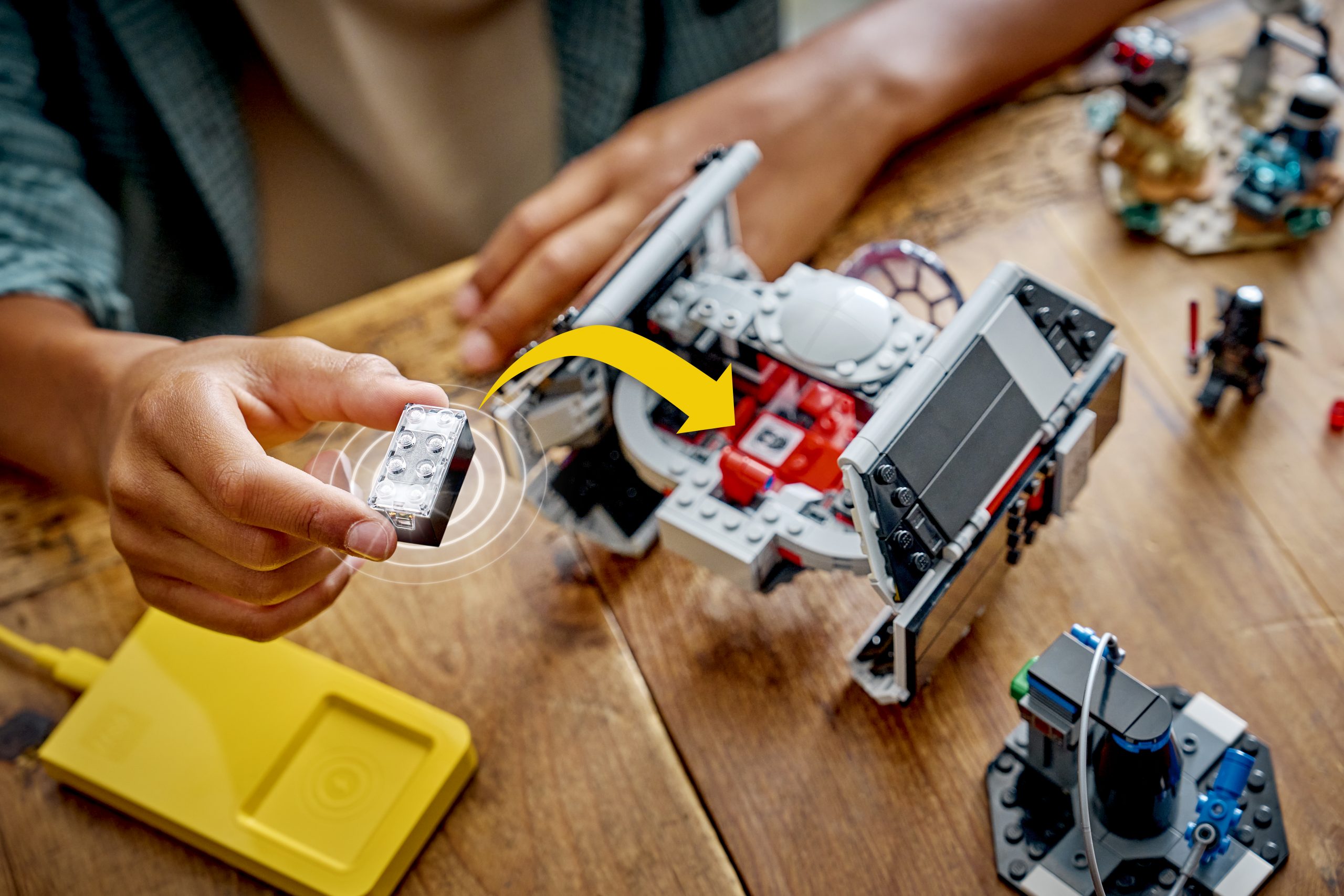
The smart brick’s behavior is determined by nearby smart tags and smart minifigs. (Photo: The LEGO Group.)
The behavior of a Smart Brick is determined by Smart Tags, Smart Minifigures, and other Smart Bricks within close proximity of your Smart Brick. Smart Bricks are recharged wirelessly using a small USB-powered pad which is included in all three of the introductory sets. (I hope they leverage the Qi charging standard so that they do not need to include the pad indefinitely to reduce e-waste.) The Smart Tags do not require batteries. While they have not explained what protocol is being used, it is very likely they use the same NFC technology used in LEGO Dimensions. (It would be an amazing easter egg if the Smart Brick responded to LEGO Dimensions tags.)
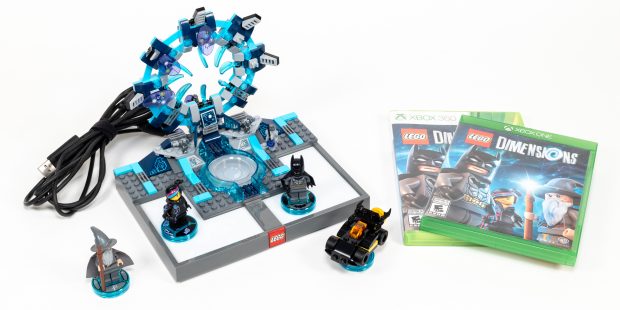
In LEGO Dimensions (2015), normal minifigs stood on Character Tags containing an NFC tag.
While I have not had a chance to go hands-on with the Smart Play system yet, the biggest appeal in the demos I’ve seen so far is the ability to have a playful interactive experience punctuated by lights and sounds without the need for a phone, tablet, or PC. It looks like kids will be able to mix and match Smart Tags / Minifigures from multiple different themes in the same way that The LEGO Movie brought together characters from unrelated worlds and LEGO Dimensions allowed players to switch freely between unrelated characters with wildly different abilities.
I believe the long-term success of the product will depend on how frictionless it is for kids to build a new set, swoosh it around the room, and combine it with unrelated tags from other themes. If it works effortlessly, it could be successful. If it is genuinely delightful, resulting in unexpected mashups when unrelated products interact in unexpected ways, it could be a transformational toy experience centered around the creativity of discovering hidden behaviors.
‘Object’ oriented programming using natural language
The real magic of this moment is the ability to rethink how programming concepts apply in a world where the physical brick has a digital presence. Object-oriented programming is an established pattern used by many programming languages where user data and software behaviors are defined as ‘objects’ that can be reused as needed to complete a complex goal. In a very real sense, Smart Tags and Smart Bricks are literal objects that could be used to define behaviors based on their position in the real world.
I am extremely eager to find out if kids (and adults) can connect the Smart Brick to a Phone or PC to define their own behaviors. I hope this is possible because it opens up the possibility of teaching programming concepts to children with a LEGO set that costs as little as $70, and possibly even less in the future.

I would love to see natural language translated into a simple visual language like the Icon Blocks used in SPIKE Essential.
More so, I hope that The LEGO Group can develop a radically simpler way for kids to create programs using natural language. Scratch and Python are reasonably simple, but it would be even cooler if a kid could say with their own voice that they want to hear batman say something cool when they get in the car, make screeching sounds when they move the car forward, an explosion if it stops suddenly, and a high-five sound when another minifigure comes close.
In a world of increasingly powerful AI-assisted programming tools, learning how explain the behavior you want is way more important than learning how to translate human desires into software code. It’s even more powerful if kids can see how the computer translates their wishes into a simple visual programming language. From there, kids could continue to ask the app to make changes to the programmed behaviors, or they could begin to learn the programming environment and make the changes themselves.
Modernizing Mindstorms
While there’s a lot that can probably be accomplished using the Smart Brick and Smart Tags alone, I continue to believe there is something magical that happens when you bring larger creations to life using motion. This is why I believe it’s appropriate to reboot the Mindstorms concept as an extension of LEGO Smart Play. To be clear, this could involve resurrecting the Mindstorms brand, or simply expanding the capabilities articlulated under the Smart Play umbrella.
The most likely approach is to build a rich storytelling experience within a rebooted Mindstorms experience that includes both the smart bricks, smart tags, smart minifigs, wireless motors needed to complete narrative-rich interactive building, programming, and play experiences. Another approach is to provide a learning and play experiences that expands whichever Smart Play enhanced LEGO themes that families already own. It’s just harder to create emotionally-rich storytelling experiences when the experience needs to work with multiple different play themes, and there’s a risk that kids can’t find the parts they need if they are expanding on a set they received some time ago.
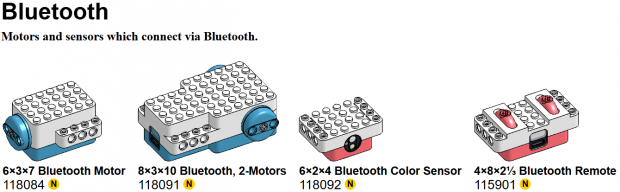
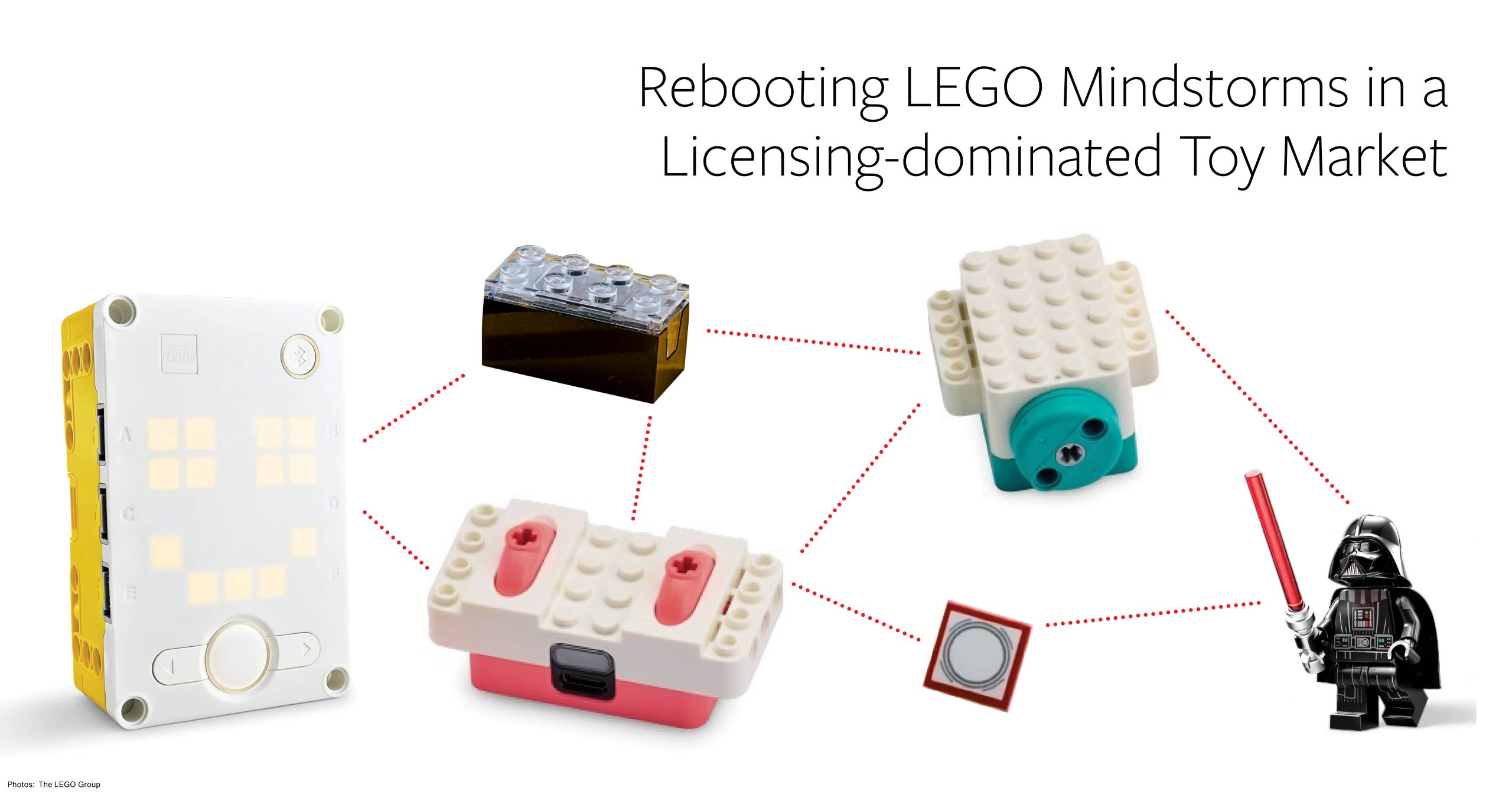
Brand new Bluetooth motors debuted in last year’s LEGO Education Science sets.
Late last year, LEGO Education quietly released a range of bluetooth motors, sensors, and even a bluetooth remote control. I suspect that these components communicate using a similar protocol to how a pair of Smart Bricks communicate with one another. It is reasonable to assume that a Smart Brick with custom software could start the motor when Batman gets inside of the Batmobile, and stop the motor when Batman is launched out of the cockpit because the car crashed into a wall. This is a pretty simple example, but it’s easy to imagine much more complex programmed behaviors leveraging multiple sensors, smart tags, and motors.
Conclusion
The LEGO Smart Play offering which was announced on January 5th looks like a fun play experience for kids which will grow as they add Smart Play sets from diverse themes. That said, I worry that the Smart Play system will fail to reach it’s full potential if The LEGO Group does not expand the offering by making it possible for kids (and adults) to create programmable behaviors using a natrual-language driven programming environment, and add support for motors to bring models to life.
I am underwhelmed by the ‘Smart Brick’ so far. From what I’ve seen, it is geared towards younger LEGO fans (nothing wrong with that) in an effort to move them away from screen time and more towards engaging play. As an adult, this has very little appeal to me. I’m not sure how many adults ‘play’ with LEGO. For me, I buy sets for the building experience. I do not display any of my sets. I take them apart to be rebuilt later. For me, LEGO has become tactile engagement building 3D puzzles. We have an annual tradition of building several of the Holiday Collection sets for Christmas celebrations. Once done, they get disassembled for future reassembly.
I also bought the Mindstorms Robotic Inventor set and was very disappointed. It was kludgy and not very engaging. Frankly, I would like to see simple, reasonably priced motors and power accessories powered by industry standards (USB-C, Bluetooth, WiFi, etc) that enable LEGO creations to come to life with lights and motion. For example, I would like to see more sets added to the Fairgrounds series with included motors and lights. I would encourage controls via smartphone rather than a custom controller. And yes, by all means, stop including proprietary charging and connections. We have enough e-waste that already lasts forever.
I was one of the folks who was on-line for early pre-orders of the first smart brick sets. The fact that the sets “sold out” as pre-orders certainly seems to indicate some initial excitement and curiosity towards this new play system. As you note, the vast potential for free play and advanced programming is pretty exciting, and with today’s schools already providing kids with early visual programming experience, this seems like another potential win for Lego. Hopefully they listen to this early feedback and, like other aspects of the Lego world, allow fans old and young, to help build the path for this new adventure!
“I hope they leverage the Qi charging standard so that they do not need to include the pad indefinitely to reduce e-waste.”
I like your mentioning the issue of e-waste in this article. I do like that Smart Bricks have the potential to reduce e-waste in powered and light-up Lego parts through being rechargable, so no more disposable battery waste. However, like you said, the Smart Bricks should not have a propriatary charging system or standard as a way of reducing e-waste as well.
Stephani,
I have asked The LEGO Group to confirm whether the charging system is proprietary or not, but haven’t heard back yet. I will not be kind if I find out it is not using an industry standard charging system — they should know better!