
Review: #21066 New York City – The Big Apple
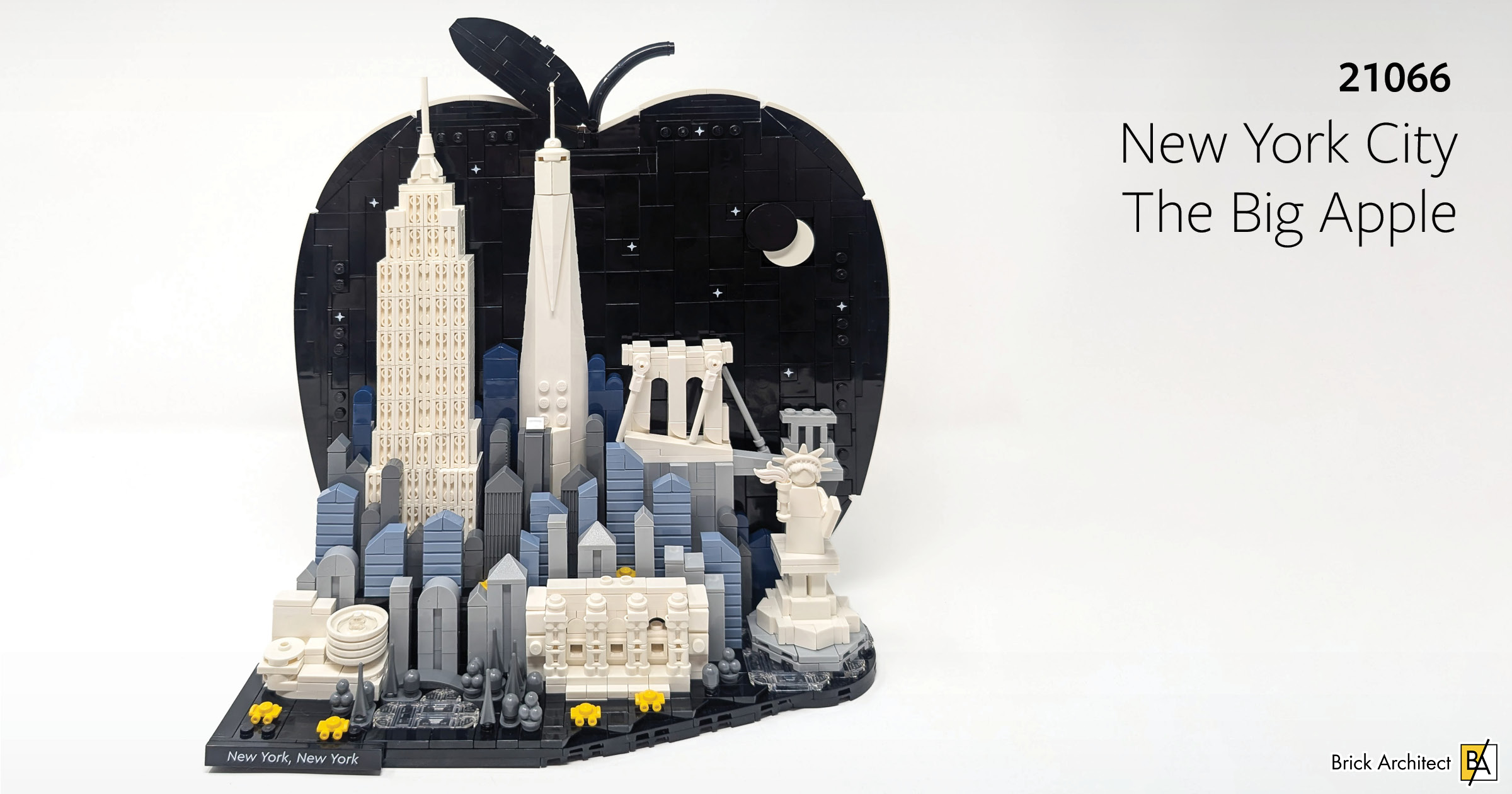
The ‘city that never sleeps’ and ‘the big apple’ collide in this nightscape of New York City on an apple-shaped backdrop. Let’s take a bite!

#21066 New York City – The Big Apple hit the shelves on the 1st of June 2026. The set consists of 1465 pieces and no minifigures, and is priced at $139.99 (€139.99/£129.99)
NYC and LEGO
New York City is one of LEGO’s most frequently revisited cities, appearing across Architecture, licensed themes, postcards and more. To nobody’s surprise the Architecture line is the biggest source of New York City based sets, with skylines being a previously iconic set many remember. Sets like the Flatiron Building, Guggenheim Museum, Statue of Liberty, Empire State Building, and One World Trade Center form a very complete architectural portrait of Manhattan. Pop‑culture sets like the Ghostbusters Firehouse and Daily Bugle add a second layer: a fictionalized, cinematic New York City that is just as iconic in LEGO form as the real life structures.
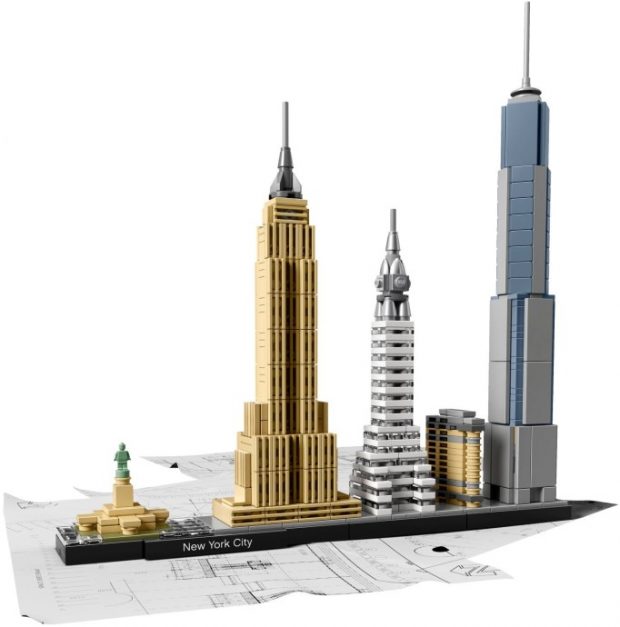
#21028 – New York City Skyline (2016) is one of many earlier sets based on this city.
#21066 New York City – The Big Apple is a curated celebration of the city’s architectural identity, refining the skyline format introduced a decade earlier with a modern twist. While New York City is iconic for many reasons, it is also home to two LEGO stores, with the Fifth Avenue Store being a high profile flagship store located right near Rockefeller Center. Nearly two decades later this store continues to represent LEGO’s presence in this iconic city. As someone who has spent a lot of time in New York City I couldn’t wait to see how these cultural icons translate into LEGO form.
The Big Apple?
Why does New York City have such a curious nickname? To answer this we have to go back to the 1920s, when sportswriter John J. Fitz Gerald (not to be confused with author F. Scott Fitzgerald) popularized “The Big Apple” after hearing African American stable hands in New Orleans use the phrase to describe New York’s prestigious horse‑racing circuit. He began using the phrase in print and it caught on quickly. By the 1970s it was used as part of a tourism campaign that cemented it as part of New York City’s enduring identity.
About the Set
#21066 New York City – The Big Apple costs $139.99 for 1465 parts. This works out to $0.096 (€0.096/£0.089) per piece, which is high for sets in the LEGO architecture series which are non-licensed sets and contain no minifigures. The model depicts New York City skyline at night in front of a backdrop shaped as a very large apple. The model is designed as an architectural display piece in the adults 18+ line. It is rather large sized at 29 x 28 x 12cm (11⅜ x 11 x 4¾ inches). As is the case with other sets in LEGO Architecture series, it comes with no stickers which is a welcome sight in the modern LEGO era.
The Build Experience
Bag 1
Bag 1
Sets in the Architecture line are known for their 26Black base. #21066 New York City – The Big Apple follows this trend but gives it a minor twist. Instead of adopting the traditional square base, the footprint of this set is designed to mirror the shape of New York City’s iconic Manhattan Island. Upper Manhattan and the Heights are omitted to give the base a more rounded look without a narrow strip jutting off the edge.
As with all Architecture sets, the iconic white text on a black plate name tile is attached at the front of the build depicting the name of the city being referenced. I did find it odd that it said New York, New York rather than Manhattan, New York or New York City, New York, but that niche decision doesn’t detract from the structure as a whole. As is the case with all foundations, both stud and tile pieces are used to build a clean finish and the foundational steps for structures to build atop. While care taken into shaping stands out, what sucked me into the build immediately was the colors used. This set is built with nighttime in mind and as such has a very noir feel to it, with the foundation leaning heavily into 26Black and 199Dark Stone GreyDark Bluish Gray colors with a gentle 40Transparent Trans-Clear to provide water based reflection.
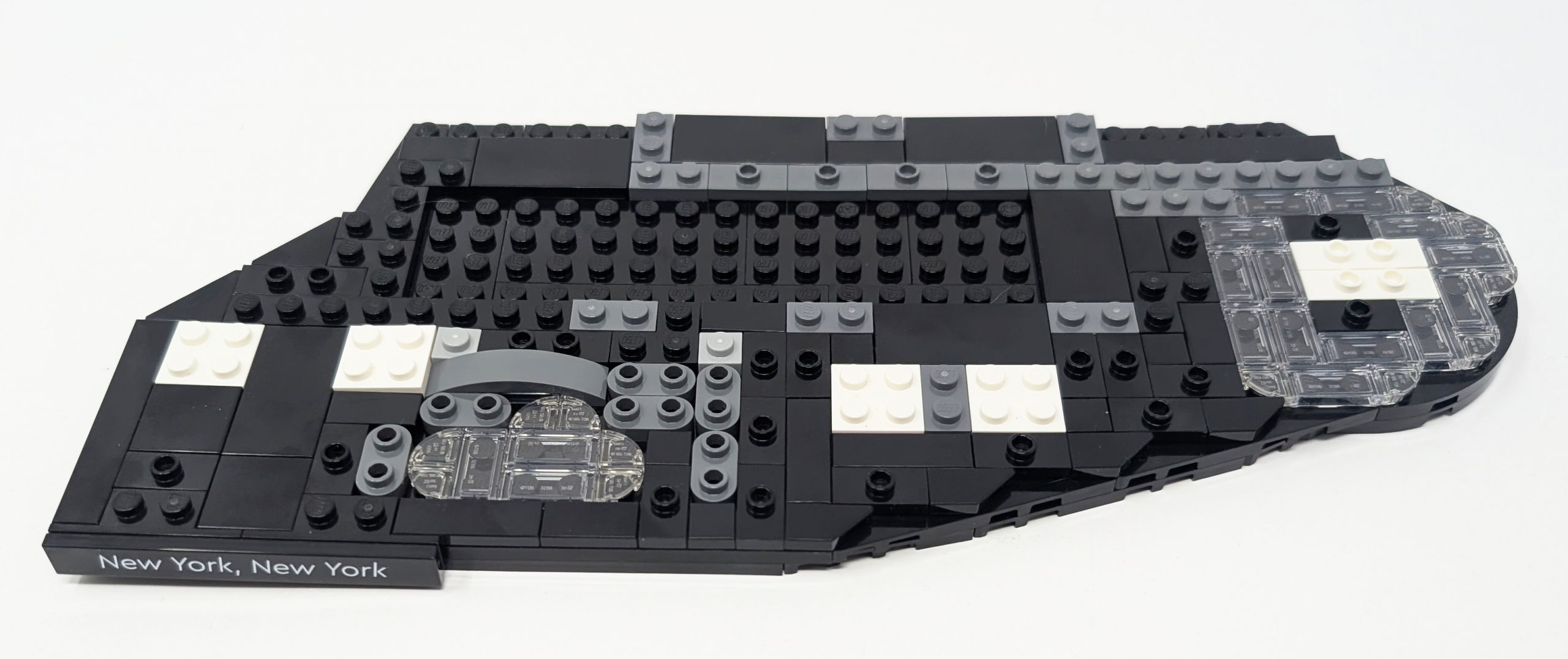
The footprint is designed to depict the shape of Manhattan Island.
Bag 2
As is the case with every city, structures are built on a solid foundation and in LEGO format this is no different. The next bag focuses on adding layered structural platforms that the rest of the brick built city can sit upon to give varied height. The designers were creative to maximize the space by not just using flat bricks to add height, instead turning the innards of the layer into a subway station.
New York City is iconic for its efficient subway so this little homage was a nice touch. Unfortunately due to the scale and it being tucked away in the dark under the plates that form the platform for the higher layers these can be hard to see. To allow a bit of light to enter the designers utilize arch pieces to still give structural rigidity but allow you to get a sneak preview inside. The rest of this section is mostly foundational, providing a platform that elevates the rest of the build.
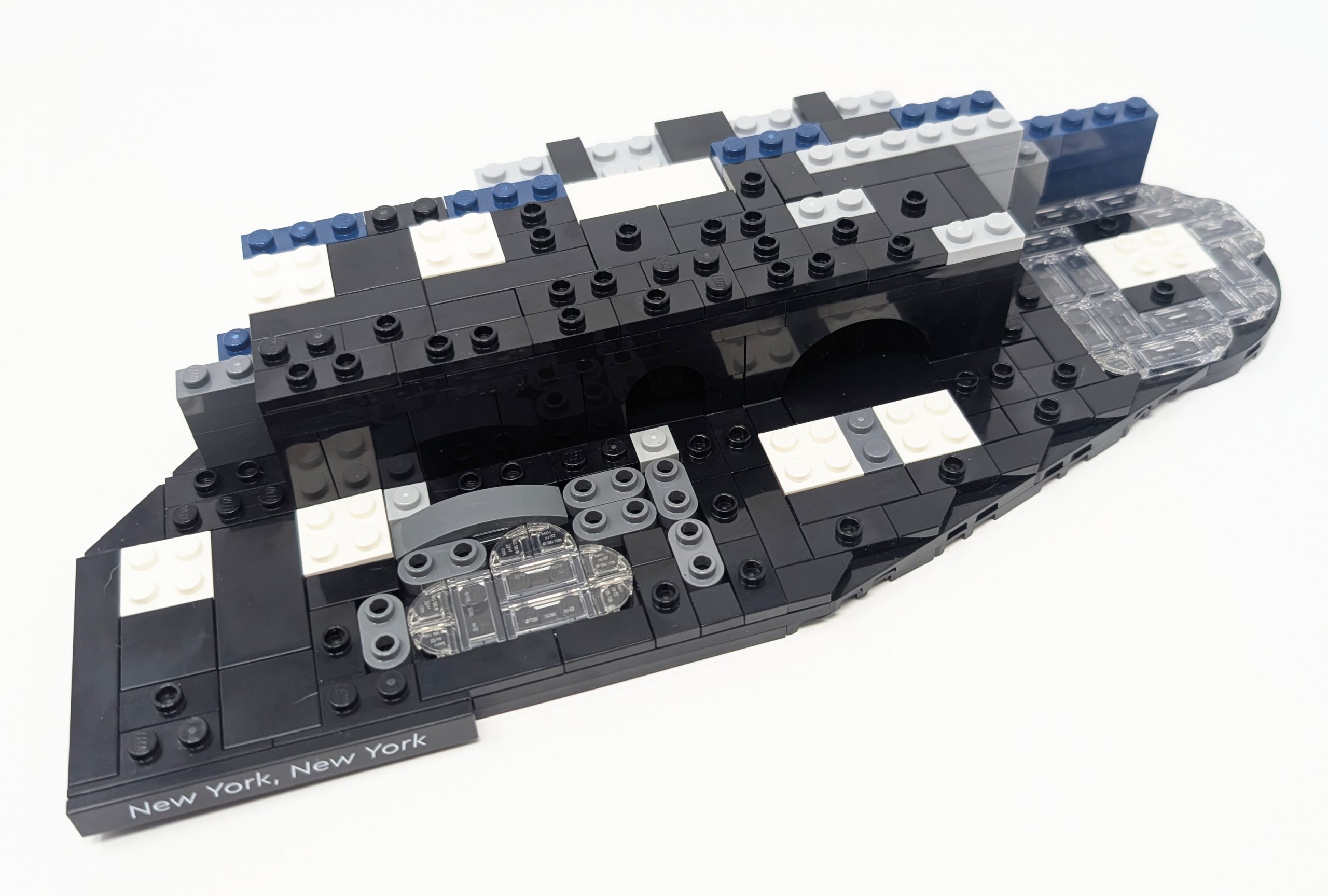
Layering allows for varied heights.
Bag 3
The third bag is where things get interesting, with colors weaved in to contrast the overwhelming 26Black color we see. I liked the use of colors from lighter 194Medium Stone GreyLight Bluish Gray and 102Medium Blue at the front against the darker 199Dark Stone GreyDark Bluish Gray and 140Earth BlueDark Blue behind. This allows for a beautiful layering, whihc we will discuss more later.
Each structure is simple but at the same time unique, varying in depth and texture. We see a variety of bricks used which highlight the amount of texture LEGO bricks can offer, from traditional 1×2 Brick (Part 3004) to 1×2 Brick, Ribbed (Part 2877), 1×2 Brick, Masonry (Part 98283) and more. We see both traditional stacking techniques and Studs Not On Top (SNOT) technique employed to represent the cities varied architectural history. While the bulk of the build has darker earthy tones, the first thing you will likely see color wise is the bright 368Vibrant YellowNeon Yellow Roller Skate (Part 11253) pieces dotting the roads. These are the iconic Yellow Cab Taxis that can be found in New York, and at this scale this part is perfect for it. A small fun fact, New York City has over 13,000 of such Taxis, making them common and integral part of the city.
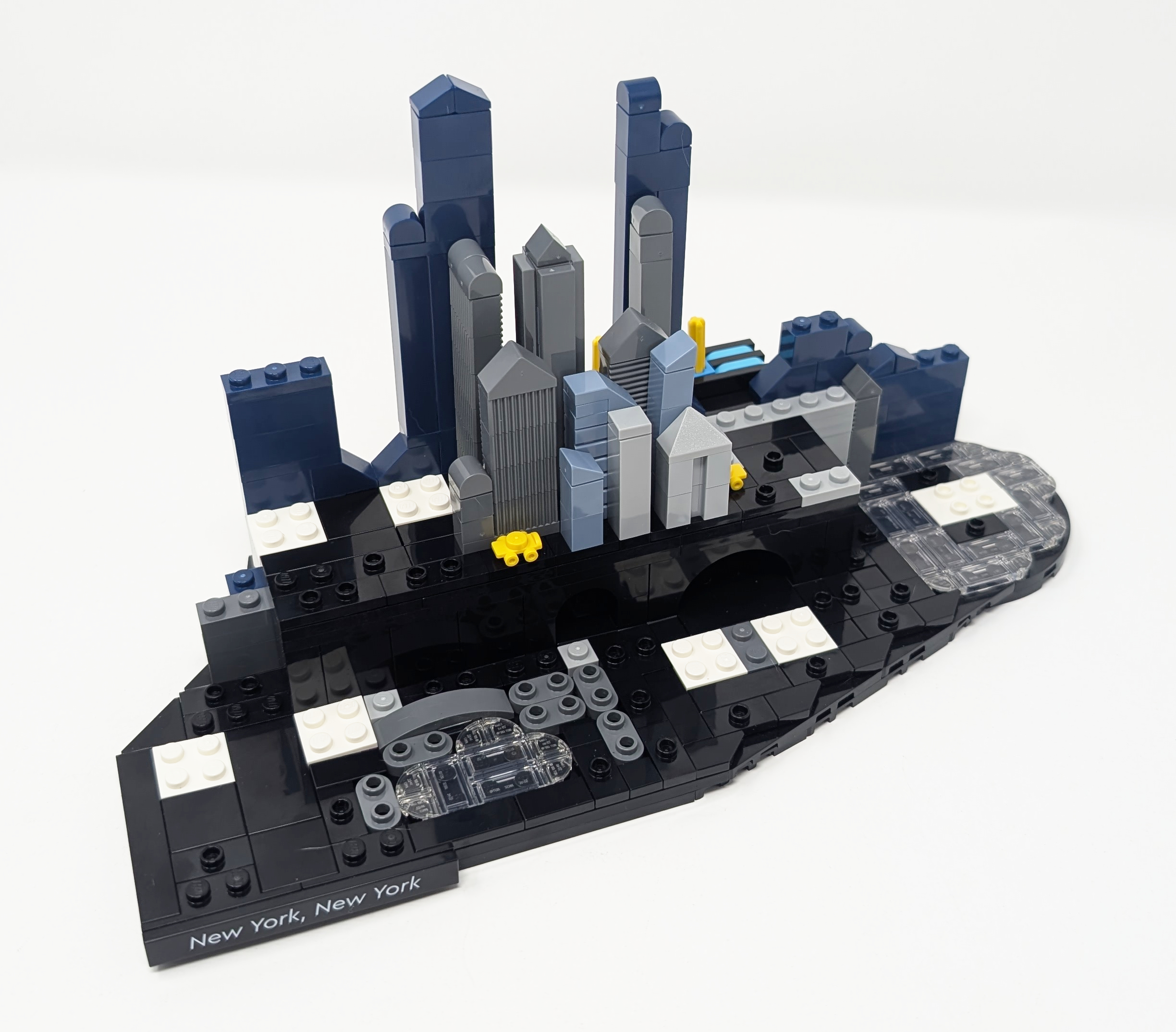
NYC is known for its skyscrapers.
Bag 4
While the first three bags focus on structure and background, the fourth bag starts building the iconic landmarks of the city. While New York City is known for its numerous cultural sites, #21066 New York City – The Big Apple focuses on seven such sites that provide a lasting impression on visitors to the city. To ensure that these do not blend into the background the designers opted to have each of them be 1White to ensure that they stand out and are right in your face. Each of these seven structures use unique building techniques that are both creative and allow them to mirror its real-life counterpart effectively, focusing on scale and image to ensure it fits in. In this bag only three of the seven structures are built, with Central Park, Metropolitan Museum of Art and The Guggenheim museum taking center stage. We will go into each of the seven microbuilds in detail in its own section later. These builds are reminiscent of those we would see in the Skylines subtheme of Architecture that unfortunately has lost its steam over the years so it was great to see such designs make a comeback here.
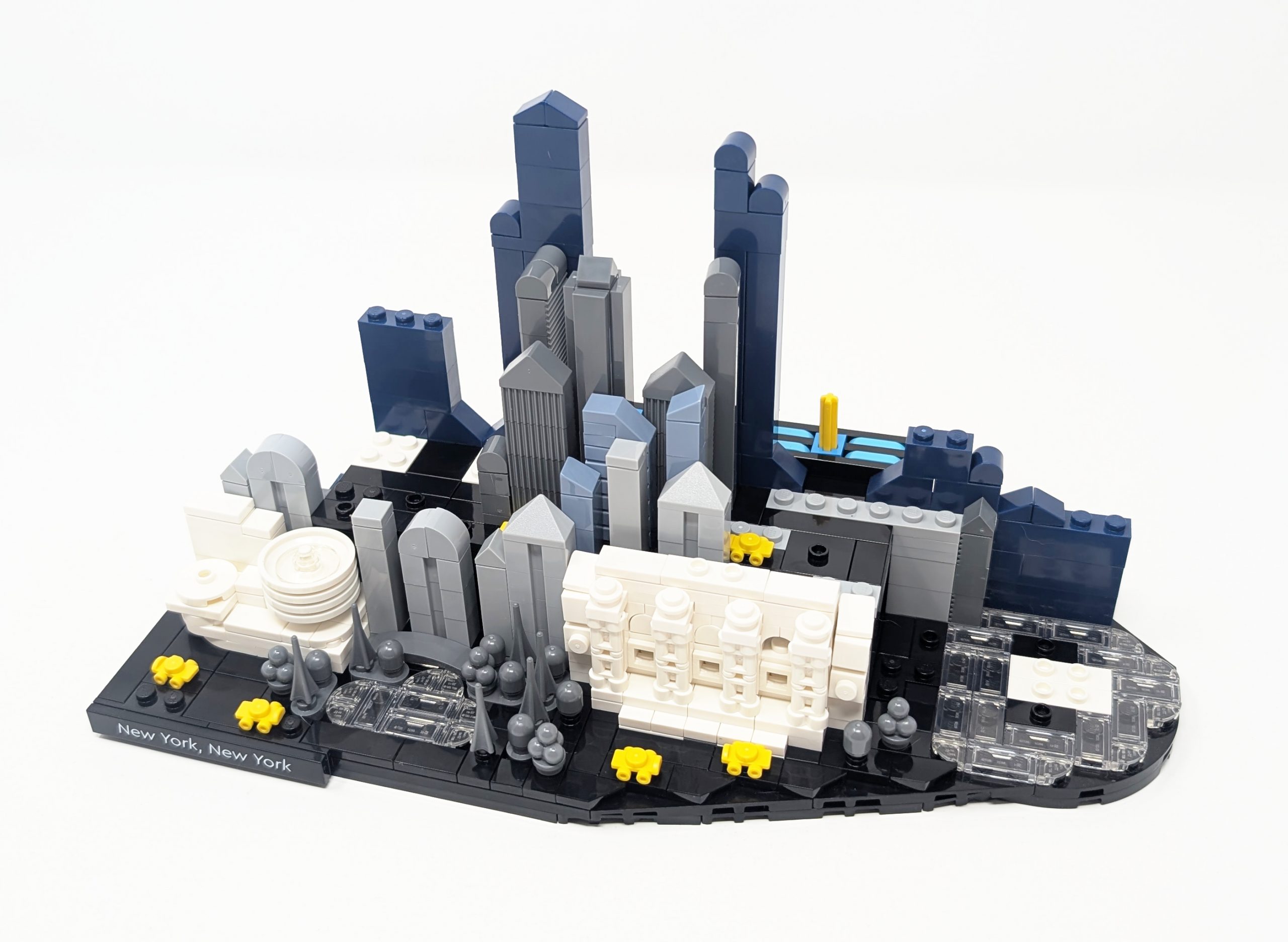
Landmarks are in white to allow for contrast.
Bags 5 + 6
Most of the pieces are used to build the backdrop, a night sky shaped as an apple. A play on the city’s nickname. These two bags focus almost entirely on structure utilizing technic pieces and plates to build a foundation and build the shape of the structure. The rounded edges don’t get built till much later but the foundations are crucial given this makes up a big chunk of the set. While the designers could have used one color entirely for the structure, they opted for more varied parts to allow for parts reuse if the set gets taken apart. It is boring for builders who take down sets to only see one color and one type so the designers at LEGO often opt for variety. This also makes the build a slightly more fun build to put together.
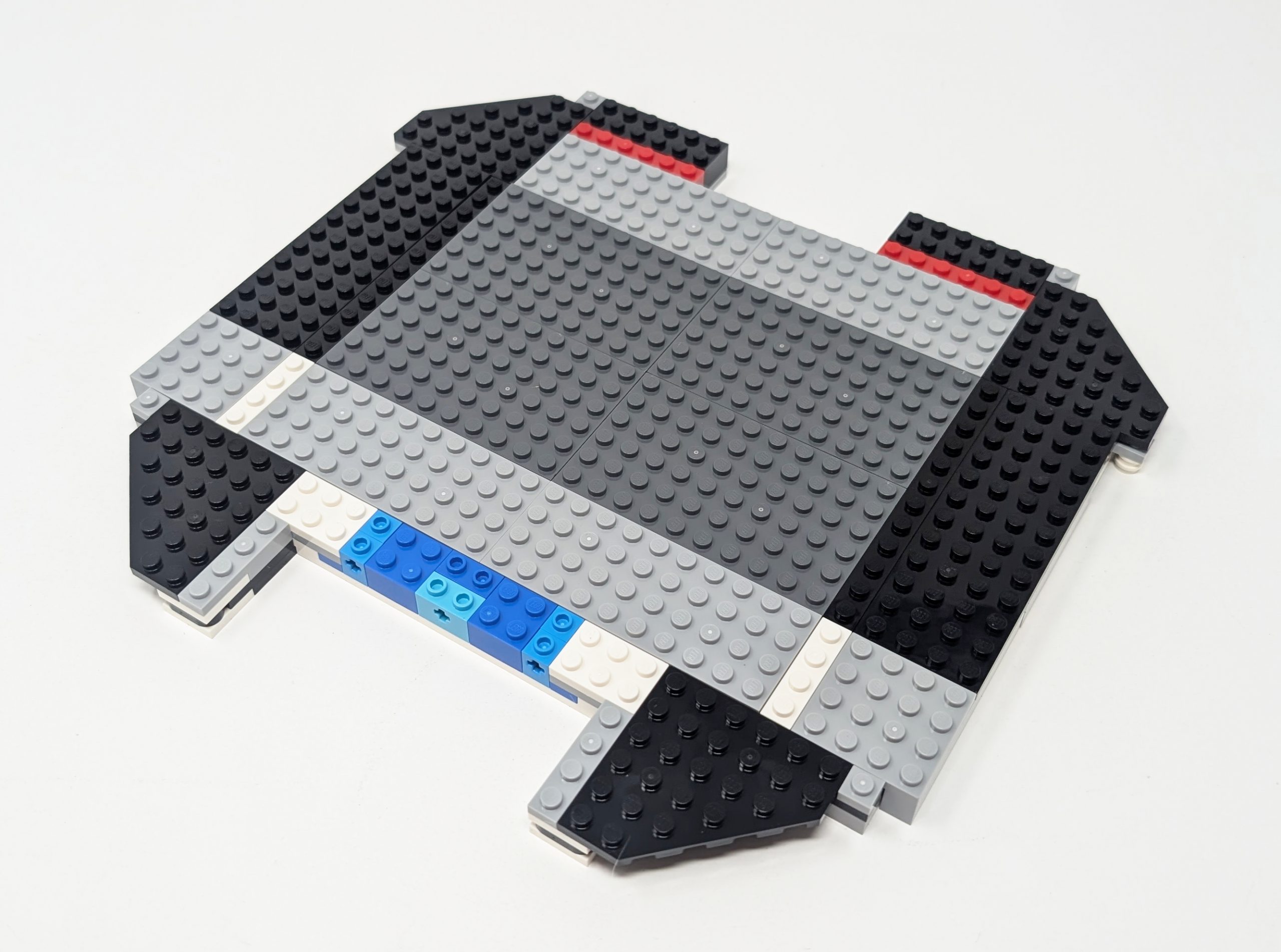
Technic allows for a sturdy apple base.
#21066 New York City – The Big Apple was designed to be displayed one way and one way only. This is especially evident when you spin the Apple around. The back is entirely scaffolding to provide support for this large structure with no pieces wasted to make it look nice. This is not a negative as it saves parts, but it sure is ugly.

The back is ugly but is not something we will look at often.
Bags 7 + 8 + 9
After the main shape is put together the rest of the build focuses on the polish and rounding. The plates are replaced with an abundance of 26Black tiles. While this allows for a nice glossy night finish, it comes with the drawback of making all your fingerprints visible. After pressing all the tiles into place a quick clean with a cloth remedies this however. We will go into more details about the color decisions of the night sky in a later section but it is incredible to start to see the apple shape come together.
A variety of slopes are placed to give the backdrop its iconic Apple shape, and honestly I was impressed. While the shape is visible on the box, you don’t see the great design decisions made to capture this shape until you build it. Although the Apple is built as a stand alone build, it is designed to slot into the rest of the city scape and as such some of the structures are built directly into the backdrop for stability. This means you cannot easily separate the two should you wish to only have the city on display. With some minor modifications this can be changed however.

Tiles hide construction details.
Hidden at the back of the City are technic pins that allow you to connect the two halves of the set together. These two halves for me highlight my two separate thoughts on the set. While I do like the details of the backdrop and the creative use of the Apple, with it taking up more than 50% of the total build I feel it adds a lot of price with limited payoff. I am sure many would love to just have owned the city without the Apple and saved a ton of money. With LEGO prices only going up the absence of middle priced sets prices a large number of fans out of the market, a gap that the Architecture line historically filled.

The structure looks great even without the apple.
The Big Apple fits smoothly into the base and despite being heavy, through use of Technic pins is sturdy and doesn’t fall over. The build is well balanced both from an aesthetic and structural perspective. From the back we can once again see that LEGO prioritized structure over detail, which in a sense allows us as the builder to appreciate all the great ways the designers were able to achieve the apple shape, each edge having its own unique techniques.
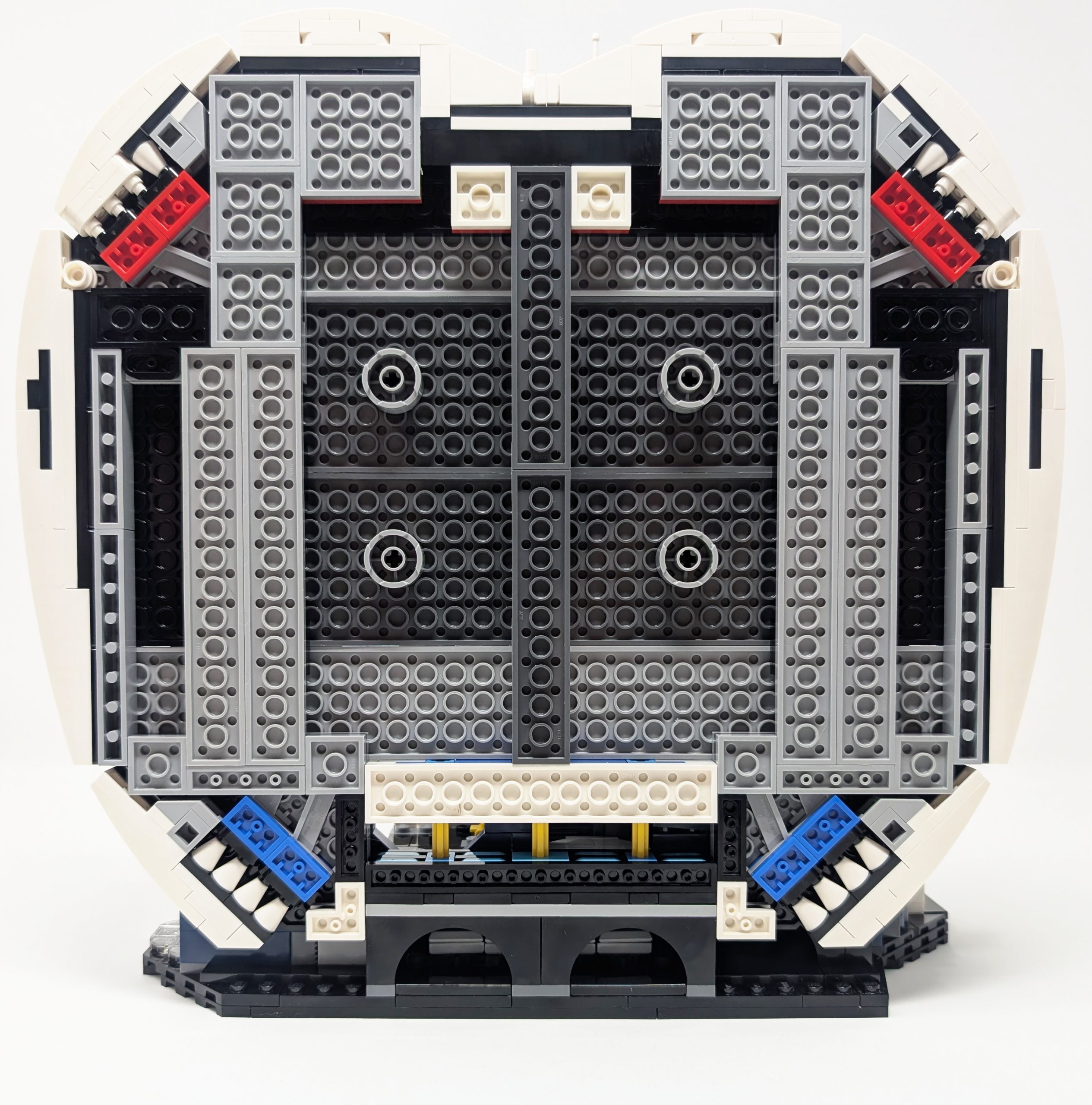
The apple is held in place with technic pins.
Design Through Colour
While shape is one way to catch your eye, #21066 New York City – The Big Apple leans heavily into utilizing color to capture your attention. The build is designed with a Noir (French word for black) color palette in mind. This scheme uses a mysterious black with dark undertones to capture stylized cinematic looks. This vibe pairs beautifully with the New York City nightscape, with the strong 26Black theme reverberating through the build.
The set captures its magic mostly through the use of color and shape, and as such there are very few printed pieces included. One such printed piece comes in the form of the night stars. These printed on a simple 1×1 Tile (Part 3070) is sized effectively with the scale of the rest of the structure, and provides a nice accent against the darker night sky backdrop. My favorite accent comes in the form of the moon. This simple layering by placing two 3×3 Tile, Round (Part 67095) on top of one another allows the 1White crescent moon to pop out straight at the builder. As we go through the next few paragraphs you can see how color is effectively used to help make this set pop through contrast.
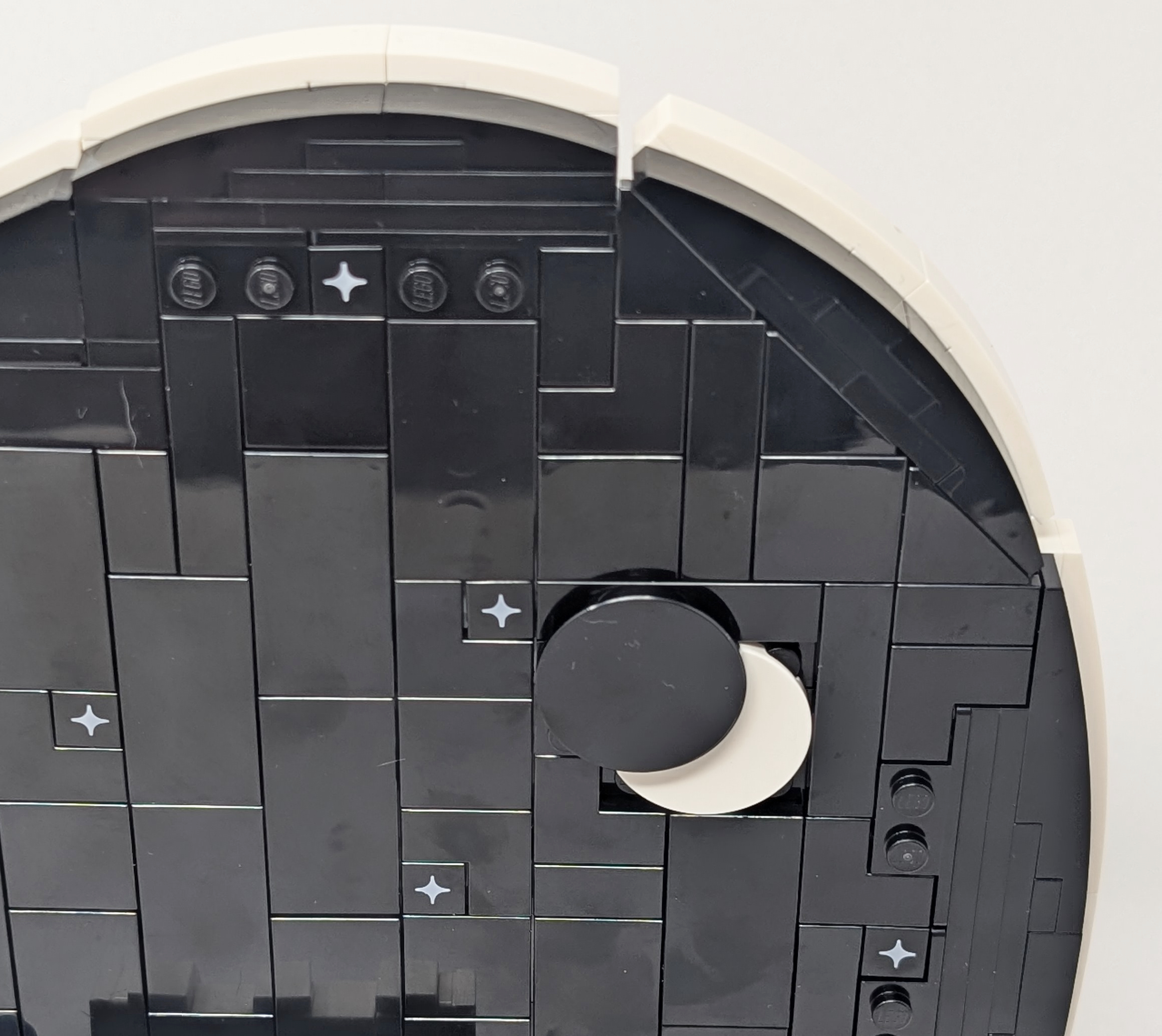
The moon is so simple yet eye catching.
One of the key ways the designers exemplified depth is through colors. The further back we go the darker the colors used with each layer of depth being a different color. In the front we have 194Medium Stone GreyLight Bluish Gray and 102Medium Blue while the back layers go into darker 199Dark Stone GreyDark Bluish Gray and 140Earth BlueDark Blue. This simple decision allows the structures, which honestly are super simple to have more feel to it as otherwise we would see a ton of repetition. To help showcase the main structures and break this color scheme the designers opted to use 1White for each. This strong contrast immediately identifies these structures as notable landmarks allowing them to be immediately recognizable. Breaking away from the Noir colors reinforced in the set we see the 368Vibrant YellowNeon Yellow of the taxis in the streets. This notable vehicle is iconic to New York City and as such act as a focal centrepiece.
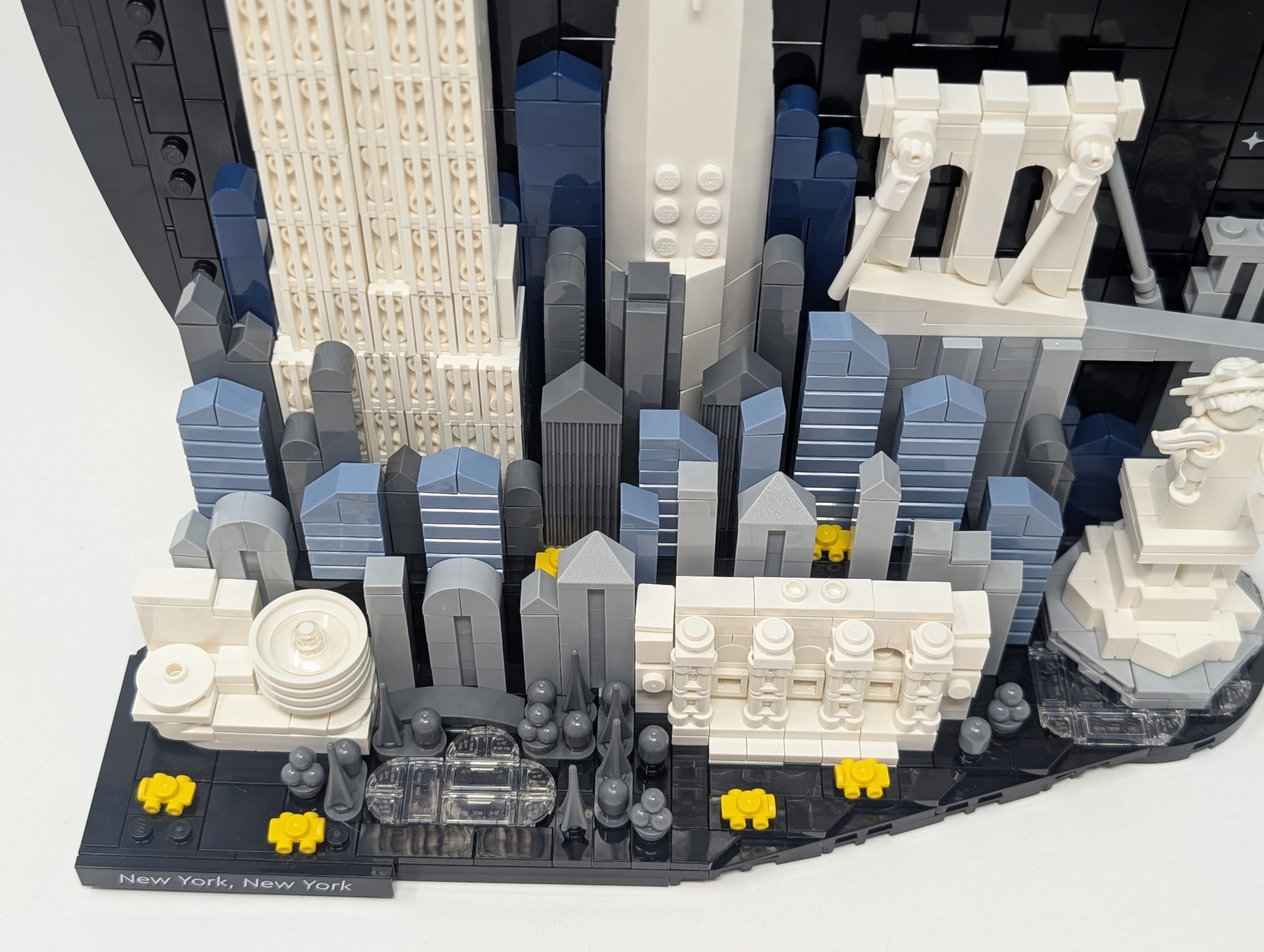
Each layer of buildings is a different shade.
Flipping the set to the side you see this colored layering in action with each layer being one brick deeper than the other. From the side you can also see how narrow the build is, with the profile of each structure pronounced. The set was clearly designed to be viewed from the front and as such pieces were conserved to allow for most to be used for front facing elegance.
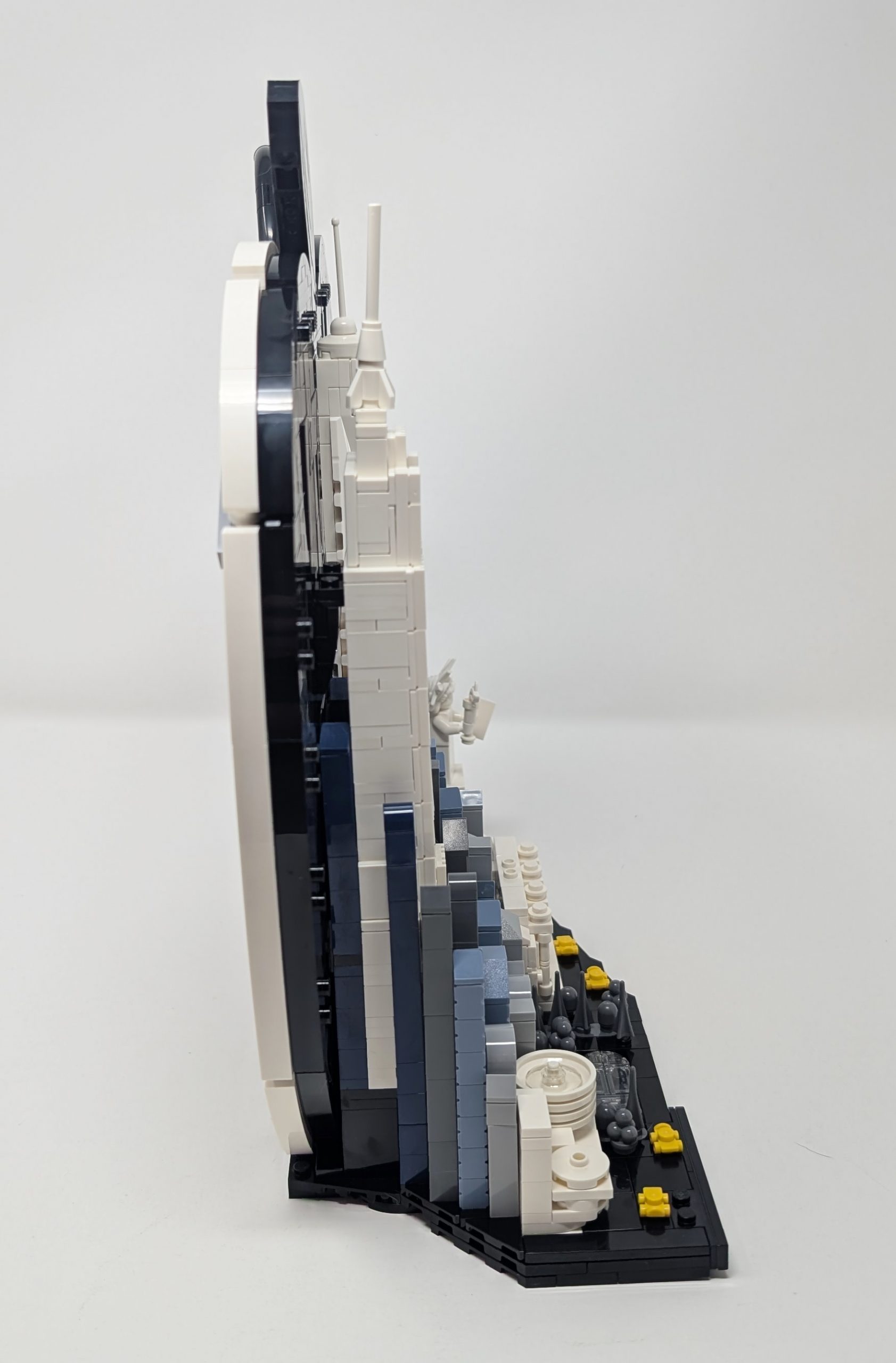
The city is built on a narrow footprint.
Iconic Landmarks
New York City is known for its many iconic landmarks. While there are too many to include all in #21066 New York City – The Big Apple, the set opted to pay homage to seven such architectural landmarks in the build. As highlighted earlier, each of the landmarks are built using only 1White pieces to ensure that the structures contrast against the darker backdrop, drawing your eyes to the build. On Bedloe Island sits the globally recognized Statue of Liberty, a landmark that almost unanimously recognized as the defining icon of the United States of America itself. The foundational base of Fort Wood, a historic U.S. coastal structure built between 1808 and 1811 depicts an 11 pointed star. The LEGO variant captures these 11 points beautifully (edit: I noticed in my build I misplaced a piece making it a 10 point star in the image). The iconic statue itself uses the iconic headpiece we have seen for the statue in the past, only this time in a new 1White color to match the color scheme of the rest of the set.
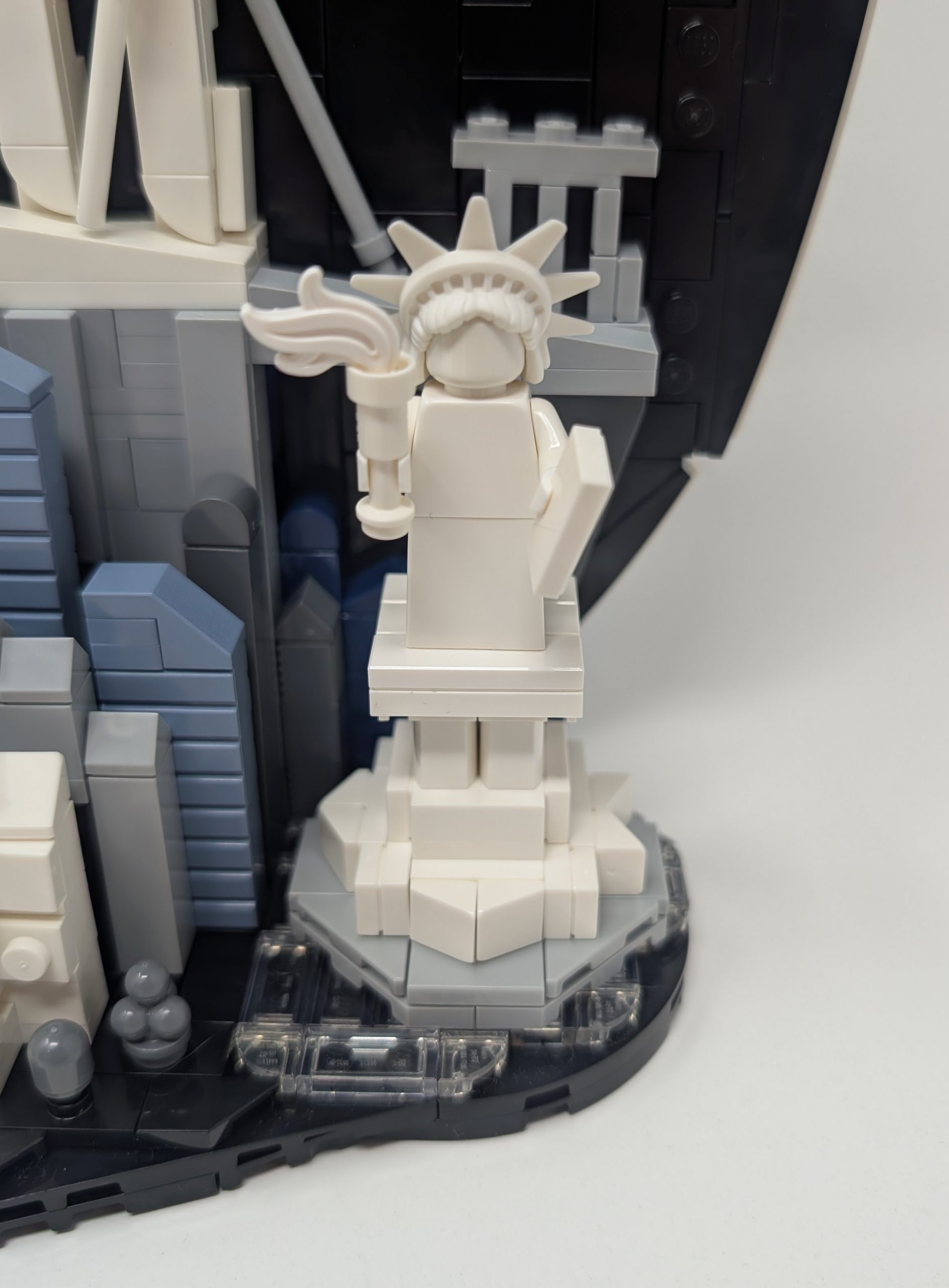
Everyone knows the statue of liberty.
My favorite of all the structures has to be the Brooklyn Bridge. The bridge is simple yet complex at the same time. The structure is designed to have the bridge be built into the horizon, and while the structure is a 2 stud deep flat build, the use of color and sizing from 1White in the foreground and 194Medium Stone GreyLight Bluish Gray in the background gives the illusion of depth. This when combined with the back half being smaller helps reinforce this. Creative Studs Not On Top construction and use of both bricks and bars help give this bridge its iconic recognizable look.
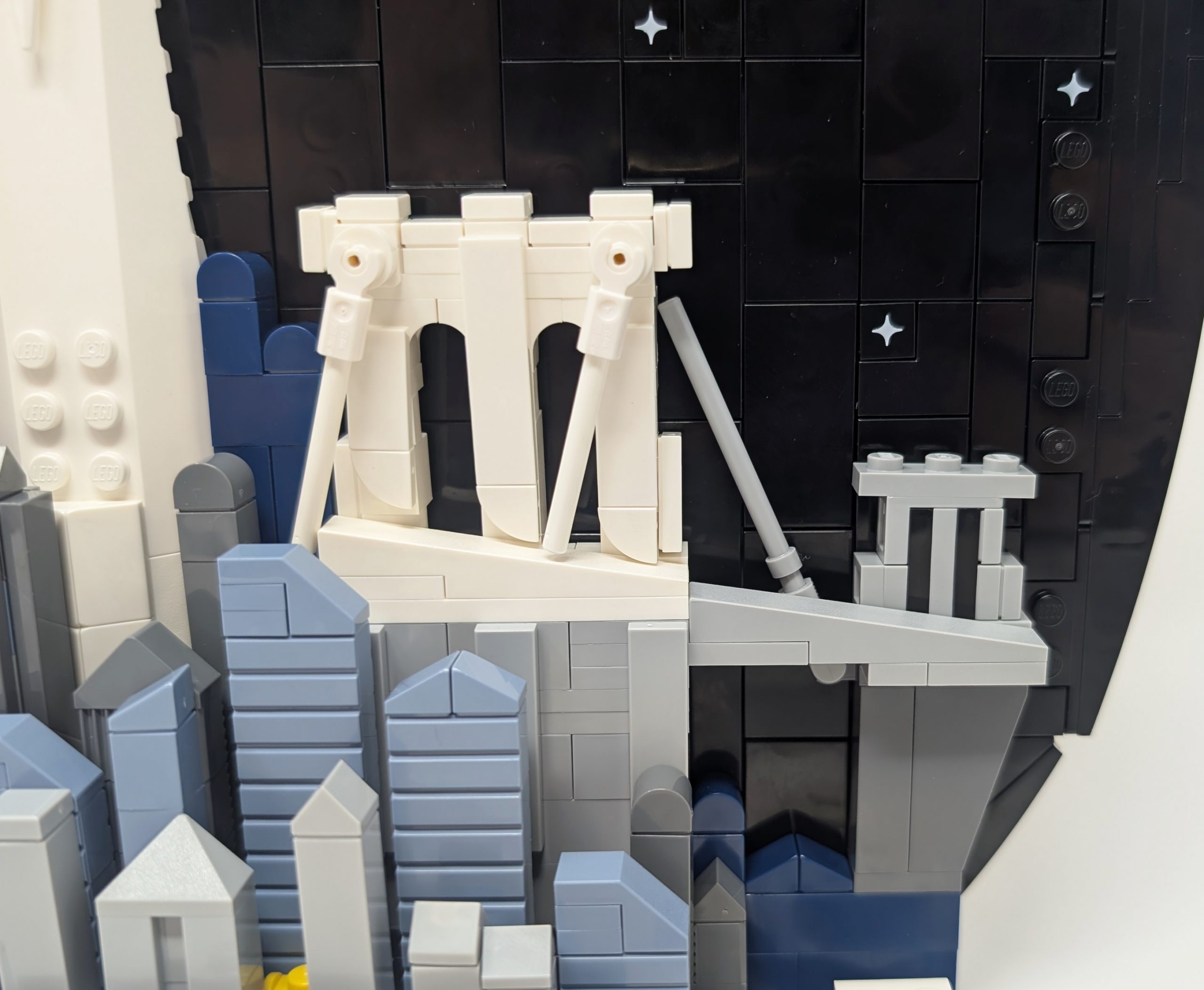
The Brooklyn Bridge uses perspective brilliantly.
At this scale it is often a challenge to make structures immediately recognizable. The Metropolitan Museum of Art is one such build as this is an incredibly detailed structure in real life. While it was impossible to capture the Victorian Gothic and Beaux-Arts architectural styles, the designers got creative with their part usage. Using the back of headlamps and even binocular pieces we get the ornate grand columns while having the glassy window look. This highlights creativity that can be achieved through common parts.
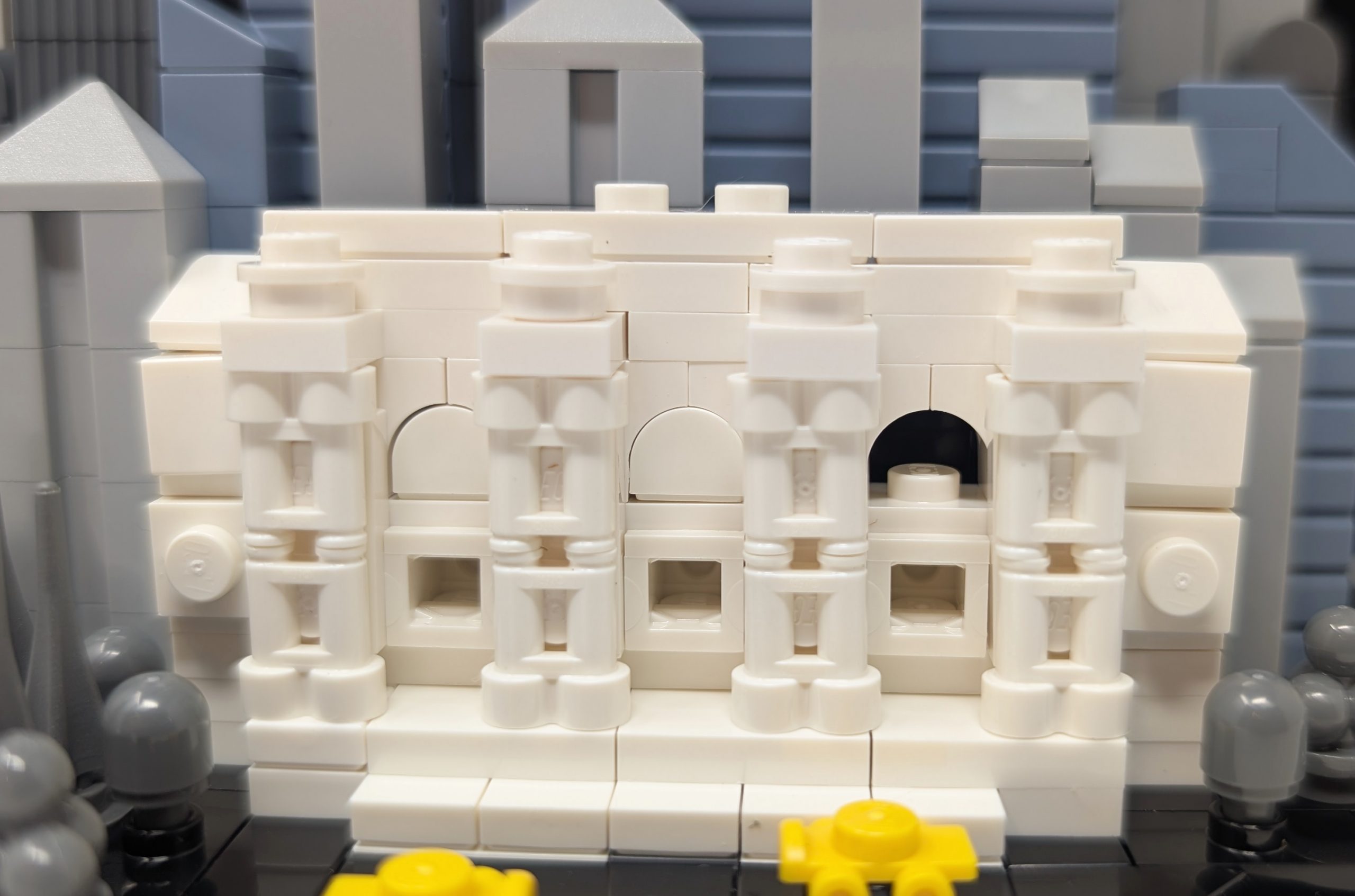
The Met is packed with iconic art.
The Guggenheim Museum is no stranger to LEGO, with a stand alone structure released in 2017 as one of the earlier Architecture sets to be released. At this scale the museum’s iconic shape is captured effectively using inverted 3×3 Dish (Part 43898) stacked to capture the modern architectural look. Designed by iconic American architect Frank Lloyd Wright, the style of this structure’s concrete curves are designed to resemble that of a shell, something the designers of the LEGO model effectively translated into brick form. While the majority of the structure is simple, the shape of the small build immediately allows it to be recognizable.
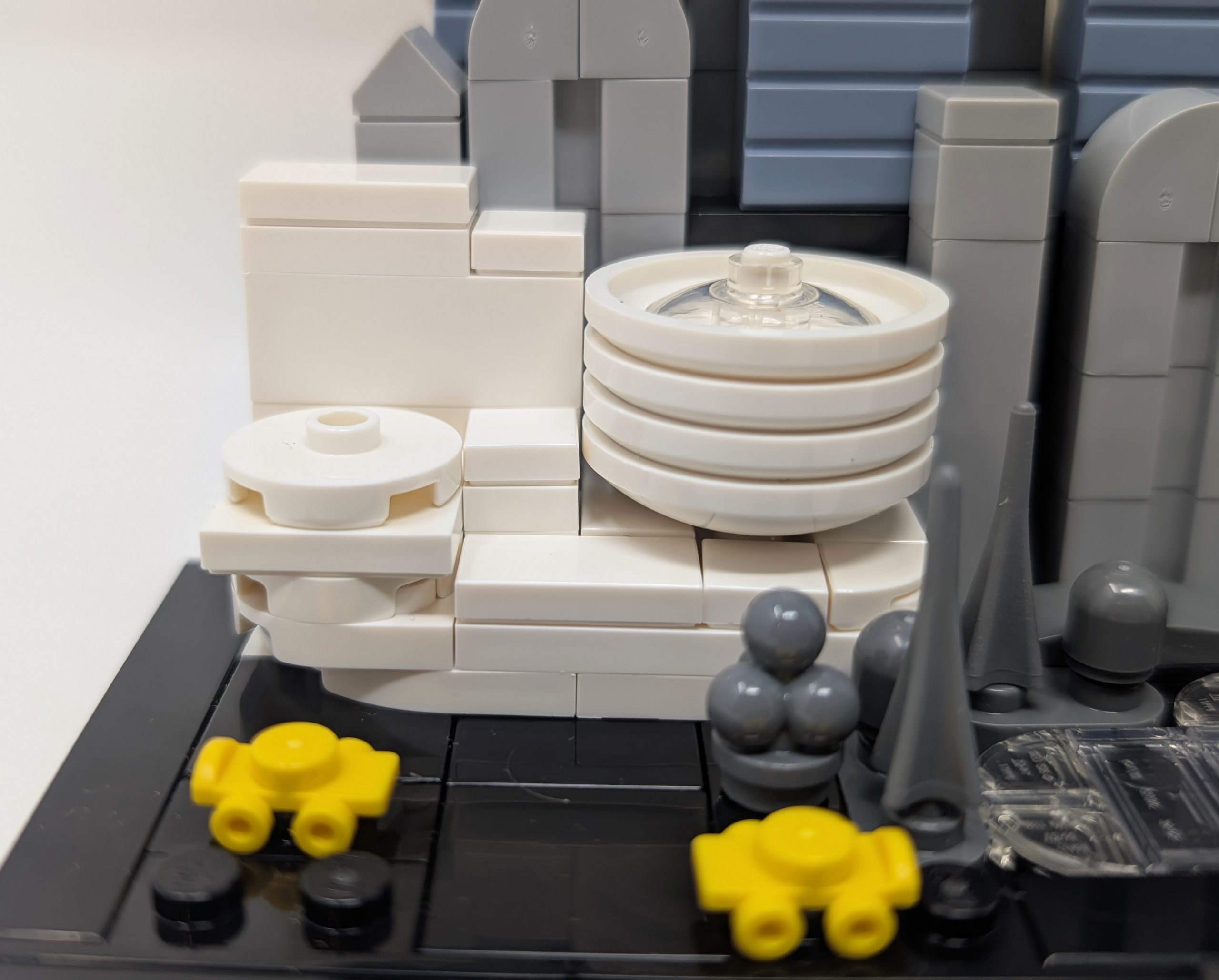
The Guggenheim is an architectural experience.
While the structures are strong, Central Park is rather weak. While the entire 843 acres of the park is difficult to translate into LEGO form, the little bit that we do see captures “The Lake” (yes, that is the real name) and some of the surrounding foliage. Part of the detractor for the park to me likely is due to the color palette used. It is difficult to get organic natural shrubbery in 199Dark Stone GreyDark Bluish Gray to stand out and that shows. While the designers used a variety of different shapes for the different trees, they feel a bit random. What does have strength though is the 40Transparent Trans-Clear water. This light sheen reflects the buildings around it beautifully and by opting to not use blues helps reinforce the nighttime appeal.
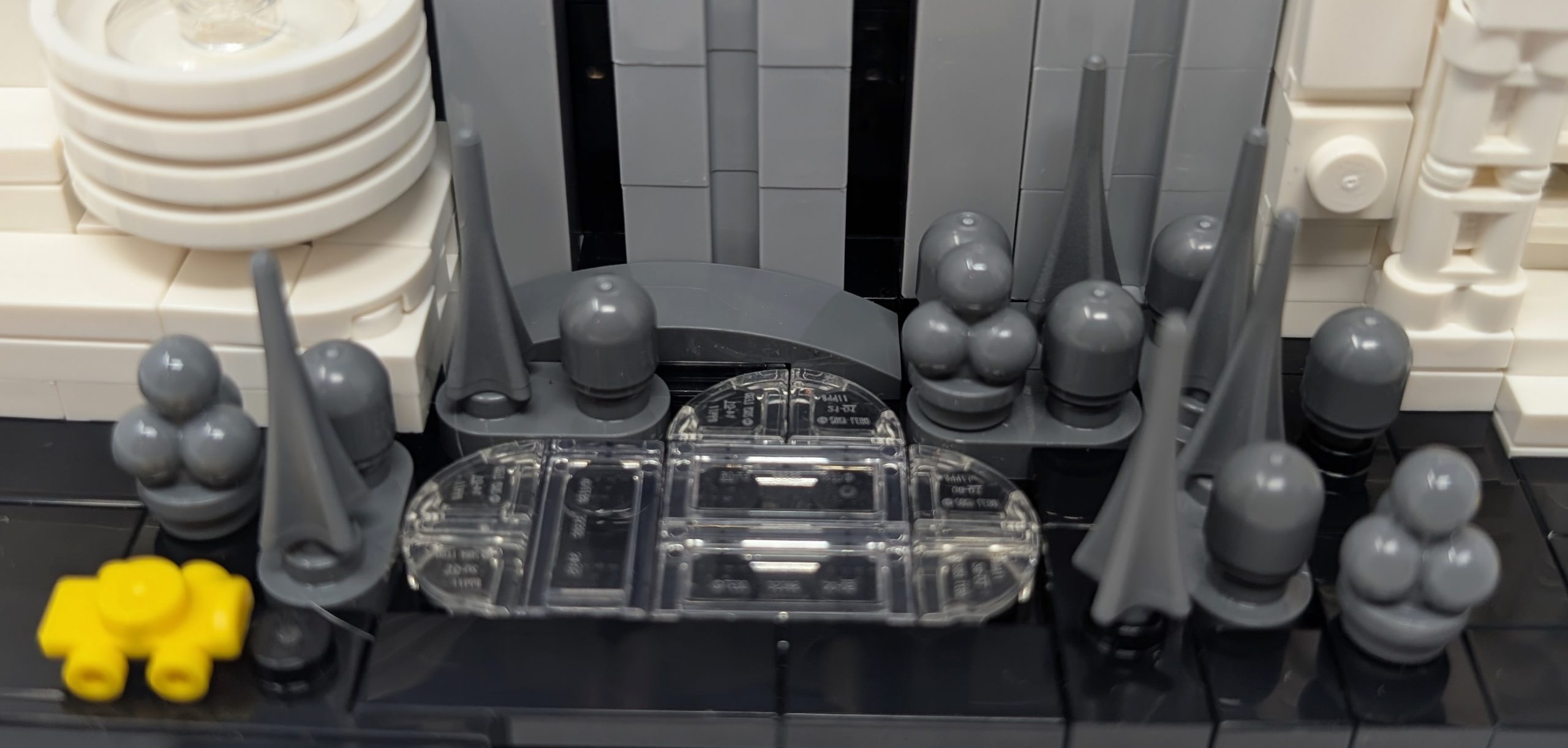
Central Park looks rather weak in LEGO form.
The final two structures are built directly into the backdrop meaning that should you wish to remove the Apple backdrop display these buildings come with it… unless of course you make some minor modifications. Both structures, the Empire State Building and One World Trade Center tower above all of the other structures in the city, being the largest builds. Each are built simply but capture the shapes of their real life counterparts. The designers used 1×2 Tile, Grille (Part 2412) pieces to create the many small windows of the Empire State Building, a technique that we also saw used when we explored the standalone version of the Empire State Building. The One World Trade Center makes its debut in this set. As one of the newer iconic structures in the city this pays homage to a part of history that is not easy to forget. This structure compared to its partner is built very simply, using very few parts with the majority of the bulk coming from one piece. The tapering of this slope effectively captures the narrowing of the structure giving it a different shape than the other tall skyscrapers in the city.
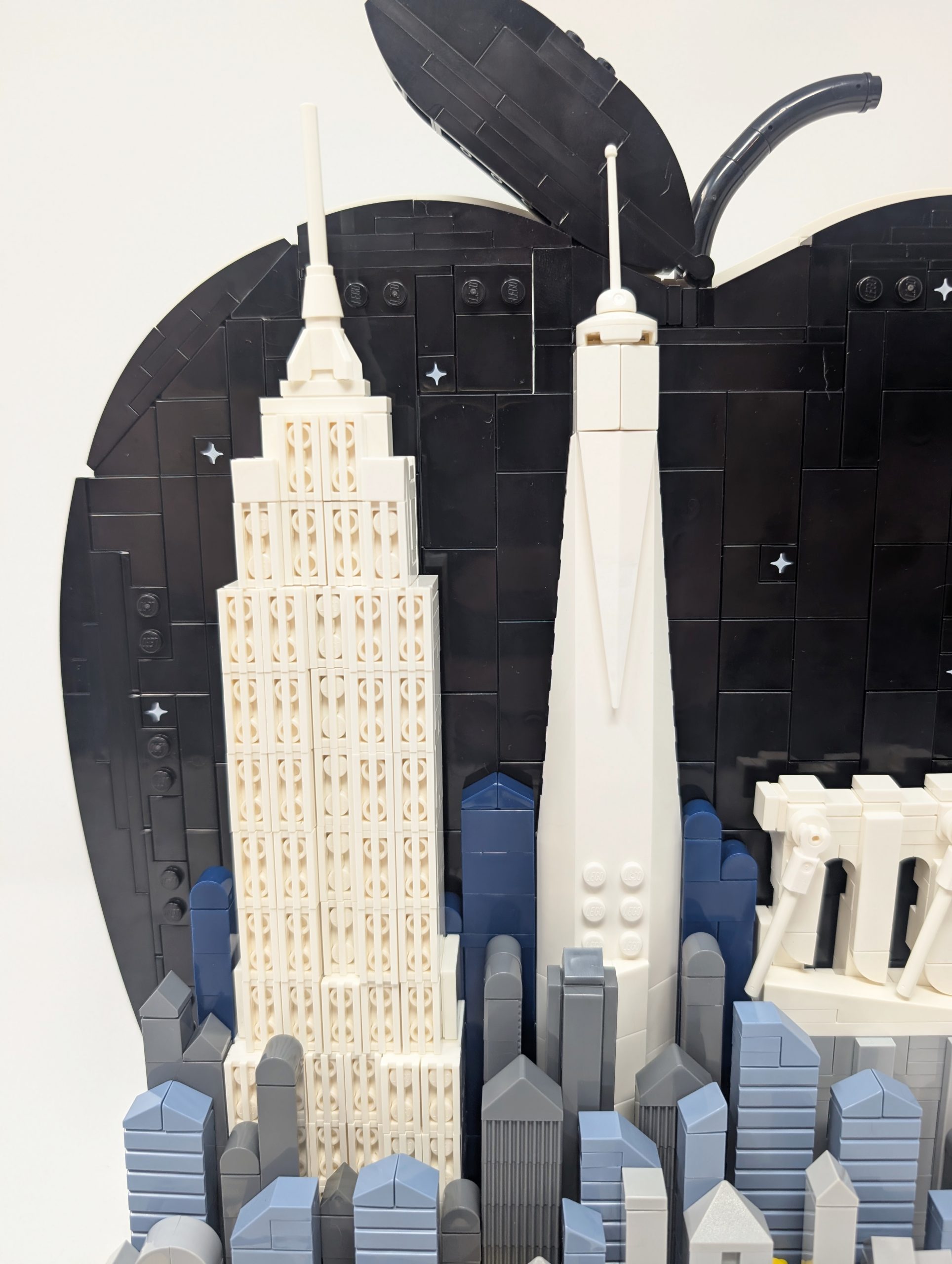
The Empire State Building and the One World Trade Center tower above all in the city.
I entered this set with mixed thoughts, but in the end, I was honestly more impressed than disappointed. The build itself is rather basic, but it captures great color, technique, and imagery all in one. The city itself is what stands out for me. I could have done without the Apple backdrop as a trade off for lower price, but with the height of some structures, the great color and beautiful shape, I came to like it overall.
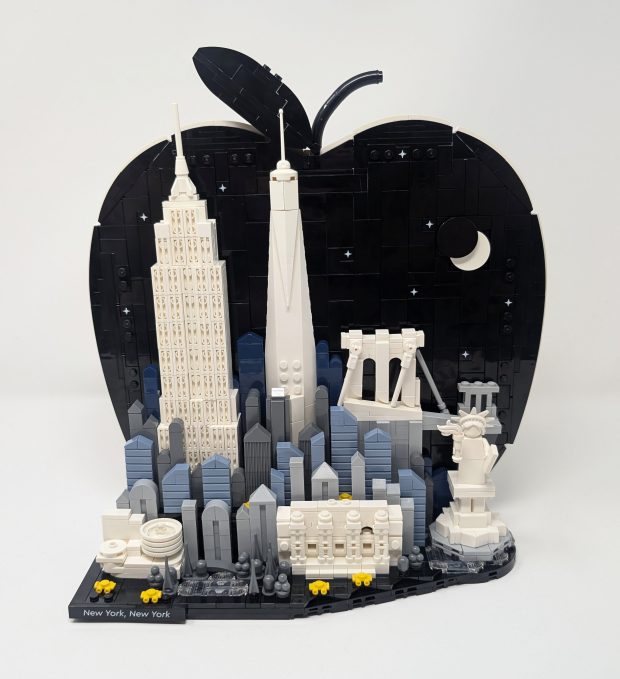
The apple ties the entire structure together.
I still think #21066 New York City – The Big Apple is about 30% overpriced given the lack of minifigures, but I anticipate it will likely go on sale for that price in the next year anyways. I’m hard pressed to find a lot of fault with this set beyond pricing (a common theme) as it exceeded my expectations. With everything in mind I give this set a well deserved 4/5 Stars (Recommended).
Great review – I got the set as a present and recently built it. Here are my comments based on the experience:
– Not sure I would have noticed the Manhattan shape of the base. Thanks for the hint!
– It was interesting to build the back drop (it is the only part with some SNOT) but I still would have preferred the set without it at half the price.
– The Guggenheim is the cutest piece in the set and the Metropolitan Museum is also well done.
– I had doubts about Brooklyn Bridge but was surprised how well the solution works from a certain distance. A cool idea.
– I am really disappointed about Miss Liberty. She is completely out of scale – and she holds both torch and table in a wrong way. I ended rotating her upper body by 180° to get a look closer to the original (if you look closer she must be one of the aliens from the Lego idea book 6000 from the 70s).
– The crescent of the moon looks rather like a partial eclipse. If you move the covering black circle a bit it gets better.
All in all I liked building the set more than I initially thought. And it was fun to optimize a few things as described above.
Meh. I will wait for it to go on sale.